|
GCSE level organic chemistry exam
revision notes: Parts 7A-7G
Addition polymers (poly(alkenes) - synthesis,
structure, properties
and the many uses of these particular plastic materials
Parts 7A-7G MANUFACTURE - MOLECULAR STRUCTURE
and USES
OF POLYMERS
[Author
©
Dr Phil Brown PhD:
Doc Brown's chemistry exam revision notes on
oil products &
organic chemistry,
suitable for students of UK GCSE Science level
AQA, Edexcel, OCR, WJEC and CCEA GCSE chemistry
courses, ~US grades 9-10 chemistry [page updated Mar 16th 2025 *]
Test your self on GCSE level organic chemistry
QUIZ on oil products & organic chemistry
(easier-foundation-level)
QUIZ on oil products
& organic chemistry (harder-higher-level)
7. Making Polymers - plastics and their uses
All my
GCSE level chemistry revision
notes
All my GCSE level oil and organic chemistry revision
notes
All my advanced A level organic chemistry notes
email doc
brown - comments - query?
*
[privacy policy, cookies
and disclaimer]
 GCSE level m/c QUIZ on oil products & organic chemistry
(easier-foundation-level)
GCSE level m/c QUIZ on oil products & organic chemistry
(easier-foundation-level)
GCSE
level m/c QUIZ on oil products
& organic chemistry (harder-higher-level)
Sub-index for this page
on polymers
Which is all
about polymerisation, the manufacture, structure, properties and
uses of the thermoplastic polymers (plastic products) poly(ethene),
poly(propene), poly(chloroethene)/PVC and polystyrene,
poly(tetrafluoroethene)/PTFE
(Sub-links also used for
Advanced Level Organic Chemistry Part 2 Alkenes
including notes on polymers)
7A.
Structure Introduction
to the formation and structure of
addition polymers from alkenes
7B.
Examples of
poly(alkene) polymer molecules e.g. manufacture of poly(ethene) to start with
7C.
Summary of the properties and uses
of poly(ethene)
7D.
Poly(propene) -
formation, structure, properties and uses
7E.
Poly(chloroethene) - formation, structure, properties and
uses
7F.
Polystyrene - formation, structure, properties and uses
7G.
Poly(tetrafluoroethene)
or PTFE - formation, structure, properties and uses
Key revision points and summary for this page on
polymerisation and thermoplastics
Multiple choice quiz for this page on polymerisation
and thermoplastics (with answers)
Parts 7H to 7N are now on a
separate page with a sub-index at the top
7H
More general comments on the uses of
polymer plastics
7I
Problems with using
polymer plastics: methods of recycling, disposing, pollution
e.g. PET, PVC etc.
7J
Highlighting three specific problems associated with using and disposing of
polymers or plastic materials
7K
Biodegradable and compostable polymers -
these should break down due to bacterial activity
7L
The recycling case of PET/PVC and
other plastics - examples of reclamation
7M
Summary of advantages and disadvantages of recycling plastic polymers - the
'pros and cons'!
7N
Logistic exercise - choosing a plastic for a particular use
|
All My synthetic
polymer-plastics revision notes pages
Introduction
to addition polymers: poly(ethene), poly(propene), polystyrene, PVC, PTFE -
structure, uses
More on the
uses of plastics, issues with using plastics, solutions and recycling
methods
Introducing
condensation polymers: Nylon, Terylene/PET, comparing
thermoplastics, fibres, thermosets
Extra
notes for more advanced level organic chemistry students
Polymerisation of alkenes to addition polymers - structure, properties, uses of
poly(alkene) polymers
The manufacture, molecular structure, properties and uses of
polyesters
Amides
chemistry - a mention of
polyamides
The structure, properties and uses of
polyesters and polyamides involving aromatic monomers
The chemistry of amides
including Nylon formation, structure, properties and uses
Stereoregular polymers -
isotactic/atactic/syndiotactic poly(propene) - use of Ziegler-Natta
catalysts |
TOP OF PAGE
and sub-index
  7.
Introducing polymerisation, polymers and plastics 7.
Introducing polymerisation, polymers and plastics
7A. The structure
and formation
of POLYMERS
Reactions of alkenes (4)
polymerisation/polymerization
Polymerisation means
joining lots of small molecules (called monomers) into very large
long molecules (called polymers).
The average molecular mass of
polymer is very large e.g. 10,000 to 50,000
Polymers are long chain molecules formed from lots of repeating units joined
together by strong covalent bonds, often, but not always, single C-C
covalent bonds for carbon based polymers.
This page describes the formation of big
polymer molecules called polyalkenes from small molecules called alkenes
and relates their structure to their physical properties and uses.
A comparative
intermolecular
forces note:
These are the relative weak
forces between whole molecules.
They are not as strong as the covalent bonds
between the atoms in a molecule.
The intermolecular forces between
polymer molecules are bigger than those between small molecules like water
and great enough to ensure plastic polymers like poly(ethene) and PVC are
solid at room temperature.
The greater the intermolecular forces the greater
the energy needed to overcome them and melt a material e.g. greater thermal
stability before degrading e.g. higher melting point.
These intermolecular
forces are much weaker than ionic or covalent bonds so the melting points of
polymers are still much less than those of giant covalent structures like
diamond or silica or
ionic compounds like sodium chloride.
The polymerisation equation for
alkenes to make poly(alkenes)
Alkenes
are made by
cracking
some of the
fractions obtained by the fractional distillation of crude oil
The diagram below shows the general equation
for the formation of a plastic polymer from alkenes.

This is a general equation for the addition
polymerisation of ANY alkene.
The 'starter' molecule is called the
monomer.
Irrespective of the atoms/groups
W, X, Y or Z, this can be explained by the double bond of the alkene
partially breaking open and new bonds are formed to make a 'chain' molecule.
In terms of the polymer chain formation, in terms of just thinking about the
carbon atoms, you can express it simply as
C=C ==> –C–C– then -C-C- +
-C-C- ==> -C-C-C-C- + -C-C- ==> -C-C-C-C-C-C- etc. many times.
The name of the polymer is quite simply derived from
the monomer name in () preceded by poly
i.e. poly(alkene monomer name)
There are many different alkenes, so there
are many different polymers with a range of physical properties and uses.
-
When catalysed and heated under pressure,
unsaturated alkenes
link together when 'half' of the double bond opens.
-
The spare
bond on each carbon atom of the double bond are
used to join up the molecules.
-
To form an addition polymer, the
monomer molecule must have a double bond.
-
The general equation for polyalkene
formation is shown in the diagram above and it is the presence of the
carbon = carbon (C=C) double bond in the alkene molecule that enables
the molecules to join together to form a long chain.
-
In terms of the 'backbone'
of carbon atoms, the essential molecular
linking is equivalent to ...
-
... C=C + C=C + C=C
... etc. ===> ... -C-C-C-C-C-C- ... etc.
-
(hydrogen and other atoms ignored, just showing the carbon chain
backbone of the polymer.)
-
.... to give a long
polymer chain molecules, hundreds-thousands of carbon atoms long!
-
... and the whole chain of
atoms is held together by strong carbon-carbon covalent bonds.
-
This process is called
addition polymerisation, the monomer molecules all add together,
with no other product formed other than the long polymer molecule.
-
Note!
-
Full equations showing all
the atoms involved are given in the next section 7b.
-
The attractive forces
between the molecules, the so-called 'intermolecular forces' or
'intermolecular bonding' are much weaker than the chemical bonds
between the atoms, but they are most important in determining the
properties of the polymer AND as you will read on later, they can be
changed to change the physical properties of a polymer.
-
Think of the process as
springing open half of the C=C double covalent bond of an alkene and using the
'spare bonds' to link across from one alkene molecule to another.
-
This can only happen if the
hydrocarbon molecule is unsaturated, like alkenes (with a C=C
double bond).
-
You cannot polymerise
saturated hydrocarbon molecules like alkanes (all C-C single bonds).
-
Most polymers (plastics) are made
from alkene compounds containing the -C=C- bond by addition polymerisation.
-
The general reaction is
small monomer molecule ==> long polymer molecule as the
small molecules link together to form a long chain with no other molecules
formed.
-
The original small
molecule is called the monomer
and the long molecule is called the polymer,
which is the sort of molecule most plastic materials consist of.
-
So lots of small molecules join up to form a
big long molecule in a process called addition polymerisation
and the polymers are named as poly(name of original alkene), i.e.
poly(alkene)
-
Several examples are shown
and their formation and structure described below, namely for
poly(ethene), poly(propene), poly(chloroethene) PVC, polystyrene.
-
Their properties and uses of
these thermoplastic materials are also described and explained.
Extra
notes on addition polymers: structure, properties
& uses for advanced level students only
TOP OF PAGE
and sub-index
 7B. Examples of
poly(alkene) polymer molecules
e.g. poly(ethene) to start with ... 7B. Examples of
poly(alkene) polymer molecules
e.g. poly(ethene) to start with ...
its formation, structure
and uses of it and other plastic materials
-
The
polymers described on this page are typical addition polymers
(formed by simple addition of monomer molecules), just like polythene
and polystyrene etc.
-
The starting small molecule is
called the monomer.
-
In
addition polymerisation
there is no other product except the polymer itself because
all the molecules are used up to form longer and longer polymer
chains (very long molecules) with the same repeating unit
based on the original monomer (see the first example below).
-
AND they are all
examples of thermoplastic polymers (thermoplastics),
that is, the polymer can be heated and softened, reshaped and cooled
to keep their new moulded shape.
-
The monomers a polymer is made
from determine the type and strength of intermolecular bonds
between the polymer chains, hence they determine the physical
properties of the polymer e.g. strength - rigidity, softening -
melting point.
-
See examples below of addition
polymers AND
-
Comparing addition
polymers & condensation polymers - thermosoftening and thermosetting polymers
-
-
-
 The
structure and formation of Poly(ethene) The
structure and formation of Poly(ethene)
-
The equation for the
formation of the polymer poly(ethene) from the monomer ethene is shown below.

above is the (repeating unit) of
poly(ethene)
The repeating unit is shown in
brackets e.g. for poly(ethene) it is CH2-CH2
To indicate the repeating nature of
the molecule, bond dashes go through the brackets giving the
'shorthand' or 'abbreviated' representation of the structure of
poly(ethene) -(-CH2-CH2-)n-
where n is the very large number, and can represent hundreds or
even thousands of
repeating units in one polymer molecule, in this case poly(ethene).
Above is show the
displayed formula style
equation for poly(ethene) formation, or a simpler molecular formula style
equation below.
n CH2=CH2
===> -(-CH2-CH2-)n-
The repeating unit shown in brackets
for poly(ethene) is (CH2-CH2) and n is a very large number, and can represent hundreds or thousands of
repeating units in one molecule.
-(-CH2-CH2-)n-
is a sensible way of writing these huge molecules!
You need
to be able to work backwards from a polymer formula to work out the
original small monomer molecule.
In other words,
from the diagram below, work out
WY>C=C<XZ from -(WY>C-C<XZ)n-

General equation for polymerising an alkene
-

-
A 'picture' of a section of a very long chain
poly(ethene) polymer
molecule, essentially consisting of hundreds or thousands of -CH2-CH2-
ethene units all joined together.
-
Above is a 'space-filling'
model 'ball and below a 'stick' type of model.
-
Although the poly(ethene)
molecules look straight, in reality, the long molecule will be all
twisted, jumbled and tangled up as in the thermoplastic diagram on the
right.
-
A pile of spaghetti isn't a
bad analogy here!
-
However in addition polymers, each
molecule does consist of a regular repeating unit based on the original
monomer e.g. -CH2-CH2-
in poly(ethene)
-
These are typical thermosoftening
polymers consisting of individual, tangled polymer chains and melt
relatively easily when they are heated.
-
Using these models' to
explain the general physical properties of a thermoplastic polymer.
-
The bonds in these polymer molecules
are covalent and very strong, but the intermolecular forces are
much less strong BUT greater than in small molecules like water or
pentane so polymers are solid at room temperature.
-
Generally speaking, the bigger the
molecule the bigger the intermolecular forces, the higher the melting
point, because more energy is needed to weaken the intermolecular
forces.
-
The higher the temperature, the
greater the kinetic energy of the particles to overcome the molecular
attractive forces.
-
Because polymer molecules are very
big, compared to small covalent molecules like water or ethanol, the
intermolecular forces (intermolecular bonding) are much greater and so
polymers-plastics like poly(ethene), PVC poly(chloroethene), polystyrene
or poly(propene) are all solid at room temperature.
-
BUT, the intermolecular forces
(electrical attractive forces) between the polymer molecules are still quite
weak compared to the strong covalent bonds (C-C) holding the chain of
atoms together.
-
Because this 'intermolecular
bonding' is weaker, when heated, these 'plastic' materials will
soften/melt quite easily (hence easily remoulded) at relatively low
temperatures (e.g. for poly(ethene) 110-150oC), without
breaking any covalent bonds in polymer molecule, which is why
they are called 'thermoplastic' and have relatively low
softening/melting points.
-
Even when 'cold' and
apparently solid, the plastic is easily distorted (easily bent when
stressed) because the polymer chains can slide over each other i.e. the
external physical force applied on bending overcomes the intermolecular
forces between the polymer molecules.
-
Despite their relative
weakness, on controlled heating, until they are quite soft (but NOT
molten), they are readily extrusion moulded or drawn out into useful
shapes (even fibres) which retain their new formation on cooling.
-
Also, the flexibility and
sometimes stretchability is actually very useful - think of plastic
'polythene' bags and PVC coated electrical cables.
-
How is poly(ethene)
manufactured? e.g. for commercially available plastics like
'polythene'
-
What
reaction conditions
are used in the manufacture of polymers?
-
Does changing the
reaction conditions have any effect on the physical properties of the
polymer?
-
Can we make different
forms of the same polymer for different uses?
-
The
properties of polymers - plastics depend on what monomers they are made
from and the reaction conditions under which they are made. For example,
low density polyethene (LD, LDP) and high density poly(ethene) (HD, DDP)
are produced from ethene using different catalysts and different
reaction conditions.
-
All
polymers have their own characteristic physical properties depending on
their specific molecular structure.
-
The strength of the
intermolecular forces (intermolecular bonding) between the polymer
molecules is crucial to how strong, rigid, flexible etc. the manufacture
plastic material is.
-
If the molecules can be made
more 'lined up way' and more 'densely' packed, the intermolecular forces
(intermolecular bonding) increases, the physical properties change e.g.
the polymer density and rigidity increases, so it is stronger and less
flexible.
-
It is possible to achieve
variations in the physical properties of plastics like 'polythene' by
varying the manufacturing conditions to give subtle differences in the
molecular structure and composition of the polymer-plastic produced..
-
Two different types of
poly(ethene) and their molecular structure and physical properties are
described with reference to their different uses.
-
Making
polymers - typical reaction conditions:
-
Polymers
like poly(ethene) are usually produced under conditions of relatively high pressure,
elevated temperature
and a catalyst.
-
An initiator is sometimes
used to get the reaction going e.g. a highly reactive peroxide molecule
- this get's used up, so its NOT a catalyst
-
However, by changing and
selecting the
reaction conditions e.g. pressure, temperature or catalyst, you can make subtle changes to the physical
properties of the polymer obtained from the polymerisation process e.g.
changing temperature, pressure or catalyst. This allows the manufacture
of a weaker more flexible lower
density
poly(ethene)
referred to as LDPE (LD poly(ethene), and a stronger less flexible
higher
density
form of poly(ethene),
HDPE
(high density poly(ethene).
-
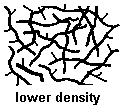 LDPE
In the original high pressure process developed in the 1930s, poly(ethene)
was made at a moderate temperature of 80oC to 300oC and a
very high
pressure of 1000 atm to 3000 atm. pressure (1 atm = normal atmospheric
pressure at sea level), the poly(ethene) product has a lower density and very flexible. Small controlled traces of oxygen (< 10 ppm)
or organic peroxides are used to initiate the polymerisation process. LDPE
In the original high pressure process developed in the 1930s, poly(ethene)
was made at a moderate temperature of 80oC to 300oC and a
very high
pressure of 1000 atm to 3000 atm. pressure (1 atm = normal atmospheric
pressure at sea level), the poly(ethene) product has a lower density and very flexible. Small controlled traces of oxygen (< 10 ppm)
or organic peroxides are used to initiate the polymerisation process.
-
The polymer chains are quite
jumbled up and the polymer chains also have many branches (NOT cross-links),
and the intermolecular forces between molecules are weaker, so the
plastic is less strong and less rigid, more flexible than HDPE
poly(ethene).
-
This lower density weaker
form of poly(ethene) melts at around 115oC, but softens well
before that temperature, so don't have very hot drinks from an LDPE
polythene cup!
-
This 'low density
poly(ethene)' is known by the acronym LDPE and is used for plastic bags,
plastic bottles,
cling film wrap, laminating paper, car covers, squeezy bottles, liners
for tanks and ponds, moisture barriers in construction.
-
Low density poly(ethene) is
not very heat resistant and softens easily if heated, so it can't be
used for any application where temperatures well above room temperature
will be encountered!
-
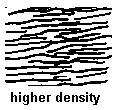 HDPE However
in the 1950s,
it became possible to make poly(ethene) in a low pressure process at around a
lower temperature, maybe as low as 50oC, and using a
much lower pressure of a 2 atm to 80 atm., AND a different catalyst, the polymer
product is more dense and less flexible. HDPE However
in the 1950s,
it became possible to make poly(ethene) in a low pressure process at around a
lower temperature, maybe as low as 50oC, and using a
much lower pressure of a 2 atm to 80 atm., AND a different catalyst, the polymer
product is more dense and less flexible.
-
Here the polymer chains are
much more aligned with each other,
maximising the intermolecular forces/bonding
between the molecules, so the plastic is stronger and more rigid and
less flexible than LDPE poly(ethene).
-
The polymer molecules are
longer with far fewer branches in the chains and this allows the
poly(ethene) molecules to get closer together (just compare the two
diagrams above-right).
-
This is a more heat resistant higher density stronger
form of poly(ethene) melting at around 135oC and can withstand
contact with hot water without distortion!
-
This 'high density
poly(ethene)' is known by the acronym HDPE, it is tougher, stronger and
more hard wearing than LDPE. HDPE poly(ethene) is used for:
-
freezer bags,
water pipes, wire and cable insulation - these three need to be a bit flexible but quite strong
-
or more rigid uses like
drainpipes, water tanks, buckets, washing-up bowls, plastic milk bottles, strong plastic crates, extrusion coating.
-
In general, in terms of how
the polymer molecules are packed ...
-
the closer the polymer
chains are packed together, the stronger the intermolecular
forces/bonding, the density increases and the strength of the
polymer increases (this tends to increase the hardness and
crystallinity of the plastic),
-
the more jumbled or
'spread out', the polymer chains are, the weaker the intermolecular
forces/bonding, the polymer material is less dense and weaker e.g.
more flexible.
Extra
notes on addition polymers: structure, properties
& uses for advanced level students only
TOP OF PAGE
and sub-index
7C. Summary of the properties and uses
of poly(ethene)
-
(Old or commercial names:
polyethylene, polythene, alkathene)
-
First and foremost poly(ethene)
from ethene is a cheap, if not very strong, useful plastic.
-
Poly(ethene) on heating is
readily moulded into any shape e.g. 'plastic'
bottles.
-
This
is because poly(ethene) is an example of a thermoplastic - it can be heated to soften
it, reshape it e.g. in an injection mould system, and on cooling retains
its new shape - bottle, bowl, toy etc.
-
Lower density poly(ethene)
is light and flexible
and used for plastic bags, detergent/shampoo bottles, plastic piping,
laminating paper and acts as a very good electrical insulator - its not
just PVC that has been used for insulating electrical cable wires..
-
Higher density poly(ethene)
is used where a less flexible/stretchy more rigid and stronger form is
needed e.g. drainpipes, milk crates - where a much tougher plastic is
needed.
-
A general important point
to make here is that the use of a polymer doesn't just depend on its
chemical composition and molecular structure, but mainly on its physical
properties (which of course are derived from the polymers structure).
-
These differences become
accentuated when
comparing
thermosoftening plastics and thermosetting plastics which also
includes a discussion on modifying polymers to change their properties,
hence varying their uses.
-
What happens if you strongly heat
plastics like poly(ethene)?
-
You can thermally degrade
poly(ethene) in a sort of 'cracking
experiment' illustrated below.
-
 Thermally degrading poly(ethene)
-
When you strongly heat a
plastic-polymer you break some of the carbon-carbon bonds (C-C) in the
polymer chains to produce much smaller and volatile molecules.
-
Some of the molecules will be liquid
or gaseous alkenes which you can collect as shown above.
-
You can test the organic liquid in
the bottle or the gases collected in the inverted test tube initially
filled with water.
-
The collected hydrocarbons should
include alkenes (including the original ethene) which you can test for
with bromine water - which turns from orange to colourless (see
chemistry of alkenes for details of alkene
test).
Extra
notes on addition polymers: structure, properties
& uses for advanced level students only
TOP OF PAGE
and sub-index
7D. Poly(propene) - formation, structure,
properties and uses
-
(Old or commercial names:
polypropylene, polyprene and polypropene).
-
The polymerisation of
the monomer propene and the molecular structure of the polymer formed, poly(propene), is shown below.

-
Above is the (repeating unit)
-
displayed formula style
equation for poly(propene) formation, or simpler molecular formula style
equation below.
-
n CH2=CH-CH3
===> -[-CH2-CH(CH3)-]n-
Extra
notes on addition polymers: structure, properties
& uses for advanced level students only
TOP OF PAGE
and sub-index
7E. Poly(chloroethene) -
formation, structure, properties and uses
-
Poly(chloroethene),
PVC
-
The old name for poly(chloroethene)
was polyvinyl
chloride, hence the use of the commercial name PVC, and is
made from polymerising the monomer chloroethene,
CH2=CHCl, (old name vinyl chloride).

-
Diagrams of the (repeating unit)
of poly(chloroethene),
PVC
-

-
displayed formula style
equation for poly(chloroethene) formation, or simpler molecular
formula style equation below.
-
n CH2=CHCl
===> -(-CH2-CHCl-)n-
-
The repeating unit shown in
brackets for poly(chloroethene) is -(CH2-CHCl)-
-
The molecular structure
of PVC poly(chloroethene)
-

-
Above is a 'picture' of a section of a very long chain
poly(chloroethene) polymer
molecule (PVC), essentially consisting of hundreds or thousands of
-CH2-CHCl- chloroethene units all joined together.
-
The above
diagram is that of a 'ball and stick' type of model and although it looks
straight, in reality, the long molecule will be all
twisted-jumbled up like in the diagram on the right.
-
The
chlorine atoms are shown as a regular arrangement, but they will
be more randomly distributed down the ...-C-C-C-... chain
depending on which way round the chloroethene molecule added.
Extra
notes on addition polymers: structure, properties
& uses for advanced level students only
TOP OF PAGE
and sub-index
7F. Polystyrene - formation,
structure, properties and uses
-
Polystyrene
-
Polystyrene is
a polymer made from the monomer 'styrene*
(another alkene monomer)
-
Polystyrene's new modern
systematic name is
poly(phenylethene), a
polymer made from polymerising phenylethene monomer (shown below).
-
 phenylethene,
old name 'styrene', hence the common name 'old name' of 'polystyrene' phenylethene,
old name 'styrene', hence the common name 'old name' of 'polystyrene'
-
You can tell that this
molecule can theoretically act as a monomer, that is it can be
polymerised to a polymer, because it is an alkene with the
characteristic C=C carbon-carbon double bond which can partially
open up to form linking -C-C-C-C- bonds.
-
Phenylethene (styrene) is like ethene, but one
of the hydrogens is replaced with a phenyl group derived from a
benzene ring (a -C6H5 group actually,
but don't worry about this at GCSE level).
-
The hexagonal group of
carbon atoms are called a benzene ring.
-

-
You can make polystyrene in
the school laboratory quite easily.
-
You mix styrene, a
colourless flammable 'smelly' liquid, with some peroxide initiator in a
test tube.
-
Cover the test tube top with
a cotton wool plug to minimise fumes escaping.
-
Since the styrene is both
volatile and flammable, you heat the mixture gently in a warm water bath
- do not heat in a bunsen flame!
-
Gradually, the 'runny'
liquid starts to thicken and become viscous as monomer upon monomer add
together.
-
You are observing the
molecules getting longer and longer and the corresponding intermolecular
attractive forces getting stronger making the viscosity increase of the
polymer.
-
Eventually the mixture sets
hard to give a clear mass of polystyrene, and a completely useless test
tube!
-
Properties and uses
of polystyrene
-
Expanded polystyrene
(EPS), with its trapped gas (from the 'blowing agent' e.g. CO2)
gives the material excellent heat insulation properties (thermal
insulation material, due to the trapped gas - poor conductor of heat).
-
It can be made into disposable cups for hot
drinks like tea, coffee and soup. It can be used as a thermal
insulator in other situations BUT bear in mind that it is a highly
flammable material and on strong heating gives off flammable gases!
So, remember, its a very flammable material and there have been
tragic accidents when used as ceiling insulation in homes. I
hope/presume this building practice is banned?
-
Polystyrene is also used in a
gas expanded form for packaging and insulation - 'polystyrene foam'
or 'expanded polystyrene'. This is light and useful for packing
breakable objects and valuable items like computers!
-
Polystyrene is chemically very stable
and a potential pollutant, so, hopefully, food packaging will be
minimised and polystyrene packaging replaced with biodegradable
materials - maybe a return to paper and cardboard!
Extra
notes on addition polymers: structure, properties
& uses for advanced level students only
TOP OF PAGE
and sub-index
7G.
Poly(tetrafluoroethene)
or PTFE - formation, structure, properties and uses

-
Above is the (repeating unit) of
poly(tetrafluoroethene)
-
PTFE is one of the most hard
wearing of commonly used thermoplastics.
-
PTFE is chemically a very unreactive
plastic and, unlike poly(ethene) and poly(propene), it doesn't burn
easily, so has good flame resistant properties.
-
Advanced level note of PTFE
properties:
-
The bonds between the carbon and
fluorine atoms are very strong and not easily broken by a chemical
reagents, hence its very useful chemical inertness.
-
Average bond
enthalpies/kJmol-1: C-C 348, C-H 412, C-F
484, C-Cl 338.
-
The greater the bond enthalpy, the
higher the activation energies for any chemical attack on the
PTFE polymer chain.
-
PTFE with its excellent heat
resistance, can with stand quite
high temperatures.
-
PTFE's
remarkable
'non-stick' properties, combined with its thermal stability and flame
resistance has made it an excellent coating for 'non-stick' cooking pans
i.e. you coat the metal surface of a cooking pan with PTFE.
-
PTFE has very low
coefficient of friction and can be moulded into moving parts in machines
(sliding/rotating surfaces etc.) and is used for taps in burettes.
-
Like most plastics, it is a poor
electrical conductor - so a very good electrical insulator, it is strong and
flexible and used for electrical insulation.
-
The use of PTFE in
'breathable' fabrics like GORE-TEX are described and discussed on the
smart materials page 6. Gore-Tex and
Thinsulate etc
Extra
notes on addition polymers: structure, properties
& uses for advanced level students only
TOP OF PAGE
and sub-index
7H. More on the USES OF
POLYMERS - Plastics
Now on separate page
 More on
the uses of plastics, problems with plastics and recycling
More on
the uses of plastics, problems with plastics and recycling
7I. Problems with using
polymer plastics: recycling, disposing and pollution
Now on separate page
More on
the uses of plastics, problems with plastics and recycling
Summary of advantages and disadvantages of recycling plastic polymers - the
'pros and cons'!
The recycling case of PET plastics
Now on separate page
More on
the uses of plastics, problems with plastics and recycling
7J.
Choosing a Plastic for a Particular Use
Now on separate page
More on
the uses of plastics, problems with plastics and recycling
TOP OF PAGE
and sub-index
Extra
notes on addition polymers: structure, properties
& uses for advanced level students only
Summary Revision Notes: Polymerisation &
Common Polymers
AND
a
Multiple choice quiz for this page on
polymerisation and thermoplastics
What is Polymerisation?
- Polymerisation
is the process of joining many monomers to form
a polymer.
- Addition
polymerisation
involves alkenes (unsaturated hydrocarbons)
where the C=C double bond breaks and bonds
reconnect to form long chains.
- Condensation
polymerisation
(not always required at GCSE) involves monomers with two
functional groups and produces a small molecule (e.g., water).
Key
Polymers You Must Know
| Polymer |
Monomer |
Structure |
Properties |
Uses |
| Poly(ethene) |
Ethene (CH2=CH2) |
Flexible, non-polar |
Lightweight, waterproof,
low melting point |
Plastic bags, bottles |
| Poly(propene) |
Propene (CH2=CHCH3) |
Slightly more rigid |
Tough, flexible, higher
melting point than poly(ethene) |
Crates, ropes, carpets |
| Poly(chloroethene)
(PVC) |
Chloroethene (CH2=CHCl) |
Contains Cl atoms |
Rigid or flexible,
chemical resistant |
Pipes, window frames,
insulation |
| Polystyrene |
Phenylethene (styrene) |
Benzene ring side group |
Lightweight, insulating |
Packaging, disposable cups |
| PTFE (Teflon) |
Tetrafluoroethene (CF2=CF2) |
Fluorine atoms |
Non-stick, heat-resistant,
chemically inert |
Non-stick pans, labware |
Key
Revision Points
- Recognise monomer and
polymer structures.
- Draw repeat units
from monomers and vice versa.
- Understand how
properties relate to structure
(e.g., side groups, polarity).
- Environmental impact:
non-biodegradability, landfill, incineration risks.
- Addition versus
condensation polymerisation
(where required). See
Common
Misconceptions
- Thinking all plastics
are biodegradable.
- Confusing condensation
and addition polymerisation.
- Forgetting to remove the
double bond when drawing polymer repeat units.
- Believing all polymers
are flexible—PVC can be rigid!
Student
Tips
- Learn monomer →
polymer name links (e.g., ethene → poly(ethene)).
- Practice drawing
repeat units with correct brackets and bonds.
- Use past paper
questions to spot how examiners phrase polymer
questions.
- Remember:
properties depend on side groups and chain length.
Exam practice: 20 Multiple Choice
Questions with Feedback
These are very basic questions
but supplement the main multiple choice quizzes below
GCSE level m/c QUIZ on oil products & organic chemistry
(easier-foundation-level
GCSE
level m/c QUIZ on oil products
& organic chemistry (harder-higher-level)
Jot
your responses down and check out the answers
ANSWERS to the multiple choice
questions on thermoplastics
If you
think there is an error email me asap
chem55555@hotmail.com any feedback welcome!
1. What type of polymerisation forms poly(ethene)?
- Condensation
- Addition
- Neutralisation
- Combustion
Answer: B.
Addition
Explanation: Poly(ethene) is made by
addition polymerisation of ethene.
Distractors:
- A: Condensation involves loss
of small molecules (not the case here).
- C/D: Not types of
polymerisation.
2. Which monomer forms poly(propene)?
- Ethene
- Propene
- Butene
- Chloroethene
Answer: B.
Propene
Explanation: Poly(propene) is made from
propene.
Tip: Match the name: propene → poly(propene).
3. What is the main environmental issue with most addition polymers?
- They dissolve in water
- They are biodegradable
- They are non-biodegradable
- They are flammable
Answer: C.
They are non-biodegradable
Explanation: Most addition polymers persist
in the environment.
Misconception: Some students wrongly assume all
plastics break down.
4. Which polymer is used for non-stick cookware?
- Poly(ethene)
- Poly(propene)
- PTFE
- PVC
Answer: C.
PTFE
Explanation: PTFE is chemically inert and
heat-resistant.
Distractors:
- A/B/D: Not suitable for high
heat or chemical resistance.
5. What is the repeat unit of poly(chloroethene)?
- –CHCl–CHCl–
- –CH2–CHCl–
- –CH2–CCl2–
- –CH2–CH2–
Answer: B. –CH2–CHCl–
Explanation: Chloroethene has a Cl atom on
one carbon.
Tip: Watch for correct placement of Cl.
6. Which polymer has a benzene ring in its structure?
- Poly(propene)
- Polystyrene
- PVC
- PTFE
Answer: B.
Polystyrene
Explanation: Styrene contains a phenyl (benzene)
group.
Misconception: Students often confuse PVC and
polystyrene.
7. Which of these is NOT a
property of PTFE?
- Non-stick
- Chemically inert
- Biodegradable
- Heat-resistant
Answer: C.
Biodegradable
Explanation: PTFE is not biodegradable.
Tip: All addition polymers resist decomposition.
8. What happens to the
double bond during addition polymerisation?
- It stays the same
- It forms a triple bond
- It breaks
- It becomes ionic
Answer: C. It breaks
Explanation: The C=C bond opens to form single
bonds in the chain.
9. Which polymer is often
used for cheap plastic bags?
- Poly(propene)
- PTFE
- Poly(ethene)
- PVC
Answer: C.
Poly(ethene)
Explanation: It’s flexible and cheap—ideal for
bags.
10. Which polymer is used
for electrical insulation and window frames?
- Poly(propene)
- PVC
- PTFE
- Polystyrene
Answer: B. PVC
Explanation: PVC is rigid and insulating.
11. Which monomer forms
PTFE?
- Ethene
- Tetrafluoroethene
- Chloroethene
- Propene
Answer:
B. Tetrafluoroethene
12. What is the correct
name for the polymer made from ethene?
- Polyethane
- Poly(ethene)
- Polyethene
- Polyethylene
Answer: B.
Poly(ethene)
Exam tip: Use IUPAC-style names in exams.
13. Which polymer is used
in packaging foam?
- Polystyrene
- Poly(propene)
- PVC
- PTFE
Answer:
A. Polystyrene
14. What is a common use of
poly(propene)?
- Window frames
- Ropes and carpets
- Non-stick pans
- Foam cups
Answer:
B. Ropes and carpets
15. Which polymer contains
fluorine atoms?
- PVC
- PTFE
- Polystyrene
- Poly(ethene)
Answer:
B. PTFE
16. What is the main bond
type in polymers?
- Ionic
- Metallic
- Covalent
- Hydrogen
Answer:
C. Covalent
17.
Assuming similar sized strips, which polymer would be the most
flexible?
- Poly(ethene)
- PVC (rigid)
- PTFE
- Polystyrene
Answer:
A. Poly(ethene)
18. Which polymer is used
in laboratory tubing and gloves?
- Poly(propene)
- PVC
- PTFE
- Poly(ethene)
Answer:
B. PVC
19. What is the monomer of
polystyrene?
- Ethene
- Propene
- Styrene
- Benzene
Answer:
C. Styrene
20. Which polymer is most
chemically inert?
- Poly(ethene)
- Polystyrene
- PTFE
- PVC
Answer:
C. PTFE |
TOP OF PAGE
and sub-index
Extra
notes on addition polymers: structure, properties
& uses for advanced level students only
|
|
Multiple Choice Quizzes and Worksheets
 KS4 Science GCSE/IGCSE m/c QUIZ on Oil Products
(easier-foundation-level)
KS4 Science GCSE/IGCSE m/c QUIZ on Oil Products
(easier-foundation-level)
 KS4 Science GCSE/IGCSE m/c QUIZ on Oil Products
(harder-higher-level)
KS4 Science GCSE/IGCSE m/c QUIZ on Oil Products
(harder-higher-level)
 KS4 Science GCSE/IGCSE m/c QUIZ on other aspects of Organic Chemistry
and
 3 linked easy Oil Products gap-fill quiz worksheets
ALSO gap-fill ('word-fill') exercises
originally written for ...
... AQA GCSE Science
Useful products from
crude oil AND
Oil, Hydrocarbons
& Cracking
etc.
... OCR 21st C GCSE Science
Worksheet gap-fill C1.1c Air
pollutants etc ...
... Edexcel GCSE Science
 Crude Oil and its Fractional distillation
etc ... Crude Oil and its Fractional distillation
etc ...
... each set are interlinked,
so clicking on one of the above leads to a sequence of several quizzes |
14-16
gcse organic chemistry
keywords and phrases:
revision study notes for 14-16 school chemistry AQA
Edexcel OCR IGCSE/GCSE 9-1 chemistry science topics modules for studying
how to make poly(ethene) its properties
and uses of poly(propene), uses and properties of poly(chloroethene),
properties and uses of PVC, properties and uses of PTFE, examples of
addition polymers, equations for addition polymerisation
ANSWERS to the exam practice multiple choice
questions with brief feedback
1. What type of polymerisation forms poly(ethene)?
- Condensation
- Addition
- Neutralisation
- Combustion
Answer: B.
Addition
Explanation: Poly(ethene) is made by
addition polymerisation of ethene.
Distractors:
- A: Condensation involves loss
of small molecules (not the case here).
- C/D: Not types of
polymerisation.
2. Which monomer forms poly(propene)?
- Ethene
- Propene
- Butene
- Chloroethene
Answer: B.
Propene
Explanation: Poly(propene) is made from
propene.
Tip: Match the name: propene → poly(propene).
3. What is the main environmental issue with most addition polymers?
- They dissolve in water
- They are biodegradable
- They are non-biodegradable
- They are flammable
Answer: C.
They are non-biodegradable
Explanation: Most addition polymers persist
in the environment.
Misconception: Some students wrongly assume all
plastics break down.
4. Which polymer is used for non-stick cookware?
- Poly(ethene)
- Poly(propene)
- PTFE
- PVC
Answer: C.
PTFE
Explanation: PTFE is chemically inert and
heat-resistant.
Distractors:
- A/B/D: Not suitable for high
heat or chemical resistance.
5. What is the repeat unit of poly(chloroethene)?
- –CHCl–CHCl–
- –CH2–CHCl–
- –CH2–CCl2–
- –CH2–CH2–
Answer: B. –CH2–CHCl–
Explanation: Chloroethene has a Cl atom on
one carbon.
Tip: Watch for correct placement of Cl.
6. Which polymer has a benzene ring in its structure?
- Poly(propene)
- Polystyrene
- PVC
- PTFE
Answer: B.
Polystyrene
Explanation: Styrene contains a phenyl (benzene)
group.
Misconception: Students often confuse PVC and
polystyrene.
7. Which of these is NOT a
property of PTFE?
- Non-stick
- Chemically inert
- Biodegradable
- Heat-resistant
Answer: C.
Biodegradable
Explanation: PTFE is not biodegradable.
Tip: All addition polymers resist decomposition.
8. What happens to the
double bond during addition polymerisation?
- It stays the same
- It forms a triple bond
- It breaks
- It becomes ionic
Answer: C. It breaks
Explanation: The C=C bond opens to form single
bonds in the chain.
9. Which polymer is often
used for cheap plastic bags?
- Poly(propene)
- PTFE
- Poly(ethene)
- PVC
Answer: C.
Poly(ethene)
Explanation: It’s flexible and cheap—ideal for
bags.
10. Which polymer is used
for electrical insulation and window frames?
- Poly(propene)
- PVC
- PTFE
- Polystyrene
Answer: B. PVC
Explanation: PVC is rigid and insulating.
11. Which monomer forms
PTFE?
- Ethene
- Tetrafluoroethene
- Chloroethene
- Propene
Answer:
B. Tetrafluoroethene
12. What is the correct
name for the polymer made from ethene?
- Polyethane
- Poly(ethene)
- Polyethene
- Polyethylene
Answer: B.
Poly(ethene)
Exam tip: Use IUPAC-style names in exams.
13. Which polymer is used
in packaging foam?
- Polystyrene
- Poly(propene)
- PVC
- PTFE
Answer:
A. Polystyrene
14. What is a common use of
poly(propene)?
- Window frames
- Ropes and carpets
- Non-stick pans
- Foam cups
Answer:
B. Ropes and carpets
15. Which polymer contains
fluorine atoms?
- PVC
- PTFE
- Polystyrene
- Poly(ethene)
Answer:
B. PTFE
16. What is the main bond
type in polymers?
- Ionic
- Metallic
- Covalent
- Hydrogen
Answer:
C. Covalent
17.
Assuming similar sized strips, which polymer would be the most
flexible?
- Poly(ethene)
- PVC (rigid)
- PTFE
- Polystyrene
Answer:
A. Poly(ethene)
18. Which polymer is used
in laboratory tubing and gloves?
- Poly(propene)
- PVC
- PTFE
- Poly(ethene)
Answer:
B. PVC
19. What is the monomer of
polystyrene?
- Ethene
- Propene
- Styrene
- Benzene
Answer:
C. Styrene
20. Which polymer is most
chemically inert?
- Poly(ethene)
- Polystyrene
- PTFE
- PVC
Answer:
C. PTFE |
polymerisation of alkenes to make
addition polymers for
syllabus-specifications
for students taking the IGCSE/GCSE level chemistry examinations, summary
revision notes key points on polymerisation of alkenes to make
addition polymers for students studying AQA
igcse/gcse chemistry notes on polymerisation of alkenes to make addition
polymers, Edexcel gcse
chemistry notes on polymerisation of alkenes to make addition
polymers, OCR 21st century GCSE
chemistry notes on polymerisation of alkenes to make addition
polymers, OCR gateway
GCSE chemistry notes on polymerisation of alkenes to make addition
polymers, WJEC gcse chemistry notes on polymerisation of alkenes to
make addition polymers, CCEA
gcse chemistry notes on polymerisation of alkenes to make addition
polymers, CIE Cambridge igcse
chemistry, notes on
polymerisation of alkenes to make addition polymers useful for US grade 9-10 chemistry student courses,
Explaining importance of properties &
uses of poly(ethene), PVC, poly(propene), polystyrene, PTFE
in GCSE level chemistry, What you need to know about properties & uses
of poly(ethene), PVC, poly(propene), polystyrene, PTFE for
GCSE level
chemistry,
Explaining use of properties & uses of poly(ethene), PVC, poly(propene),
polystyrene, PTFE knowledge in GCSE level chemistry, Examples of
properties & uses of poly(ethene), PVC, poly(propene), polystyrene,
PTFE
explained when studying GCSE level chemistry, What is the significance
of properties & uses of poly(ethene), PVC, poly(propene), polystyrene,
PTFE in GCSE level chemistry, describing
explaining theory of properties & uses of poly(ethene), PVC,
poly(propene), polystyrene, PTFE when studying GCSE level chemistry, exam revision
notes for properties & uses of poly(ethene), PVC, poly(propene),
polystyrene, PTFE, online help for understanding properties & uses
of poly(ethene), PVC, poly(propene), polystyrene, PTFE in GCSE
chemistry, what do I need to learn about properties & uses of
poly(ethene), PVC, poly(propene), polystyrene, PTFE? what do I need to know
about properties & uses of poly(ethene), PVC, poly(propene),
polystyrene, PTFE for GCSE chemistry exams, how to prepare for questions on
properties & uses of poly(ethene), PVC, poly(propene), polystyrene,
PTFE in GCSE
chemistry examination?
|

 Poly(propene) can be drawn
out into strong fibres (just like
Poly(propene) can be drawn
out into strong fibres (just like
 For searching