HOME PAGE * SEARCH * UK KS3 level Science Quizzes for students aged ~13-14

UK GCSE level BiologyChemistryPhysics ~14-16 * Advanced Level Chemistry ~16-18

GCSE level biology notes on Evolution - adaptations:

PART 5. More on animal extremophiles - animals living in extreme environmental conditions

[Author © Dr WP Brown PhD: Doc Brown's biology exam revision notes suitable for students of UK IGCSE & GCSE level biology courses & ~ US grades 9-10 biology, updated Feb 2nd 2026 *]

[Key points and learning objectives for this page, after the main body of notes]

Sub-index for evolution - adaptations biology notes

[email doc b] * [privacy-policies-disclaimer]  *  ]SEARCH doc b's science website]


(5) More on animal adaptations including extremophiles described and explained

(some of these adaptations can be described as functional or physical, but here I'm emphasising more extreme behaviour or environmental conditions)

Don't forget that microorganisms, like bacteria, live in a huge variety of environments, some of them in quite extreme conditions and not surprisingly they are called extremophiles!

Some microorganisms live on very hot rocks/water eg by hot volcanic vents and some exist under very pressure and temperature in the deep ocean volcanic vents.

Some bacteria can live in water containing very high concentration of dissolved salts.

The above examples plus others are further discussed below along with the sort of learning objectives you need to cope with.

In the wild violent territorial disputes between species or members of a species are common - an example of competition.

Those animals who are best adapted will nudge out of other species from a particular habitat are more likely to survive.

In most UK woodlands, the grey squirrel from North America, has displaced the native red squirrel, principally because it out-competes for food. The grey squirrel can feed more at ground level and can digest acorns and red squirrels can't).

Know and understand that organisms, including microorganisms have features (adaptations) that enable them to survive in the conditions in which they normally live and these may be quite extreme compared to 'average' environmental conditions.


Examples of extremophiles

Know that so-called extremophiles may be tolerant to high levels of salt, high temperatures, high pressures or adapted to extremes of pH.

Flamingos filter-feed on brine shrimp and blue-green algae and their pink or reddish colour comes from carotenoid proteins in their diet of animal and plant plankton which can survive in the very salty lakes the flamingos fly to for feeding.

Some microorganisms can survive in very acid water (low pH <<7) or very alkaline water (high pH >>7)

There are certain microorganisms, eg bacteria colonies, that live by hot volcanic vents of water on land (eg geysers) or on the seabed (where the vents are called 'black smokers').

The bacteria cannot rely on photosynthesis so they make there own food by using chemical energy derived from the minerals on and around the vent.

These processes are called chemosynthesis, powered by initial chemical energy inputs, as opposed to photosynthesis in plants powered by initially by sunlight.

The bacteria then become the producers for a food chain that can support several animal species - so we still have food chains and food webs in these extreme conditions.

These bacteria must be adapted to cope with both high temperatures and high pressures in extreme depths of the ocean in volcanically active regions.


Biochemical points and conditions:

Extremophile bacteria living in very hot water have enzymes whose optimum operating temperature is much higher than 'normal' for most organisms e.g. ours is ~37oC.

The high temperatures encountered eg  by deep oceanic volcanic vents would normally denature the protein structure of enzymes, but the enzymes have evolved and adapted to function efficiently at higher ambient temperatures of over 100oC.

Some organisms can withstand pressures 1000 x normal atmospheric pressure deep in the oceans.

Other organisms are found deeper than 6 km in the Earth's crust and have adapted to sparse resources - they can even exist deep in oil wells.

There are creatures that happily live on the deep ocean beds where the pressure from the water above is enormous.


Deep sea fish often have large mouths to collect scraps of food from the seabed and/or have large eyes to cope with dim light conditions to see prey and some deep sea creatures have long feelers to detect prey.

It should be pointed out that deep in seas and oceans there is virtually no light, the depth being such that sunlight doesn't penetrate to the sea or ocean bed. This means no plants because of no light for photosynthesis. Therefore deep sea organisms often have to rely on scraps of food that sink down from richer regions of life. This hard life has produced some interesting adaptations e.g.

Some deep sea fish can  give out light from organs on their body's surface like the angler fish which has rod-shaped spine sticking out from its face which emits light to attract prey.

The Pacific black dragon is one of the blackest fish in the deep sea because its ultra-black skin makes it as invisible as possible to predators. The pigment particles in the skin are in dense layers that scatter the light so much that virtually non is reflected. This is an 'extremophile' that is 'extremely' invisible' that helps such a fish survive at these great depths in the ocean!

Know and understand animals and plants may be adapted for survival in the conditions where they normally live, eg deserts, the Arctic regions.

Know and understand that animals may be adapted for survival in dry and arctic environments by means of:


Changes to surface area - heat/water transfer surface factors

Increasing (in hot environments) or reducing heat (in cold environments) transfer from organisms is an important adaptation to help survival.

Desert animals eg in Africa, tend to have a large surface area/volume ratio to allow excess body heat to be readily lost. This helps overheating, particularly as they do not sweat much and produce smaller volumes of concentrated urine, both helping to reduce water loss.

Animals living in very cold climates eg the arctic regions and northern Europe and Russia, tend to have a smaller surface area/volume ratio to minimise heat loss. Their bodies need to compact with a minimum volume - 'roundish' to minimise the surface area through which heat is lost.

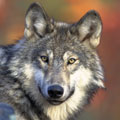
The arctic fox and wolves have short ears and a short snout to minimise surface area, hence minimise heat loss.


Thickness of insulating coat

Desert animals have thinner coats than animals in colder climates, which aids heat loss.

Animals living very cold climates have thick hairy coats to minimise heat loss, but the fur must be in good condition to trap insulating air and keep cold water away from the skin. The fur of animals like the arctic fox is an extremely good insulator and can survive at temperatures as low as -50oC. It has a long winter coat with thick dense under fur. Bears, similarly, have thick fur coats.


Amount of body fat

Desert animals have thin layers of body fat compared to animals in colder climates, which aids heat loss.

Animals in arctic regions have thick layers of insulating fat or blubber AND these also act as an important energy store - fat/blubber has a very high calorific value, useful in lean times and scarcity of food. eg seals, penguins, polar bears, whales


Camouflage

Desert animals have sand coloured coats which give good camouflage to minimise being seen and attacked by predators, it also the enables animal to a predator itself, prey becomes the hunter!

Arctic animals like polar bears have white fair to blend in with the icy/snowy background to increase the chances of a kill. Smaller white coated animals are less likely to seen and caught. The white arctic fox is a mean hunter!

Birds like the ptarmigan stand a better chance of survival from predators turning white in colour in winter, and brown in the summer, thereby blending into the landscape with the change in seasons


Key points - Summary of ideas

Based on the syllabus-specifications for students taking the AQA, Edexcel and OCR GCSE level biology examinations (~US grades 9-10).

Evolutionary Adaptations of Extremophile Animals

Extremophiles are organisms that thrive in extreme environments where most life forms would struggle to survive.

These environments include extreme temperatures, pressures, salinity, acidity, or radiation levels.

The adaptations of extremophile animals are crucial for their survival and have evolved over generations through natural selection.


Types of Adaptations

Adaptations can be classified into three main categories:

  1. Structural Adaptations – Physical features that help survival.

  2. Behavioural Adaptations – Actions or behaviours that improve survival chances.

  3. Physiological Adaptations – Internal processes that enhance survival.


Examples of Extremophile Animals and Their Adaptations

1. Polar Extremophiles (Arctic & Antarctic)

  • Example: Polar Bears (Ursus maritimus)

    • Thick fur and a layer of blubber for insulation.

    • Small surface area to volume ratio to minimise heat loss.

    • Large paws with rough pads for grip on ice.

    • White fur for camouflage in snowy environments.

  • Example: Emperor Penguins (Aptenodytes forsteri)

    • Dense feathers and a thick fat layer for insulation.

    • Huddle together to conserve heat (behavioural adaptation).

    • Males incubate eggs on their feet to protect them from the cold.


2. Deep-Sea Extremophiles (Hydrothermal Vents)

  • Example: Giant Tube Worms (Riftia pachyptila)

    • Lack a digestive system; rely on symbiotic bacteria for nutrition.

    • Red plume rich in haemoglobin to absorb oxygen and hydrogen sulfide.

    • Can withstand extreme pressure and temperatures.

  • Example: Anglerfish (Lophiiformes)

    • Bioluminescent lure to attract prey in pitch-black environments.

    • Large mouths and expandable stomachs to consume scarce food.

    • Sexual parasitism: males fuse to females for reproduction.


3. Desert Extremophiles

  • Example: Fennec Fox (Vulpes zerda)

    • Large ears to dissipate heat.

    • Nocturnal behaviour to avoid daytime heat.

    • Thick fur on paws to protect against hot sand.

  • Example: Kangaroo Rat (Dipodomys)

    • Highly efficient kidneys to produce concentrated urine.

    • Gains water from metabolic processes rather than drinking.

    • Burrows underground to escape extreme heat.


4. High-Salinity Extremophiles

  • Example: Brine Shrimp (Artemia)

    • Can tolerate high salt concentrations in water.

    • Specialised osmoregulatory mechanisms to balance salt levels.

    • Produces cysts that can survive extreme dehydration.


Evolutionary Mechanisms Behind Adaptations

  • Natural Selection: Traits that improve survival are passed on.

  • Mutation: Random genetic changes may lead to beneficial adaptations.

  • Genetic Drift: Changes in allele frequencies over time.

  • Speciation: Formation of new species due to extreme environmental pressures.


These adaptations allow extremophile animals to thrive in conditions that would be lethal to most other organisms.

Understanding these adaptations is crucial for biology students studying ecology and evolution.


Selected examples of more detailed notes on specific individuals or groups of particular animal or plant species adaptations (in alphabetical order) arctic fox * camel * fishes-general * hydrothermal vent organisms * lemurs * meerkats * mole * owls-general * penguins * polar bear * wasps * whales


WHAT NEXT?

TOP OF PAGE

Sub-index for evolution - adaptations biology notes

INDEX of all my BIOLOGY NOTES

HOME PAGE of Doc Brown's Science website

UK KS3 Science Quizzes for KS3 science students aged ~11-14, ~US grades 6, 7 and 8

BiologyChemistryPhysics UK GCSE level students aged ~14-16, ~US grades 9-10

Advanced Level Chemistry for pre-university age ~16-18 ~US grades 11-12, K12 Honors

Find your GCSE/IGCSE science course for more help links to all science revision notes

email doc brown - comments - query?


Explaining the importance of extremophile adaptations of animals in GCSE level biology, What you need to know about extremophile adaptations of animals for GCSE level biology, Explaining the use of extremophile adaptations of animals knowledge in GCSE level biology, Examples of extremophile adaptations of animals explained when studying GCSE level biology, What is the significance of extremophile adaptations of animals in GCSE level biology, describing and explaining the theory of extremophile adaptations of animals when studying GCSE level biology, revision notes for extremophile adaptations of animals in exams, online help for understanding extremophile adaptations of animals, exam revision notes for extremophile adaptations of animals, what do I need to learn about extremophile adaptations of animals? revision summary for extremophile adaptations of animals, learning notes for extremophile adaptations of animals, help to pass the extremophile adaptations of animals topic in an exam question, how to prepare for questions on extremophile adaptations of animals in a GCSE biology examination? Based on the syllabus-specifications for students taking the IGCSE/GCSE level biology examinations summary revision notes and key points on extremophile adaptations of animals for students taking the AQA igcse/gcse biology notes on extremophile adaptations of animals, Edexcel gcse biology notes on extremophile adaptations of animals,  OCR 21st century GCSE biology notes on extremophile adaptations of animals, OCR gateway GCSE biology notes on extremophile adaptations of animals, WJEC gcse biology notes on extremophile adaptations of animals, CCEA gcse biology notes on extremophile adaptations of animals for students taking CIE Cambridge igcse biology, or any other GCSE or IGCSE level biology exams notes on extremophile adaptations of animals, useful for US grade 9-10 biology courses


SITEMAP Website content © Dr Phil Brown 2000+. All copyrights reserved on biology revision notes, images, quizzes, worksheets etc. Copying of website material is NOT permitted. Exam revision summaries and references to science course specifications are unofficial.

TOP OF PAGE