|

 143k.
Doolin Pier, Doolin Ferry to
Arran Islands all on Wild Atlantic Way, Co. Clare, West of Ireland -
EXPLORING INISHMORE (Inis Mor) 143k.
Doolin Pier, Doolin Ferry to
Arran Islands all on Wild Atlantic Way, Co. Clare, West of Ireland -
EXPLORING INISHMORE (Inis Mor)[Author
&
photographer
©
Dr Phil Brown PhD
plus help from AI,
page updated Mar 25th 2026]
INDEX of sections on our Inishmore Trip

INDEX for Inishmore Trip
 1.
Doolin Pier for the Arran Islands Ferry 1.
Doolin Pier for the Arran Islands Ferry
2.
The boat trip to Kilronan Harbour on Inishmore Island
3.
Kilronan village, Inishmore
4.
The ancient stone fort of Dún Aonghasa
5.
Teampall Mich Duach (?)
6.
Na Seacht Teampaill (The Seven Churches) on Inishmore (Inis Mor)
7.
Some general landscape scenes on Inishmore
8.
The memorial
to the writer Liam O’Flaherty Memorial on Inishmore (Inis Mor)

1. Doolin Pier for the Arran Islands Ferry
On the Wild Atlantic Way is Doolin Pier for the ferry to
the Arran Islands
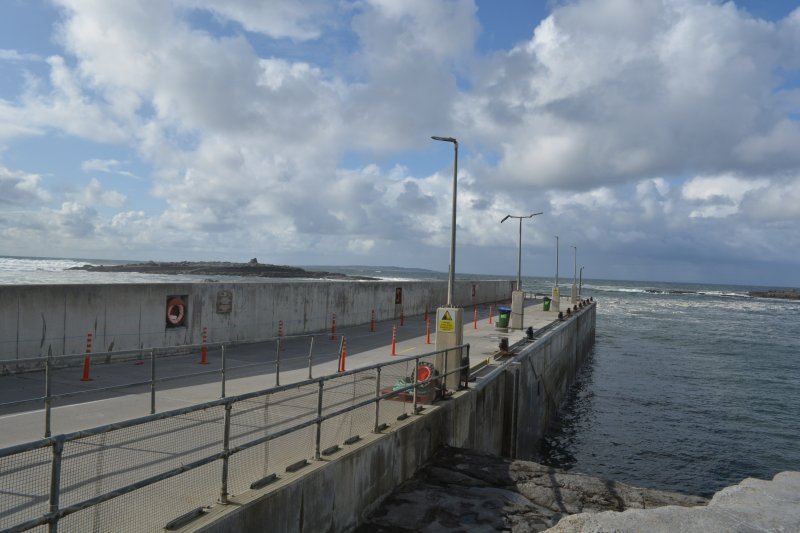
The relatively new pier of Doolin Pier Point for the
Doolin ferry to the Arran Islands and trips to the
Cliffs
of Moher. Doolin is a small,
lively village on Ireland’s west coast, famous as the gateway to the
Aran Islands and home to one of the country’s most important ferry
piers.
Its pier is the departure point for the fastest
crossings to the islands, with multiple daily sailings and short journey
times.
Overview of Doolin Village
Doolin sits in County Clare, just north
of the Cliffs of Moher, and is known for:
-
Traditional Irish music – its pubs
are legendary for nightly sessions.
-
Colourful cottages and a relaxed,
rural atmosphere.
-
Proximity to major attractions –
the Burren, the Cliffs of Moher, and the Aran Islands.
-
A long history as a fishing and ferrying
community.
It’s a compact village, but very popular with walkers,
cyclists, and visitors heading to the islands.
Doolin Pier: The Ferry Hub
Doolin Pier (Ballaghaline, just outside the village) is
the departure point for ferries to all three Aran Islands:
Two main operators run services from here, with modern,
fast boats.
Crossing Times
According to Doolin Ferry Co., the express services
take:
-
15 minutes to Inis Oírr
-
25 minutes to Inis Meáin
-
35 minutes to Inis Mór
Rome2Rio reports typical journey times of around
30 minutes, depending on destination and schedule.
Frequency & Timetables 2026
Ferries run multiple times per day,
especially in the main season (spring–autumn).
For example, O’Brien Ferries lists:
-
Inis Oírr departures: 10:00, 11:00,
13:00, 15:00
-
Inis Mór departures: 09:00, 11:00,
15:00
-
Cliffs of Moher cruises also run
from the pier at set times.
Services typically operate from late February to
early November.
What It’s Like at the Pier
Doolin Pier is a modern, functional harbour with:
-
A large car park
-
Ticket offices for the ferry
companies
-
Clear boarding areas
-
Views across to the Aran Islands and the Cliffs of
Moher - great views from the pier.
-
Easy access from the village (a short drive or a
20–25 minute walk)
It can get busy in peak season, so arriving early is
recommended.
Why People Sail from Doolin
-
Shortest sea crossing to the Aran
Islands
-
Ideal for
day trips
-
Option to combine with a
Cliffs of Moher
cruise
-
Access to island highlights such as Dún
Aonghasa, the Black Fort, and traditional
Irish-speaking communities
Many visitors choose Doolin over Galway because the
crossings are quicker and the village itself is a charming base.
If You’re Planning a Visit
Here’s a quick decision guide:
| Goal |
Best Option |
| Fastest crossing |
Inis Oírr from Doolin (15 minutes) |
| Full-day island exploration |
Inis Mór |
| Quiet, traditional island |
Inis Meáin |
| Combine islands + cliffs |
Ferry + Cliffs of Moher cruise |

Deposits of large blocks of 'geometric' stone to protect Doolin Pier
from the ravages of the Atlantic.

The coast cliff scenery of cliffs and Atlantic Ocean looking south from Doolin Pier,
looking south towards the Cliffs of Moher 5 miles away - fabulous views.


The coastal scenery south of Doolin Pier is very
atmospheric.

A rectangular swimming pool has been carved out of the
rocks near Doolin Pier.
2. The boat trip to Kilronan Harbour on Inishmore
Island
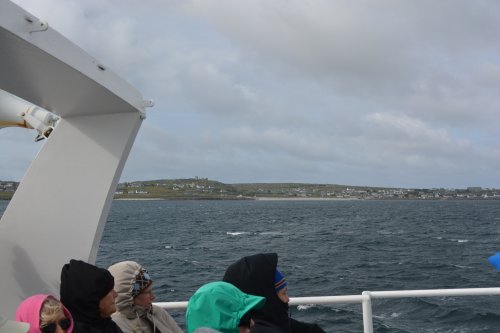
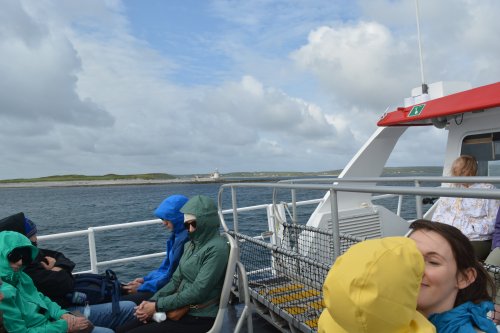
The boat trip from Doolin Pier on the Doolin Ferry to
Inishmore, passing by other islands before approaching Kilronan Harbour.
3. Kilronan, the main village on
Inishmore

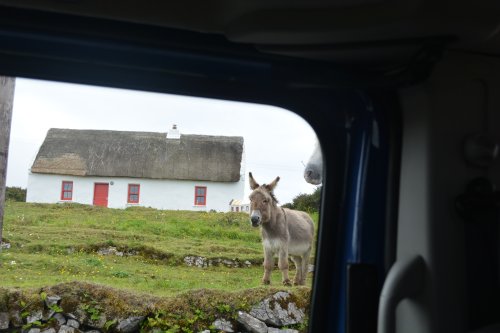
Left: Just beyond Kilronan are some
memorials to people who returned home to be buried on the island.
Right: One of the few traditional
restored cottages on Inishmore (Inis Mor)
Kilronan (Cill Rónáin) is the main village and
harbour on Inishmore (Inis Mór), the largest of the Aran Islands.
It’s the island’s transport hub, cultural
centre, and the place where most visitors first arrive—whether from
Doolin or Rossaveal.
Kilronan Village (Cill Rónáin)
Key Characteristics
-
Main settlement of Inishmore and
the island’s social and commercial centre.
-
Historically a fishing port, now
also the island’s primary tourism hub with
restaurants, pubs, shops, and accommodation.
-
Population: around 297 (2011
figure).
-
Irish-speaking (Gaeltacht) area
with strong traditional culture.
Atmosphere & Amenities
Kilronan is described as one of the most picturesque
spots in Ireland, with:
-
A white sandy beach beside the
village.
-
Seafood restaurants, traditional
Irish bars, and buskers.
-
A lively but relaxed feel—ideal for people‑watching
or using as a base to explore the island.
What’s in the Village?
-
Aran Sweater Market and other craft
shops.
-
Bike hire (the most popular way to
explore the island).
-
Tour operators offering
pony-and-trap tours, guided walks, and boat trips.
Kilronan Harbour
Location & Setting
-
Situated in Killeany Bay, on the
southeast side of Inishmore, facing Galway Bay.
-
The harbour is the main port for all ferries
serving the island from both Doolin (County Clare)
and Rossaveal (County Galway).
Harbour Features
-
Anchorage and visitor moorings
available.
-
Alongside berths possible in the
main harbour.
-
Lights and markers allow safe entry
at night.
-
Access at all tides—straightforward
navigation.
Shelter & Conditions
Kilronan is considered the only reliable haven
in the Aran Islands group. However:
-
Sheltered in moderate weather.
-
Exposed to the full fetch of Galway Bay,
making it untenable in strong north–east winds.
-
A north‑west gale can send a heavy
swell directly into the harbour.
Why Kilronan Matters
Transport Hub
-
All ferries land here, making it the island’s
gateway.
-
From the harbour, visitors can easily reach:
-
Dún Aonghasa (the famous
cliff‑edge fort)
-
The Wormhole (Poll na bPéist)
-
Kilmurvey Beach
-
The island’s network of stone-walled lanes and
cycle routes
Starting Point for Exploration
Inishmore is 12 km long and 3 km wide, with:
-
Labyrinths of limestone,
-
Stone walls,
-
Wildflowers (over 437 species),
-
Quiet beaches,
making it a paradise for walkers and cyclists.
Quick Reference Table
| Feature |
Details |
| Irish name |
Cill Rónáin (“Church of Ronan”) |
| Role |
Main village & ferry port of Inishmore |
| Harbour |
Only reliable haven in the Aran Islands; anchorage &
moorings available |
| Ferry connections |
Doolin (Co. Clare) & Rossaveal (Co. Galway) |
| Atmosphere |
Picturesque, lively, traditional music, seafood,
beachside setting |
| Population |
~297 (2011) |
If You’re Visiting from England
Given you’re based in northeast England, the most common
route is:
-
Fly to Shannon or Dublin,
-
Travel to Doolin or
Rossaveal,
-
Ferry to Kilronan.
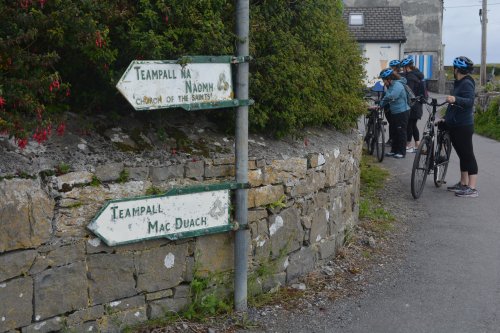
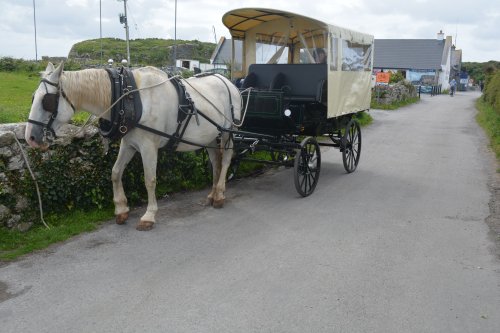
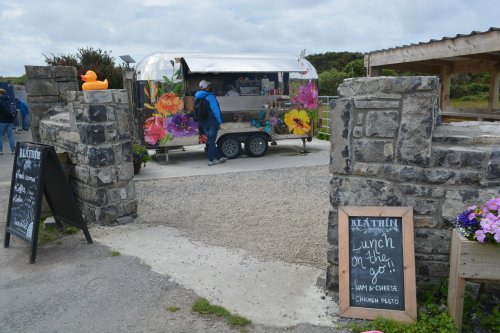
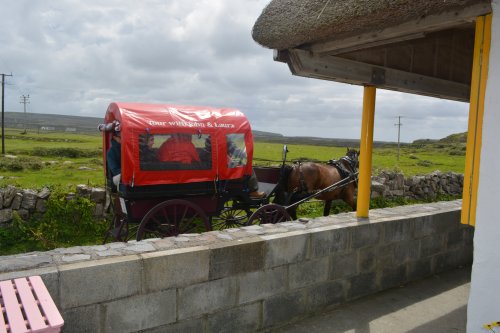
The village of Kilronan, which has many
visitors and the pony and trap tours always available.

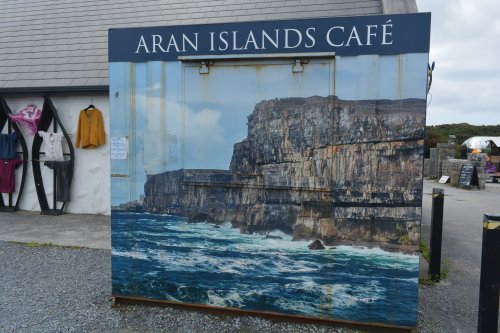
Lots of bicycles for hire by the Aran Islands Cafe, other
cafes around too.
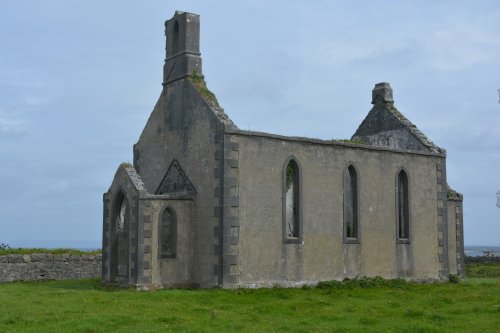
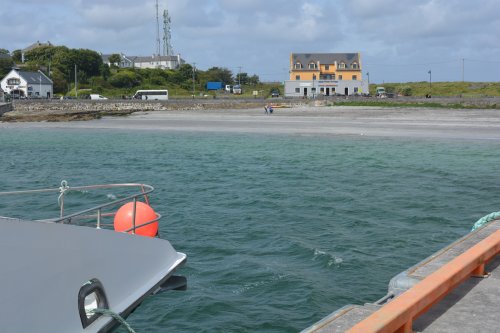
Left: Ruined church of ?
Right: The beach by Kilronan Harbour.
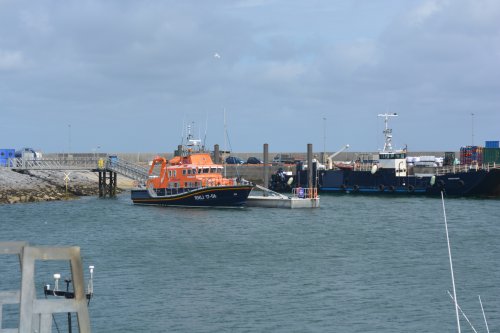
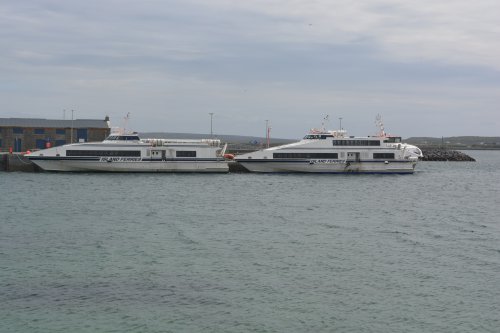
The RNLI lifeboat and the Doolin Ferry boats moored at
the quayside of Kilronan Harbour.

One the light passenger aircraft flying into Inishmore
(Inis Mor) from the
mainland.
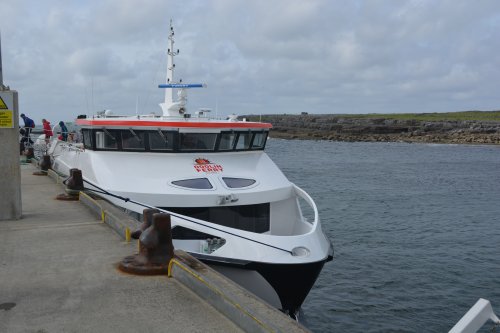
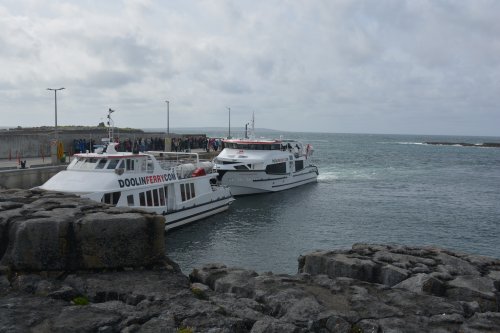
The ferryboat back in Doolin harbour
pier.
4. The ancient stone fort of Dún
Aonghasa
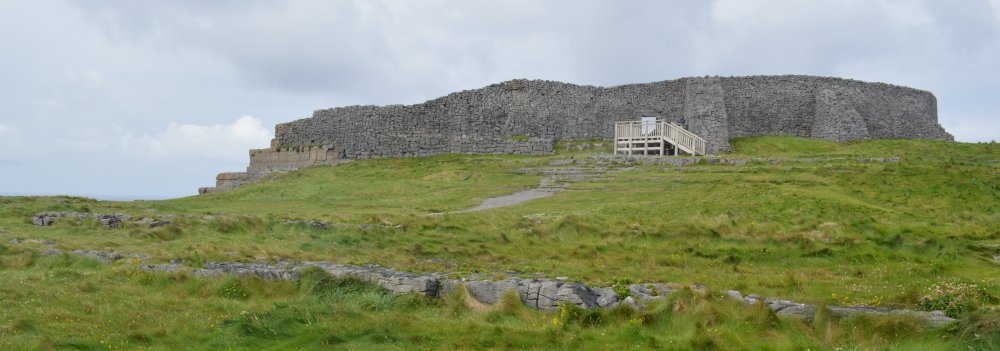
Dún Aonghasa (Dún Aengus) is one of the most spectacular
prehistoric monuments in Europe—a massive, semi‑circular stone fort
perched dramatically on a 100‑metre cliff edge on Inishmore.
Archaeology shows it was first enclosed around
1100 BC and developed through the Bronze Age, Iron Age, and early
medieval period, making it a centre of power, ritual, and settlement for
over two millennia.
Origins and Chronology
Earliest Activity (c. 1500–1100 BC)
-
Excavations by the Discovery Programme found
human activity on the hilltop from c. 1500 BC.
-
The first enclosure was created
around 1100 BC, using rubble piled against upright
stones to form an early defensive or ritual boundary.
Major Construction Phase (c. 800–500 BC)
-
The most dynamic period of the
fort’s history was around 800 BC, when it likely
served as the political, economic, and ritual centre
for a powerful kin‑group. Only elite members lived inside the fort.
-
Around 500 BC, the
triple‑wall defences on the western side were probably
constructed, creating the monumental form we see today.
Later Use (700 BC – AD 1000)
-
After 700 BC, the site’s importance
declined, with intermittent occupation over the
next thousand years.
-
The fort was remodelled in the early
medieval period, possibly around AD 800,
showing continued symbolic or strategic value.
Architecture and Defensive Features
Multi‑layered Stone Walls
-
Dún Aonghasa consists of concentric stone
enclosures, the largest covering 6 hectares.
-
The walls are built of local limestone, using
dry‑stone construction typical of Atlantic European hillforts.
Chevaux‑de‑Frise (Stone Spikes)
-
One of its most remarkable features is the
chevaux‑de‑frise—a dense band of upright, jagged limestone
slabs set into the ground outside the outer walls.
-
These acted as anti‑cavalry and
anti‑infantry obstacles, making approach extremely
difficult.
Cliff‑Edge Position
-
The fort’s iconic semi‑circular shape is due to its
placement on a 100‑metre cliff, with the sea
forming an impregnable defence on one side.
-
Erosion has removed part of the original enclosure,
meaning the fort once extended further seaward.
Who Built It? (Myth & Interpretation)
Legendary Associations
Scholarly Theories
-
T. F. O’Rahilly suggested it was built by the
Builg after the Laginian conquest of
Connacht in the 2nd century BC.
-
Archaeology, however, shows the site’s origins are
much earlier, rooted in the Late Bronze Age.
Excavations and Research
Key Excavation Findings
The Western Stone Forts Project
Function and Significance
Defensive Stronghold
Ritual & Political Centre
Symbolic Power
Summary Table
| Aspect |
Details |
| Earliest activity |
c. 1500 BC |
| First enclosure |
c. 1100 BC |
| Major construction |
c. 800–500 BC |
| Later use |
Intermittent to AD 1000 |
| Materials |
Local limestone, dry‑stone walls |
| Defences |
Triple walls, chevaux‑de‑frise, cliff edge |
| Function |
Elite centre, ritual site, stronghold |
| Modern status |
National Monument; major archaeological site |
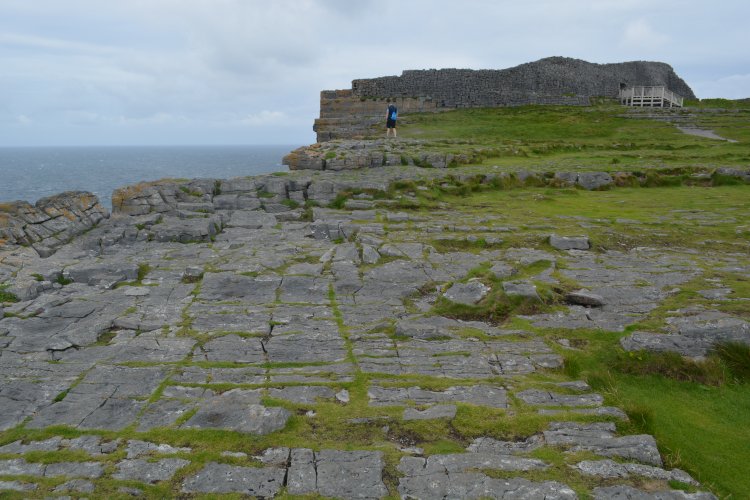
The limestone plateau on which
Dún Aonghasa (Dún Aengus)
stone fort was built on Inishmore (Inis Mor).


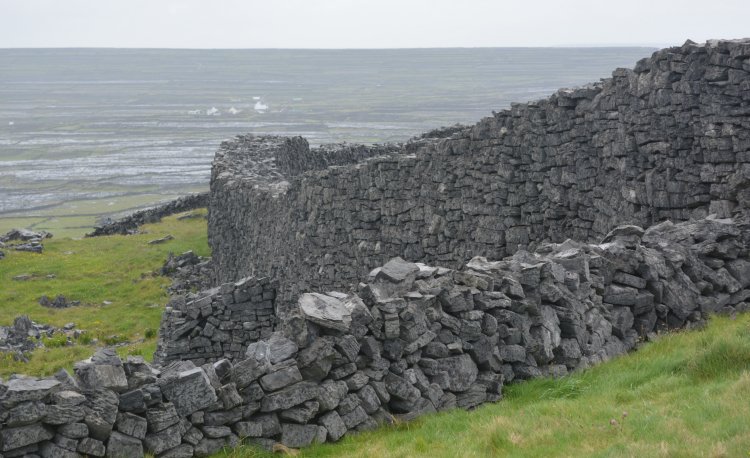
The thick stone walls of
Dún Aonghasa (Dún Aengus).
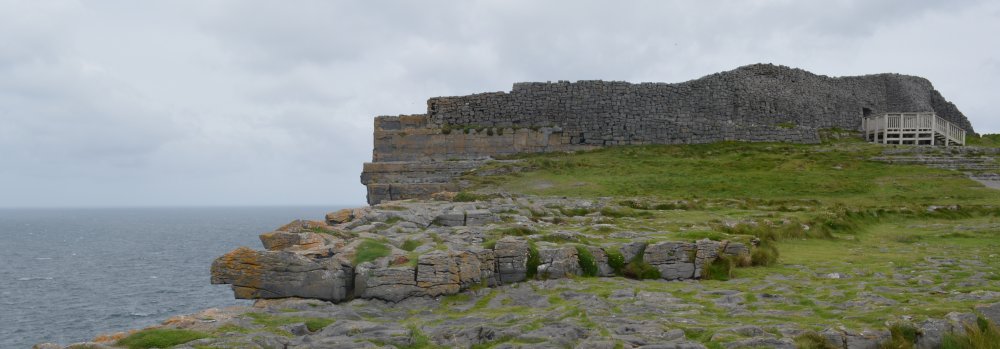


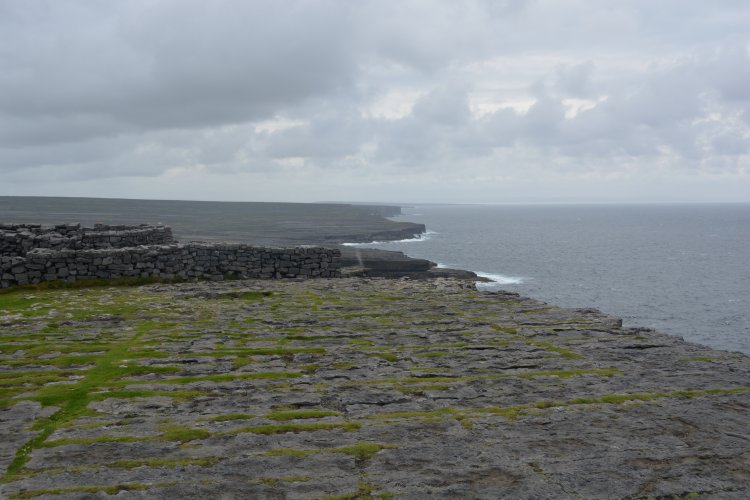
The view down the coast towards the mainland, from the
ramparts of
Dún Aonghasa (Dún Aengus).
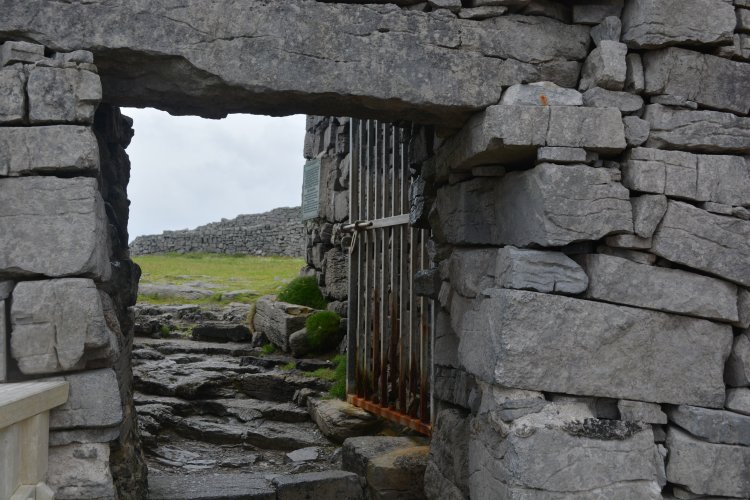
The entrance to
Dún Aonghasa (Dún Aengus)
stone fort
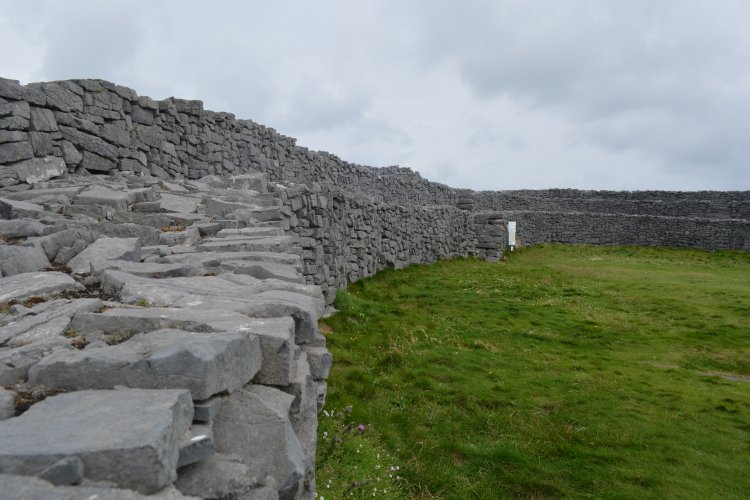
The internal rampart of the main stone
wall of
Dún Aonghasa (Dún Aengus).
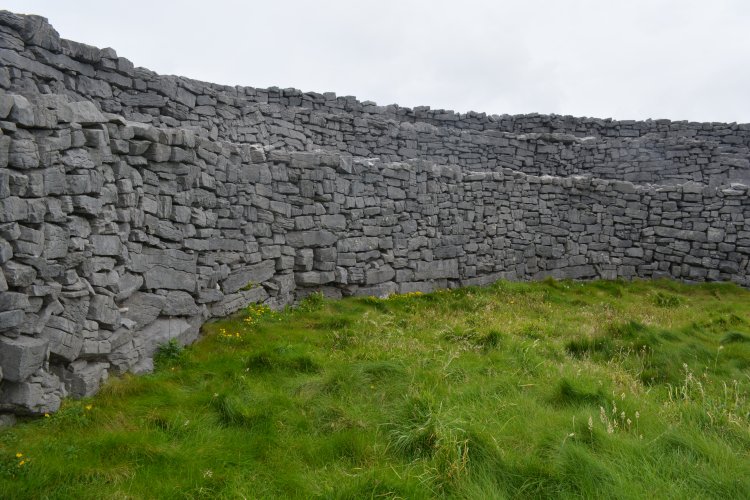
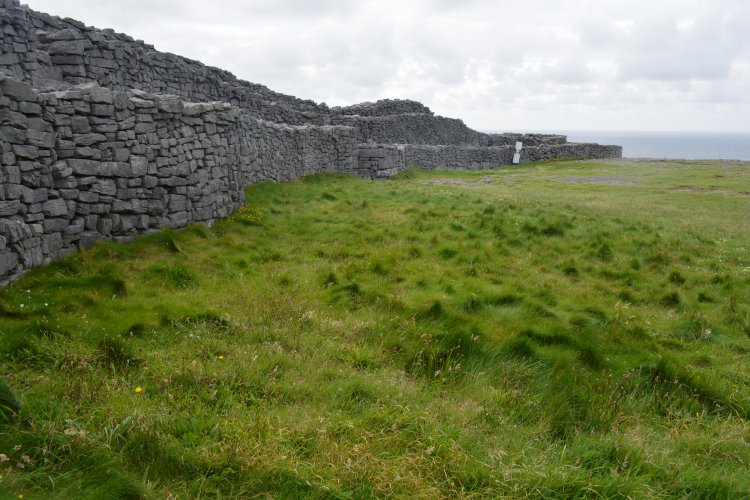
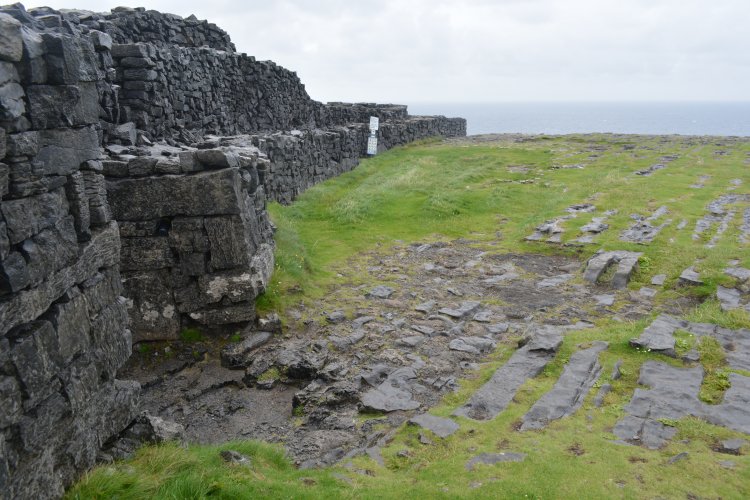

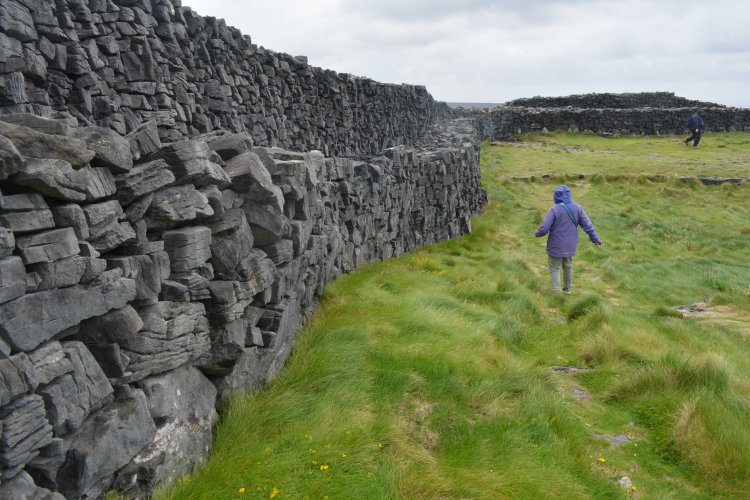
Above and below: The two inner walls of
Dún Aonghasa (Dún Aengus).

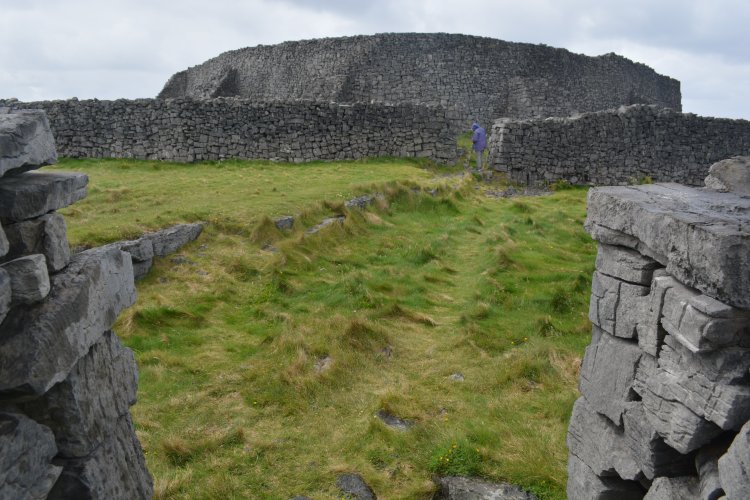
Looking towards the two inner walls from a gap in the
3rd outer stone wall of
Dún Aonghasa (Dún Aengus).


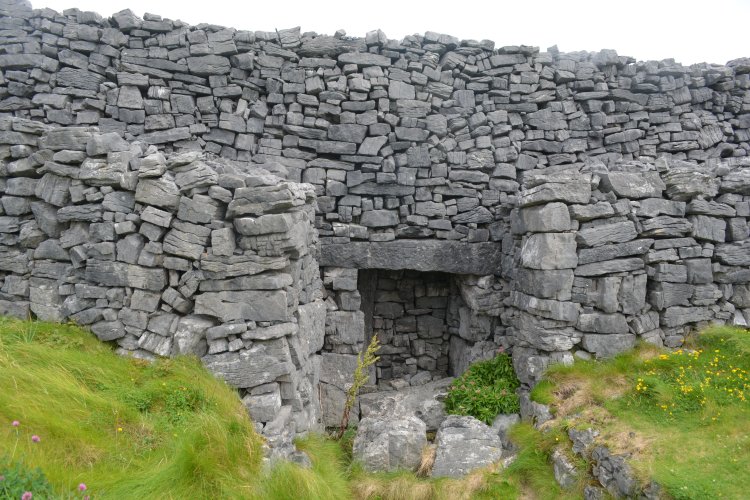
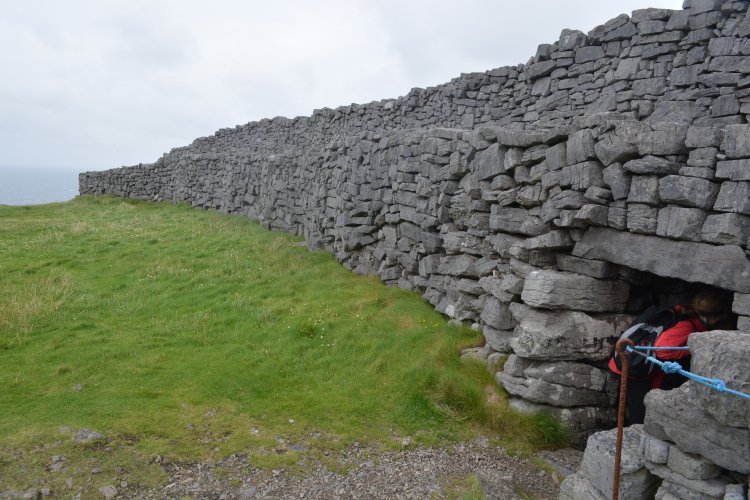
A souterrain in the inner wall of
Dún Aonghasa (Dún Aengus),
used for food storage or a safe refuge.
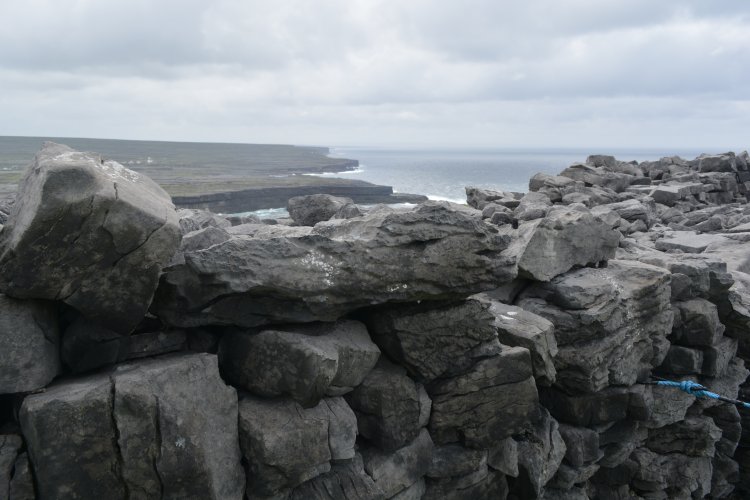
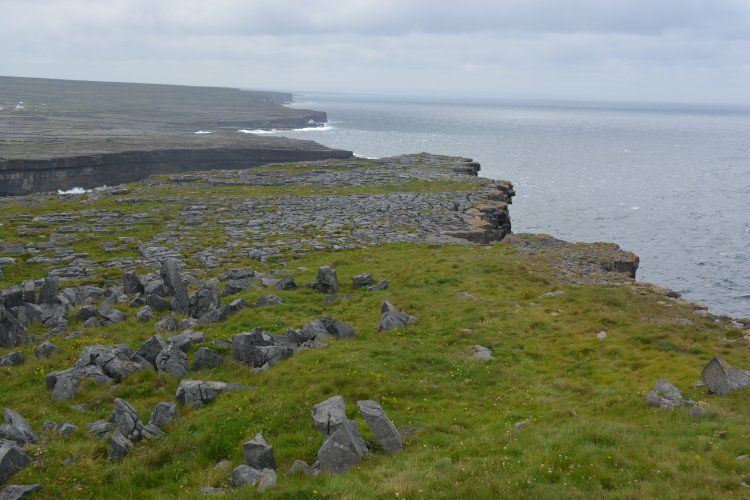
5. Teampall Mich Duach, Inishmore (Inis
Mor)
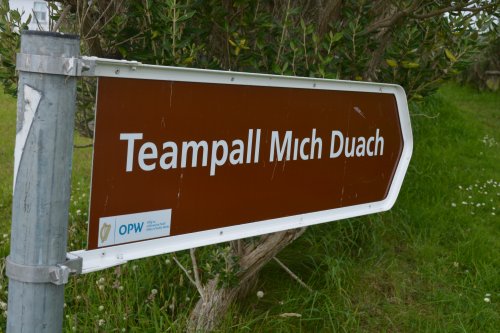
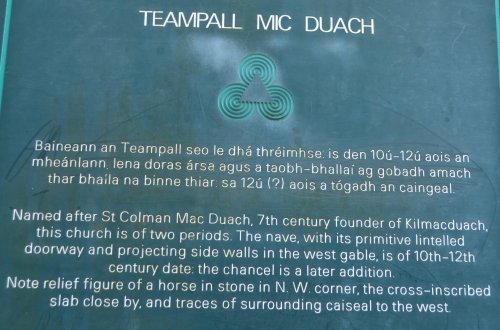
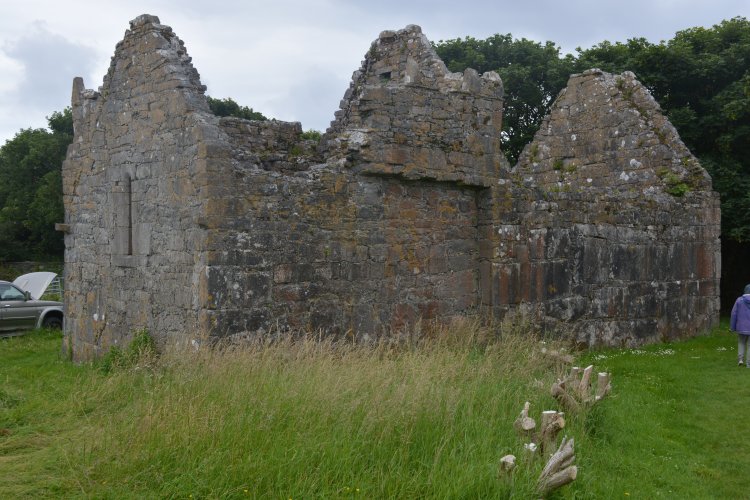
Teampall Mhic Duach (St Mac Duach’s Church) is
one of the oldest and most atmospheric early Christian sites on
Inishmore.
It is an early medieval church—likely 8th to
11th century—dedicated to St Colmán Mac Duach, a major monastic founder
in Connacht.
The surviving structure preserves classic early
Irish stone‑church features, local folklore, and unique carved stones.
Below is a clear, evidence‑based synthesis of its
history, origin, archaeology, and legends, grounded in
the most authoritative sources.
Citations appear throughout.
1. Origins and Dedication
St Colmán Mac Duach
-
The church is dedicated to Colmán Mac Duach,
a 7th‑century saint who founded the major monastery at
Kilmacduagh, Co. Galway.
-
He is said to have been a student of St
Éanna, the great monastic founder of the Aran Islands.
Date of Construction
Different sources give slightly different ranges, but
all agree it is early medieval:
-
Possibly 8th–9th century (Aran
Islands Official Guide).
-
11th century (Heritage Ireland).
-
Nave 10th–12th century, with a
later chancel (Geograph).
This suggests:
-
An early core (8th–9th century),
-
Major rebuilding in the 10th–12th
century,
-
Later additions to the chancel.
2. Architectural Features
Teampall Mhic Duach is a classic example of early Irish
stone‑church construction.
Key Features
-
Massive dry‑stone masonry, typical
of early medieval Aran churches.
-
Inclined jambs on the doorway—an
iconic feature of pre‑Romanesque Irish churches.
-
Two‑phase construction:
-
Cross‑inscribed pillar stone
standing west of the church.
-
A carved stone on the outer north wall
showing an animal with a long body and bushy tail—locally believed
to be a horse.
Setting
-
Located in Kilronan village, within
the grounds of Kilmurvey House B&B (the modern
village grew around several early ecclesiastical sites).
-
Part of a cluster of early Christian remains in the
area.
3. Historical Context
Early Christian Aran
The Aran Islands were a major centre of monastic
learning from the 5th century onward. Saints such as:
Teampall Mhic Duach fits into this landscape as:
-
A satellite church linked to the
wider monastic network,
-
Possibly serving a local monastic community
or hermitage,
-
Later becoming a parish or devotional site
in the medieval period.
4. Folklore and Legends
The church is associated with a vivid local legend:
The Trapped Scotsman
This story reinforces the church’s sacred status
and the belief in divine protection over holy sites.
5. Archaeological Significance
Although no large‑scale excavation has been carried out,
the site is archaeologically important because:
It preserves:
-
Early medieval church architecture
in near‑original form.
-
Multiple construction phases,
showing continuity of worship.
-
Carved stones and cross pillars,
typical of early Irish devotional practice.
-
Evidence of local craftsmanship,
especially in the doorway and carved animal stone.
National Monument Status
This protects the site and confirms its national
historical importance.
6. Summary Table
| Feature |
Details |
| Name |
Teampall Mhic Duach (Church of St Mac Duach) |
| Location |
Kilronan village, Inishmore |
| Dedication |
St Colmán Mac Duach (7th century) |
| Earliest construction |
Possibly 8th–9th century |
| Major building phase |
10th–12th century (nave) |
| Later additions |
Medieval chancel |
| Architectural features |
Inclined jambs, massive masonry, carved animal stone,
cross pillar |
| Status |
National Monument (OPW) |
| Folklore |
Scotsman trapped by the lintel stone |
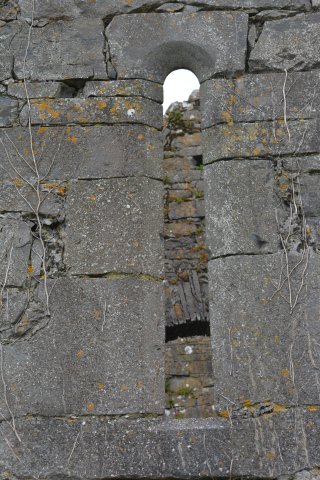

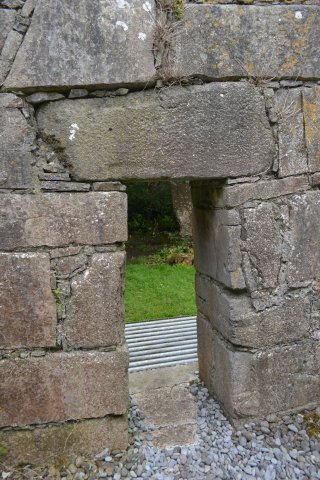
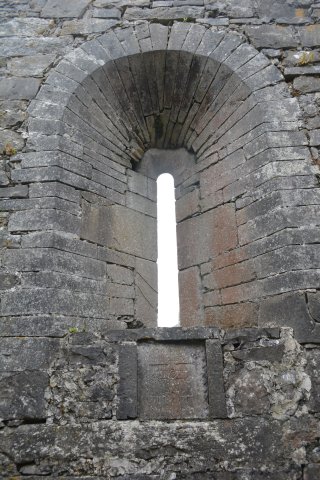
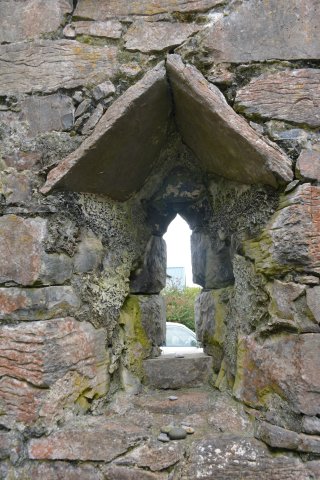
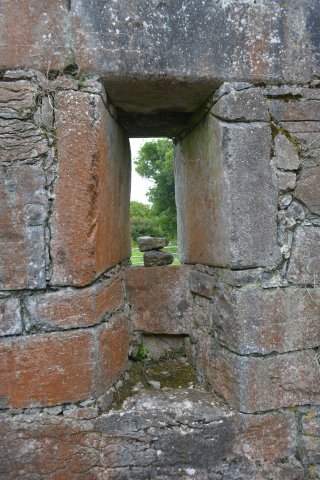
Some of the surviving architectural features of the
church Teampall Mich Duach, the curved features are Romanesque style.
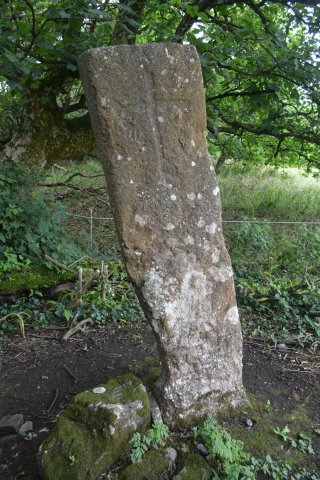 An ancient cross near the entrance to Teampall Mich Duach
6.
Na Seacht Teampaill (The Seven Churches) an ancient Christian church site
on Inishmore

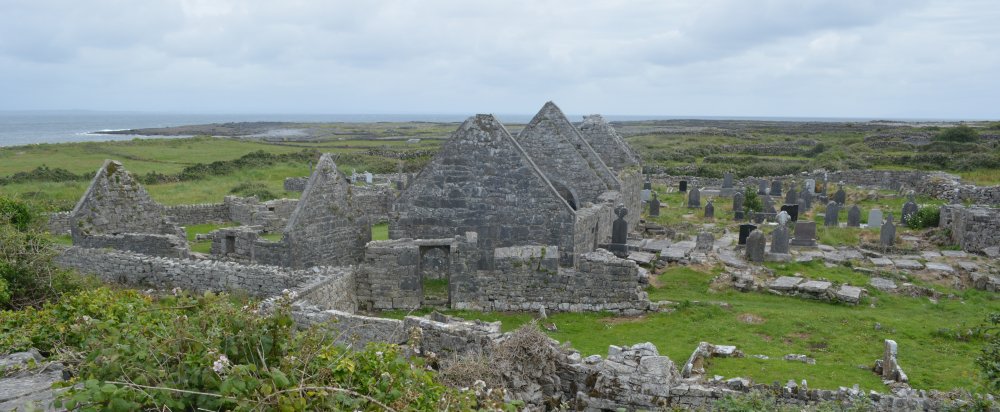
Here’s a clear, authoritative,
archaeology‑focused account of Na Seacht Teampaill (The
Seven Churches) on Inishmore, drawing directly from the most
reliable sources available.
This is one of the most important early Christian
monastic sites on the Aran Islands and a major medieval pilgrimage
centre.
What Na Seacht Teampaill Really Is
Despite the name, “The Seven Churches” is not a
group of seven churches.
It is a large early medieval monastic settlement
containing two churches and a cluster of monastic
dwellings, crosses, gravestones, and ancillary buildings.
The name “Seven Churches” likely refers to the
seven pilgrimage churches of Rome, signalling the site’s
importance as a pilgrimage destination.
1. Origins and Founding Saint
St Brecan (Bhreacáin)
-
The site is also known as Dísert Bhreacáin,
meaning “Brecan’s hermitage”.
-
St Brecan is believed to have
arrived on Inishmore in the late 5th or early 6th century,
around the same time as St Enda, the island’s most
famous monastic founder.
-
Tradition says Brecan’s foundation rivalled
St Enda’s, and the two saints eventually agreed to
divide the island between them.
This places the origins of the site firmly in the
early Christian period, when the Aran Islands were a
major centre of monastic learning.
2. The Two Surviving Churches
A. Teampall Bhreacáin (St Brecan’s Church)
The main and largest structure on the site.
Chronology
Key Features
-
Massive stone masonry.
-
A large nave and chancel.
-
An impressive stone arch.
-
An inscribed stone in the west gable reading:
“OR AR 11 CANOIN” – “Pray for the two canons.”
Burial of St Brecan
A stone fragment near the church marks the
traditional burial place of St Brecan.
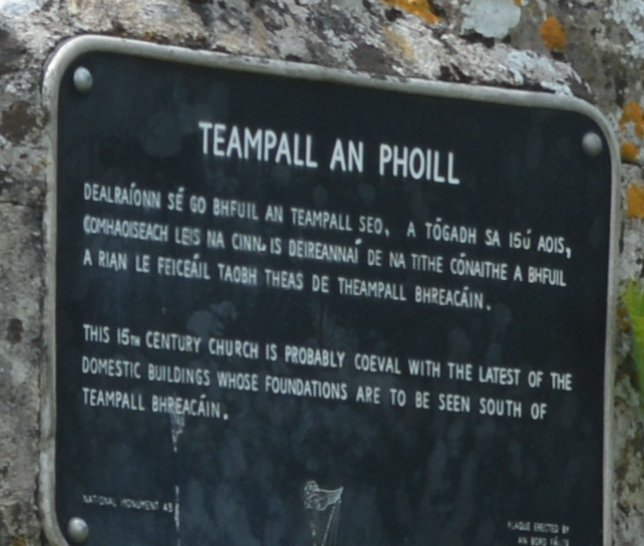
B. Teampall an Phoill
3. Other Structures in the Complex
The site contains a rich cluster of early Christian and
medieval features:
Monastic Dwellings
Clochán (Beehive Hut)
Holy Well
Graveyard and Crosses
-
Numerous early gravestones.
-
Four inscribed stone pillars, the
oldest on the site, marking graves.
-
Remains of two high crosses, one
within the monastic enclosure and one in a nearby field.
4. Importance as a Pilgrimage Centre
For centuries, Na Seacht Teampaill was one of
the largest monastic foundations and pilgrimage destinations on
Ireland’s west coast.
Pilgrims travelled here to:
The name “Seven Churches” may reflect this
pilgrimage tradition, echoing the seven‑church circuit of Rome.
5. Archaeological Significance
The site is a major example of:
-
Early monastic settlement planning
-
Multi‑phase church construction
-
Dry‑stone architecture
-
Inscribed stones and early Christian grave
markers
It preserves over 1,000 years of religious
activity, from the 5th/6th century to the late medieval period.
It is now a state‑owned National Monument
under the care of the Office of Public Works.
6. Location and Setting
Summary Table
| Feature |
Details |
| Irish name |
Na Seacht Teampaill / Dísert Bhreacáin |
| Founding saint |
St Brecan (late 5th–early 6th century) |
| Main church |
Teampall Bhreacáin (8th–13th century) |
| Second church |
Teampall an Phoill (15th century) |
| Other structures |
Clochán, holy well, domestic buildings, crosses,
graveyard |
| Function |
Major monastic centre and pilgrimage site |
| Status |
National Monument (OPW) |
| Location |
Eoghanacht, western Inishmore |

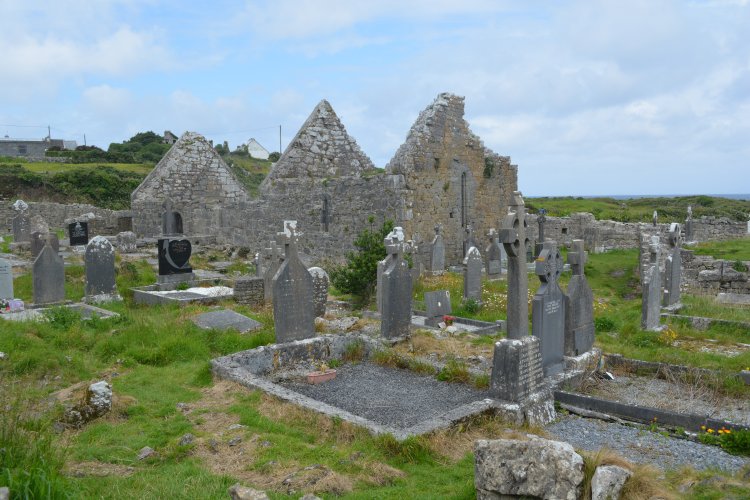
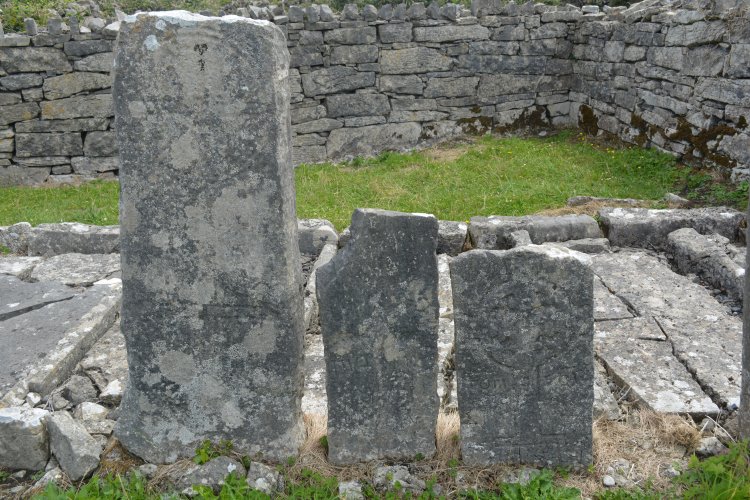
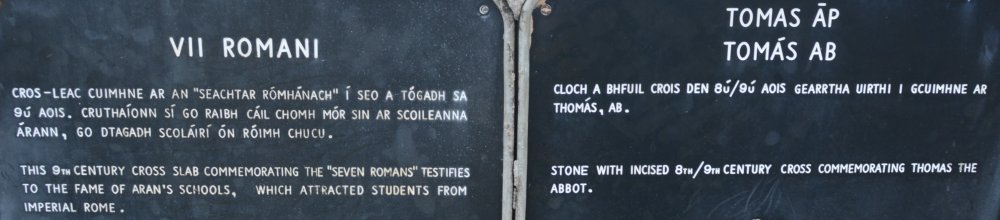
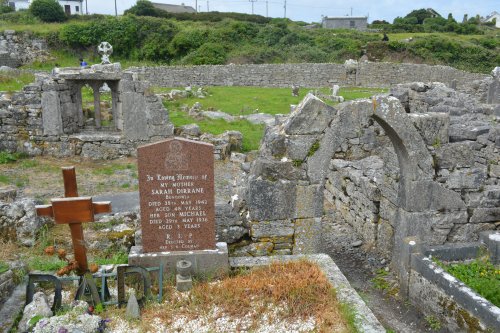

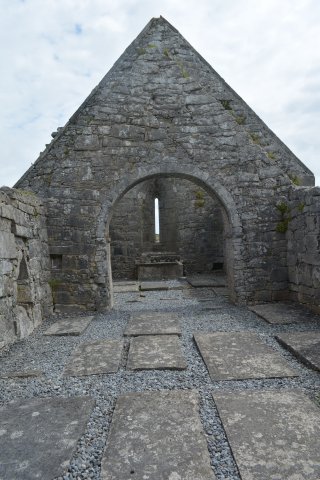
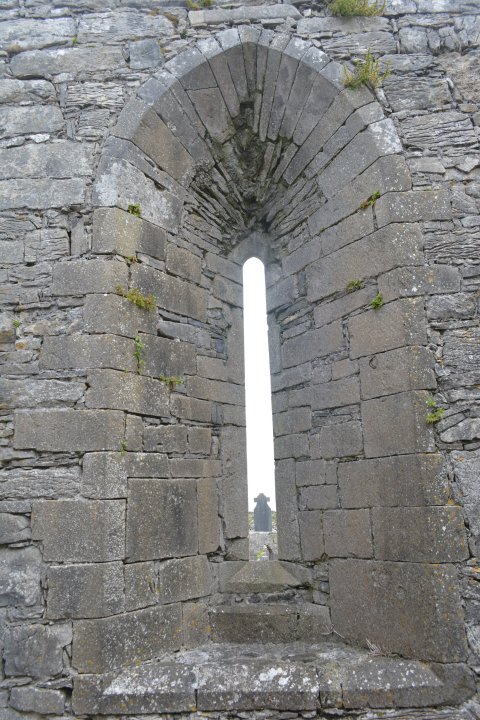
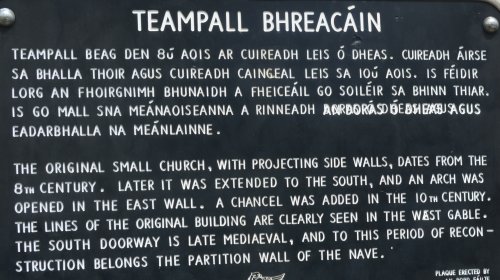 The church Teampall Bhreacáin (St Brecan’s Church)

The church
Teampall an Phoill.
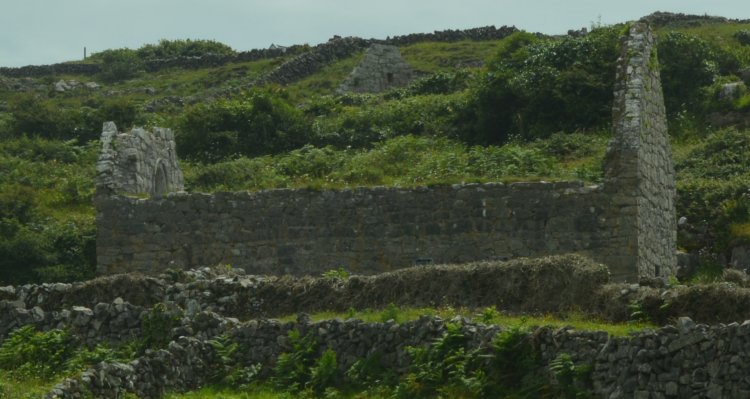
Another ancient church ? on the road beyond the 'Seven
Churches'.
7.
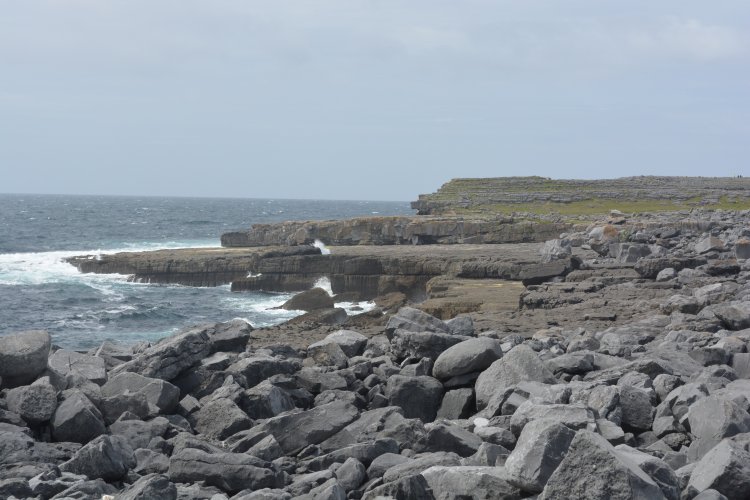
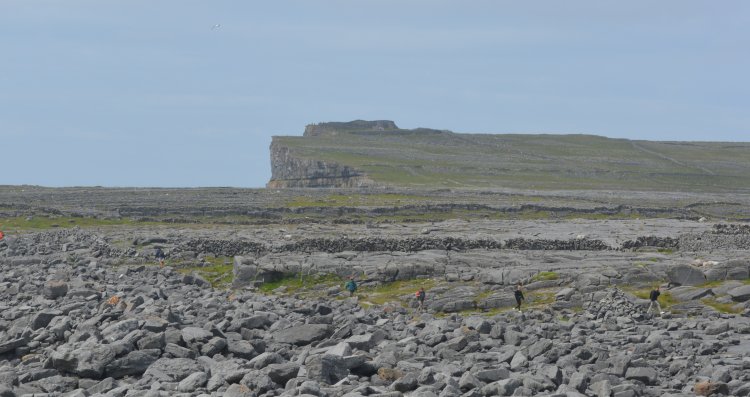
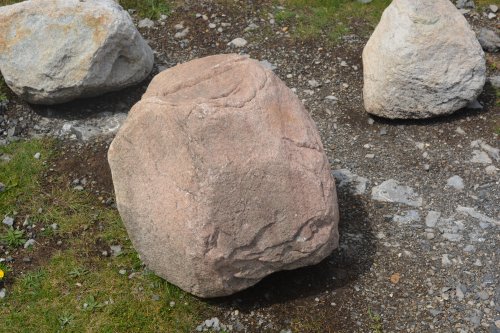
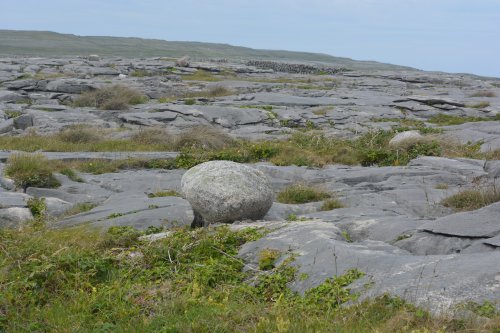
Some general landscape scenes on Inishmore (Inis Mor)
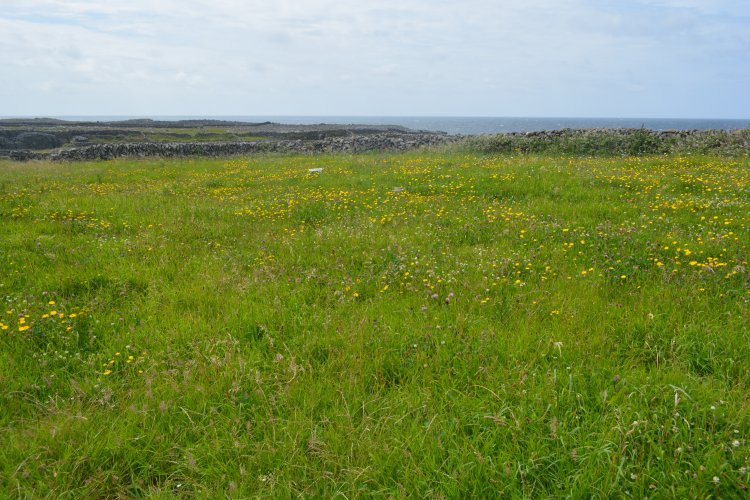
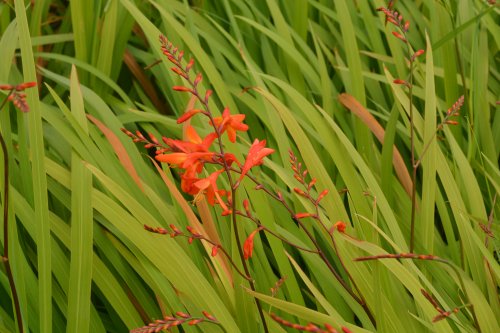
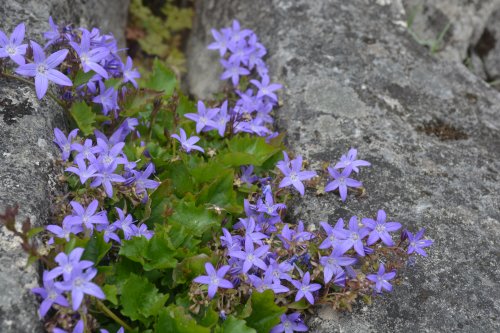
Lush fields of wild flowers on the limestone landscape of
Inishmore (Inis Mor),

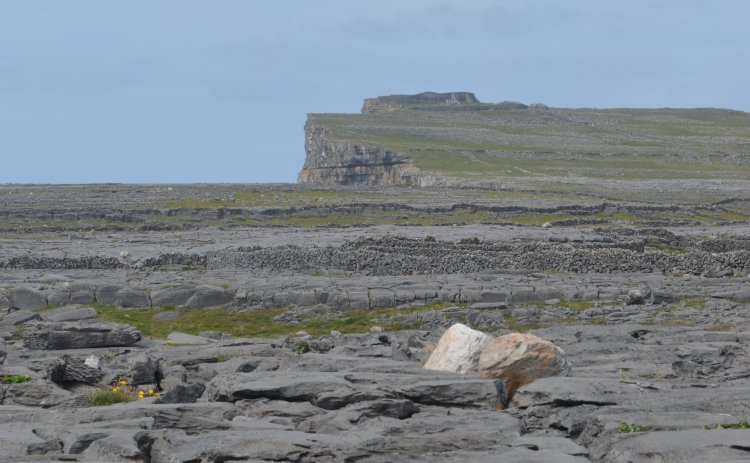
The numerous limestone walls enclosing the small fields
of Inishmore (Inis Mor).

8. The memorial
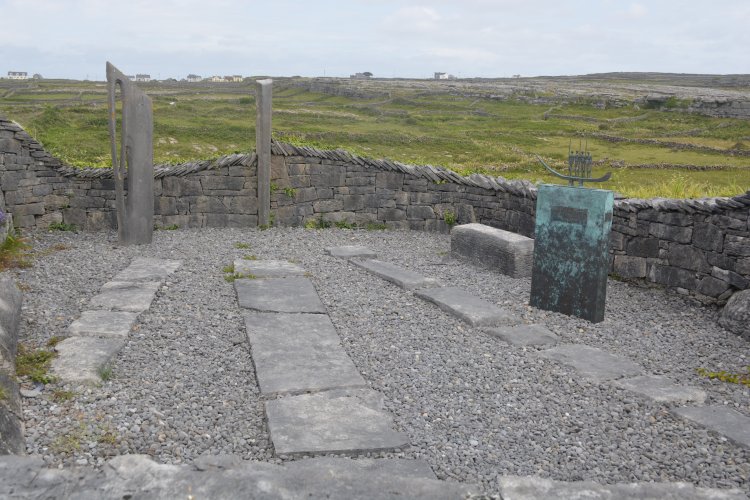
to the writer Liam O’Flaherty Memorial on Inishmore (Inis Mor)
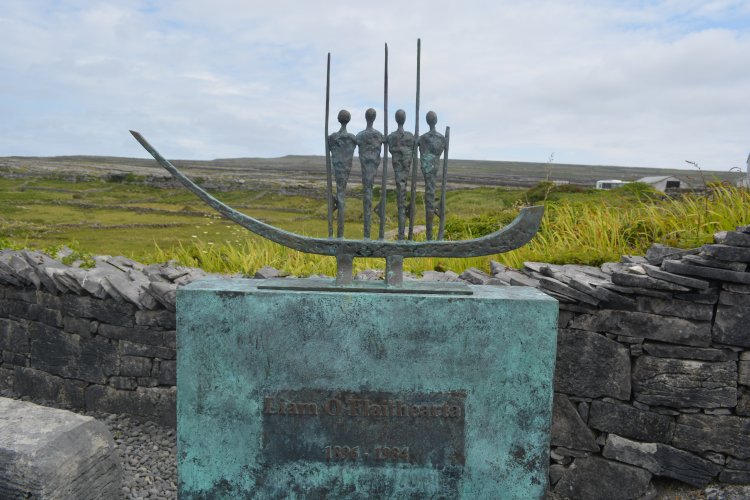
Here’s a clear, well‑sourced, archaeology‑minded
account of the Liam O’Flaherty Memorial on Inishmore,
drawing directly from the most reliable information available from the
search results.
What the Liam O’Flaherty Memorial Is
The Liam O’Flaherty Memorial on Inishmore is a
commemorative marker honouring the island’s most famous literary son,
the novelist and short‑story writer Liam O’Flaherty (1896–1984).
It celebrates his contribution to Irish literature and his deep
connection to the Aran Islands, where he was born.
Who Was Liam O’Flaherty?
-
Born 28 August 1896 in Gort na
gCapall, Inishmore.
-
A leading figure of the Irish Literary
Renaissance, known for his socialist, realist, and
modernist writing.
-
Author of The Informer, The Sniper,
Famine, The Black Soul, and many short stories
rooted in Aran life.
-
Cousin of film director John Ford.
-
Died in 1984 in Dublin.
His writing is steeped in the landscape,
hardship, and character of the Aran Islands, making the
memorial a culturally significant site for visitors.
Location & Setting
The memorial stands on Inis Mór (Inishmore),
the largest of the Aran Islands, close to the area where O’Flaherty was
born.
It is typically visited as part of walking or cycling routes across the
island.
The setting is intentionally simple and reflective—very
much in keeping with the stark, elemental landscape that shaped his
writing.
What the Memorial Looks
Like
While the search results do not
provide a detailed physical description, the memorial is generally known
to be:
-
A stone and bronze
plaque‑style monument
-
Set in the open landscape of
Inishmore
-
Marking O’Flaherty’s
birthplace and commemorating his literary legacy
It is often included in cultural
and heritage guides to the island.
Why the Memorial Matters
1. Literary Significance
O’Flaherty is one of Ireland’s most important
20th‑century writers. His works capture:
His short story The Stone even inspired modern
research into traditional Aran lifting stones.
2. Cultural Identity
The memorial anchors O’Flaherty’s legacy in the
landscape that shaped him—an important act of cultural preservation for
the Aran community.
3. Heritage Tourism
It forms part of the island’s broader heritage trail,
alongside:
Visiting the Memorial
The memorial is outdoors and freely accessible.
Summary Table
| Aspect |
Details |
| Honours |
Liam O’Flaherty (1896–1984), novelist & short‑story
writer |
| Location |
Inis Mór, near his birthplace |
| Significance |
Literary heritage, cultural identity, island history |
| Associated works |
The Informer, The Sniper, Famine,
The Stone |
| Landscape context |
Open Aran limestone terrain; part of walking routes |


docspics images photos of
Doolin Pier, Co. Clare, Wild Atlantic Way, West Coast of Ireland © Phil
Brown Tourist information on Doolin Pier, Co. Clare, Wild Atlantic Way,
West Coast of Ireland, Walks near Doolin Pier, Co. Clare, Wild Atlantic
Way, West Coast of Ireland, Having holidays near
Doolin Pier, Co. Clare, Wild Atlantic Way, West Coast of Ireland, Ireland, Top tourist attractions near
Doolin Pier, Co. Clare, Wild Atlantic Way, West Coast of Ireland, luxury hotels near
Doolin Pier, Co. Clare, Wild Atlantic Way, West Coast of Ireland,
self-catering holiday cottages near Doolin Pier, Co. Clare, Dún Aonghasa
stone fort, ancient churches, Teampall Mich Duach, Na Seacht Teampaill
(The Seven Churches), memorial to writer Liam O’Flaherty, Wild
Atlantic Way, West Coast of Ireland, airbnb air B and B near Doolin
Pier, Co. Clare, Wild Atlantic Way, West Coast of Ireland,
good B&B near Doolin Pier, Co. Clare, Wild Atlantic Way, West Coast
of Ireland, friendly pubs near Doolin Pier, Co. Clare, Wild Atlantic
Way, West Coast of Ireland, cafes near Doolin Pier, Co. Clare, Wild
Atlantic Way, West Coast of Ireland, eating out
in fine restaurants near Doolin Pier, Co. Clare, Dún Aonghasa stone
fort, ancient churches, Teampall Mich Duach, Na Seacht Teampaill (The
Seven Churches), memorial to writer Liam O’Flaherty, Wild Atlantic Way, West
Coast of Ireland, weekend breaks near Doolin Pier, Co. Clare, Wild
Atlantic Way, West Coast of Ireland, wining & dining
weekends near Doolin Pier, Co. Clare, Wild Atlantic Way, West Coast of
Ireland, walking holidays around Doolin Pier, Co. Clare, Wild Atlantic
Way, West Coast of Ireland, touring coach tours
including Doolin Pier, Co. Clare, Dún Aonghasa stone fort, ancient
churches, Teampall Mich Duach, Na Seacht Teampaill (The Seven Churches),
memorial to writer Liam O’Flaherty, Wild Atlantic Way, West Coast of
Ireland, pretty villages near Doolin Pier, Co. Clare, Wild Atlantic Way,
West Coast of Ireland, historic towns and pretty
village near Doolin Pier, Co. Clare, Wild Atlantic Way, West Coast of
Ireland, museums near Doolin Pier, Co. Clare, Wild Atlantic Way, West
Coast of Ireland, local art galleries near Doolin Pier, Co. Clare, Wild
Atlantic Way, West Coast of Ireland, guided
walks from Doolin Pier, Co. Clare, Wild Atlantic Way, West Coast of
Ireland, excellent fell hill walking around Doolin Pier, Co. Clare, Dún
Aonghasa stone fort, ancient churches, Teampall Mich Duach, Na Seacht
Teampaill (The Seven Churches), memorial to writer Liam O’Flaherty, Wild
Atlantic Way, West Coast of Ireland, rambling near
Doolin Pier, Co. Clare, Wild Atlantic Way, West Coast of Ireland, exploring the landscape near
Doolin Pier, Co. Clare, Wild Atlantic Way, West Coast of Ireland, good places to eat near
Doolin Pier, Co. Clare, Wild Atlantic Way, West Coast of Ireland,
tourist attractions near Doolin Pier, Co. Clare, Wild Atlantic Way, West
Coast of Ireland, tourist information for places near Doolin Pier, Co.
Clare, Wild Atlantic Way, West Coast of Ireland,
good places for wining and dining near Doolin Pier, Co. Clare, Wild
Atlantic Way, West Coast of Ireland, good walks near Doolin Pier, Co.
Clare, Wild Atlantic Way, West Coast of Ireland,
properties for sale near Doolin Pier, Co. Clare, Wild Atlantic Way, West
Coast of Ireland, renting a flat or house near Doolin Pier, Co. Clare,
Wild Atlantic Way, West Coast of Ireland, property
for rent near Doolin Pier, Co. Clare, Dún Aonghasa stone fort, ancient
churches, Teampall Mich Duach, Na Seacht Teampaill (The Seven Churches),
memorial to writer Liam O’Flaherty, Wild Atlantic Way, West Coast of
Ireland, houses for sale near Doolin Pier, Co. Clare, Wild Atlantic Way,
West Coast of Ireland, lettings near Doolin Pier, Co. Clare, Wild
Atlantic Way, West Coast of Ireland, places
to rent near Doolin Pier, Co. Clare, Inishmore (Inis Mor) on the Wild Atlantic Way, West Coast of
Ireland, holiday cottage accommodation near Doolin Pier, Co. Clare, Wild
Atlantic Way, West Coast of Ireland docspics images photos of Doolin
Pier, Co. Clare, Wild Atlantic Way, West Coast of Ireland ©
Phil Brown Tourist information on Doolin Pier, Co. Clare, Wild Atlantic
Way, West Coast of Ireland, Things to do in Doolin Pier, Co. Clare, Wild
Atlantic Way, West Coast of Ireland, What to see
in Doolin Pier, Co. Clare, Wild Atlantic Way, West Coast of Ireland, guided walks in
Doolin Pier, Co. Clare, Wild Atlantic Way, West Coast of Ireland, weekend breaks in
Doolin Pier, Co. Clare, Wild Atlantic Way, West Coast of Ireland holidays in
Doolin Pier, Co. Clare, Wild Atlantic Way, West Coast of Ireland, Top
tourist attractions in Doolin Pier, Dún Aonghasa stone fort, ancient
churches, Teampall Mich Duach, Na Seacht Teampaill (The Seven Churches),
memorial to writer Liam O’Flaherty, Co. Clare, Wild Atlantic Way, West
Coast of Ireland, luxury hotels in Doolin Pier, Co. Clare, Wild Atlantic
Way, West Coast of Ireland, self-catering holiday
cottages in Doolin Pier, Co. Clare, Wild Atlantic Way, West Coast of
Ireland, airbnb air B and B in Doolin Pier, Co. Clare, Wild Atlantic
Way, West Coast of Ireland, good B&B in Doolin Pier, Co. Clare, Wild
Atlantic Way, West Coast of Ireland, friendly pubs in
Doolin Pier, Co. Clare, Wild Atlantic Way, West Coast of Ireland, cafes in
Doolin Pier, Co. Clare, Wild Atlantic Way, West Coast of Ireland, eating out in fine restaurants in
Doolin Pier, Co. Clare, Wild Atlantic Way, West Coast of Ireland, bargain
holiday breaks in Doolin Pier, Co. Clare, Wild Atlantic Way, West Coast
of Ireland, wining & dining weekends in Doolin Pier, Co. Clare, Wild
Atlantic Way, West Coast of Ireland, touring coach
tours visiting Doolin Pier, Co. Clare, Wild Atlantic Way, West Coast of
Ireland, pretty areas in Doolin Pier, Co. Clare, Wild Atlantic Way, West
Coast of Ireland, historic buildings, Dún Aonghasa stone fort, ancient
churches, Teampall Mich Duach, Na Seacht Teampaill (The Seven Churches),
memorial to writer Liam O’Flaherty, in Doolin Pier, Co. Clare, Wild
Atlantic Way, West Coast of Ireland,
visiting museums in Doolin Pier, Co. Clare, Wild Atlantic Way, West
Coast of Ireland, local art galleries in Doolin Pier, Co. Clare, Wild
Atlantic Way, West Coast of Ireland, guided walks in
Doolin Pier, Co. Clare, Wild Atlantic Way, West Coast of Ireland,
Inishmore (Inis Mor), history of
Doolin Pier, Co. Clare, Wild Atlantic Way, West Coast of Ireland, architecture of
Doolin Pier, Co. Clare, Wild Atlantic Way, West Coast of Ireland, historic houses in
Doolin Pier, Co. Clare, Inishmore (Inis Mor) on the Wild Atlantic Way, West Coast of Ireland, historic
churches in Doolin Pier, Co. Clare, Wild Atlantic Way, West Coast of
Ireland, information centre in Doolin Pier, Co. Clare, Wild Atlantic
Way, West Coast of Ireland, heritage places in Doolin Pier, Co. Clare,
Wild Atlantic Way, West Coast of Ireland, good places to eat in Doolin
Pier, Co. Clare, Wild Atlantic Way, West Coast of Ireland,
top tourist
attractions in Doolin Pier, Co. Clare, Wild Atlantic Way, West Coast of
Ireland, tourist information
for things to do and see in Doolin Pier, Co. Clare, Wild Atlantic Way,
West Coast of Ireland, good places to eat out in Doolin Pier, Co. Clare,
Wild Atlantic Way, West Coast of Ireland, good
places to walk to in Doolin Pier, Co. Clare, Wild Atlantic Way, West
Coast of Ireland, tourist attractions properties for sale
in Doolin Pier, Co. Clare, Wild Atlantic Way, West Coast of Ireland, renting a
flat of house in Doolin Pier, Co. Clare, Wild Atlantic Way, West Coast
of Ireland, property for rent in Doolin Pier, Co. Clare, Wild Atlantic
Way, West Coast of Ireland, houses for sale in Doolin Pier, Co. Clare,
Wild Atlantic Way, West Coast of Ireland,
lettings in Doolin Pier, Co. Clare, Wild Atlantic Way, West Coast of
Ireland, places to rent in Doolin Pier, Co. Clare, Wild Atlantic Way,
West Coast of Ireland, Dún Aonghasa stone fort, ancient churches,
Teampall Mich Duach, Na Seacht Teampaill (The Seven Churches), memorial
to writer Liam O’Flaherty, holiday cottage accommodation in Doolin Pier, Co.
Clare, Wild Atlantic Way, West Coast of Ireland, things to see on
Inishmore (Inis Mor), Dún Aonghasa stone fort, ancient churches,
Teampall Mich Duach, Na Seacht Teampaill (The Seven Churches), memorial
to writer Liam O’Flaherty |


 Enter Irish place, heritage site, feature, walk, town, village, city, museum, historic building,
mountain, island, walk, anything of interest in Ireland!
Enter Irish place, heritage site, feature, walk, town, village, city, museum, historic building,
mountain, island, walk, anything of interest in Ireland!