|
KILKENNY TOWN, County Kilkenny, Scenes form Ireland
63a. Kilkenny Castle & Kilkenny Design Centre,
Butler House and the medieval Butler Tower
tourist attractions
[Author
and photographer
©
Dr Phil Brown PhD
plus notes help from AI these days, page updated
May 20th 2026]
Some extra notes on these locations
Email:
chem55555@hotmail.com

SCENES
from IRELAND - County Kilkenny
63a.
Kilkenny Castle and Design
Centre 63b.
Rothe House *
63c.
Kilkenny Cathedral * 63d.
The 'Black Abbey'
63e.
St Mary's Medieval Mile Museum * 63f
St
Mary's Catholic Cathedral
*
 *
*
Kilkenny Castle
Kilkenny Castle dates from the 12th century but much remodelled in
Victorian times and set in extensive parkland open to the public.
Kilkenny Castle was the seat of the Butler family.
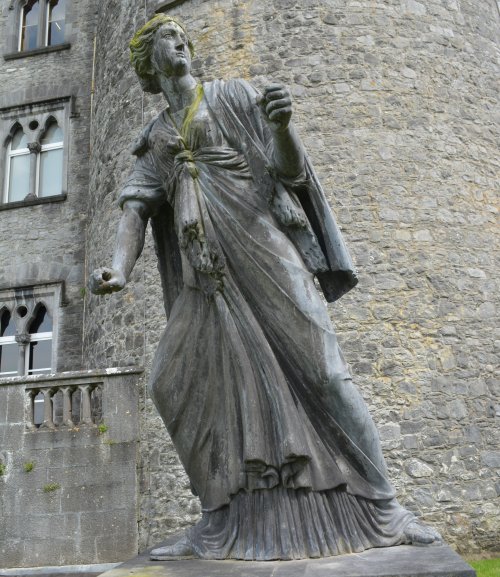
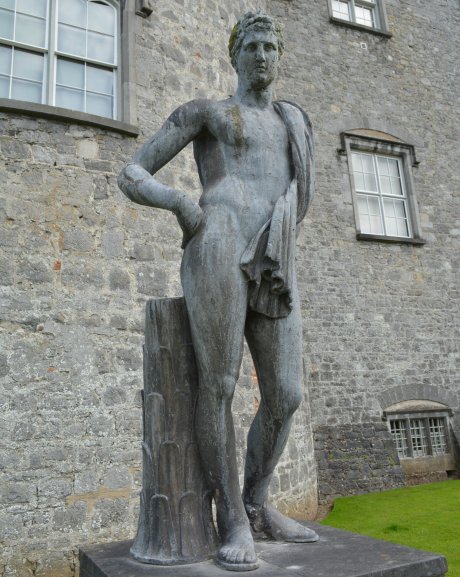
Statues in the grounds of Kilkenny Castle.
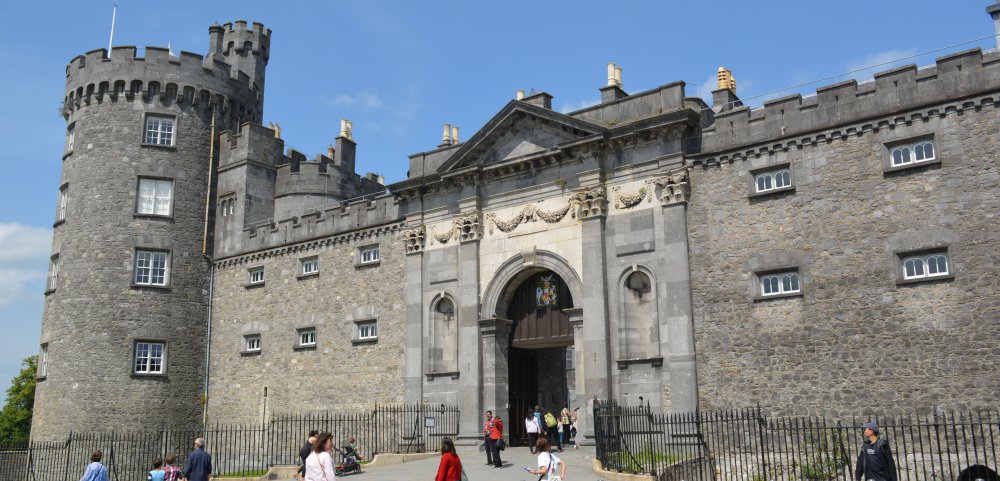
The main entrance to Kilkenny Castle


The entrance to Kilkenny Castle.

The inner courtyard of Kilkenny Castle.
TOP OF PAGE


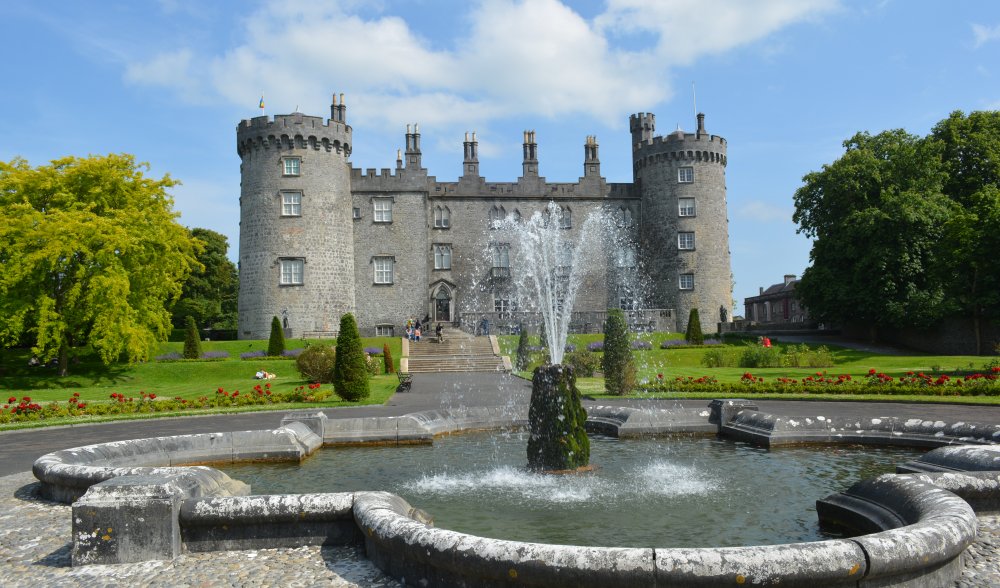
Part of the garden grounds of Kilkenny Castle.


The great fountain in the gardens of Kilkenny Castle.
TOP OF PAGE


The Butler Gallery (free entry, you pay for the Kilkenny Castle
tour) and the adjacent Castle Tea Room cafe
The work of Eamon O'Kane

The River Nore below Kilkenny Castle.
TOP OF PAGE
Kilkenny Design Centre and Galleries

Castle Yard of Kilkenny Design Centre, Kilkenny

The Kilkenny Design Centre is opposite Kilkenny Castle.
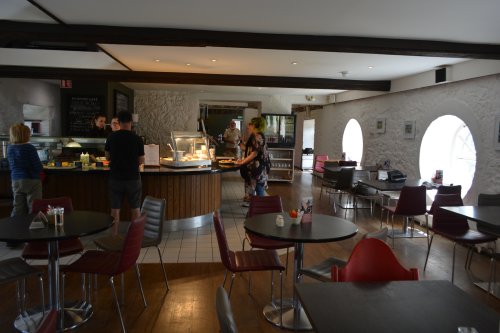
Some of the shops and cafe in the Kilkenny Design Centre,
Kilkenny.
TOP OF PAGE
-
TOP OF PAGE

Butler House and Gardens, beyond the Kilkenny Design Centre, but the front is in Patrick Street
The history of Butler House
(adapted from Wikipedia): Butler House is an 18th-century Georgian Dower
house located in Kilkenny, Ireland. It is currently working as a 4-star
hotel and conference centre. Butler House was built so that it was completed
by 1786 as the Dower house for Kilkenny Castle. It was built by Walter
Butler, 16th Earl of Ormonde for his wife to live in when their son John
Butler, 17th Earl of Ormonde inherited the title. The first occupant was
Lady Eleanor Butler, though it isn't certain if she and her husband moved in
before his death. Her son John was the 17th Earl, who regained the title and
re-energised the family fortunes, and her daughter, Eleanor was one of the
Ladies of Llangollen. James Butler, 1st Marquess of Ormonde lived in the
house while he was doing significant reconstruction work on the Castle 1831.
A local cholera epidemic in 1832 meant that the family used the house as the
site of a soup kitchen. The house was substantially extended about this time
as well. The Royal Historical and Archaeological Association of Ireland, now
the Royal Society of Antiquaries of Ireland, was homed in the house in the
1870s. The house was refurbished in the 1970s by the Kilkenny Design
Workshops which had taken over the Castle yard and house in 1965. In 1989
the house was opened as a hotel and conference centre and is owned and
managed by the Kilkenny Civic Trust. The gardens were restored to their
previous glory in 2000. Architecturally it is a classic Georgian three-bay
three-storey over basement house with a pair of three full-height bowed bays
to the east side of the house facing into the walled garden which backs onto
the Castle Yard and stables to Kilkenny Castle. The hotel retained many of
the historic characteristics including the well-preserved rooms.
 
On the right the front entrance to Butler House, Kilkenny.
 
The
Butler Tower and a 'bit of wall', once part of the defences of medieval
Kilkenny.
TOP OF PAGE
More on the
history of Kilkenny Castle (adapted from Wikipedia)
Kilkenny Castle (Irish: Caisleán Chill Chainnigh) is a castle in Kilkenny,
Ireland built in 1195 to control a fording-point of the River Nore and the
junction of several routes. It was a symbol of Norman occupation and in its
original thirteenth-century condition it would have formed an important
element of the defences of the town with four large circular corner towers
and a massive ditch, part of which can still be seen today on the Parade.
The property was transferred to the people of Kilkenny in 1967 for £50[1]
and the castle and grounds are now managed by the Office of Public Works.
The gardens and parkland adjoining the castle are open to the public. The
Parade Tower is a conference venue. Awards and conferring ceremonies of the
graduates of "Kilkenny Campus" of National University of Ireland, Maynooth
have been held there since 2002. Kilkenny Castle has been an
important site since Richard de Clare, 2nd Earl of Pembroke, commonly known
as Strongbow constructed the first castle, probably a wooden structure, in
the 12th century. The Anglo-Normans had established a castle in 1173,
possibly on the site of an earlier residence of the Mac Giolla Phádraig
kings of Osraighe. Kilkenny formed part of the lordship of Leinster, which
was granted to Strongbow. Strongbow’s daughter and heiress, Isabel married
William Marshall in 1189. The Earl Marshall owned large estates in Ireland,
England, Wales and France and managed them effectively. He appointed
Geoffrey fitz Robert as seneschal of Leinster and so began a major phase of
development in Kilkenny, including the construction of Kilkenny Castle and
the agreement of rents and privileges with burgesses or citizens of the
borough. The first stone castle on the site, was completed in 1213. This was
a square-shaped castle with towers at each corner; three of these original
four towers survive to this day
James Butler, 3rd Earl of Ormonde, bought the castle in 1391 and established
himself as ruler of the area. The powerful Butler family were to be the
owners of the castle for over 500 years. In 1967 James Arthur Butler, 6th
Marquess of Ormonde, sold Kilkenny Castle to Kilkenny Castle Restoration
Committee for £50 after a period of neglect.
Kilkenny Castle is the signature symbol of the Mediaeval city. The Kilkenny
Castle Restoration Committee handed the castle over to the State, and it has
since been refurbished and is open to visitors. There are ornamental gardens
on the city side of the castle, and extensive land and gardens to the front.
It has become one of the most visited tourist sites in Ireland. Now a
property in state care. Part of the National Art Gallery is on display in
the castle.
A potted history: Richard de Clare (also known as Strongbow) and other
Norman knights came to Kilkenny in 1172, the high ground beside the River
Nore was as an ideal site on which to build a wooden tower. He built a
wooden castle of the type known as motte-and-bailey.
This strategic site was where the local Kings of Osraige had their chief
residence before the Norman invasion. Twenty years later, de Clare's
son-in-law, William Marshal, Earl of Pembroke, built the first stone castle
on the site, of which three towers still remain. The castle was owned by the
seneschal of Kilkenny Sir Gilbert De Bohun who inherited the county of
Kilkenny and castle from his mother in 1270, in 1300 he was outlawed by
Edward I but was reinstated in 1303, he held the castle until his death in
1381. It was not granted to his heir Joan, but seized by the crown and sold
to the Butler family.
The Castle became the seat to a very powerful family, the Butlers of
Ormonde. The Butler family (who changed their name from FitzWalter in 1185)
arrived in Ireland with the Norman invasion. They originally settled in
Gowran where James Butler, 3rd Earl of Ormonde built Gowran Castle in 1385.
The family had become wealthy and James bought Kilkenny Castle in 1391 and
established himself as ruler of the area. The Butler dynasty then ruled the
surrounding area for centuries. Many of the family, including James, 3rd
Earl of Ormonde are buried in St. Mary's Collegiate Church Gowran.
Among the many notable members of the Butler family was Lady Margaret Butler
(c. 1454 or 1465–1539) the Irish noblewoman, the daughter of Thomas Butler,
7th Earl of Ormond. Lady Margaret Butler was born in Kilkenny Castle. She
married Sir William Boleyn and was the paternal grandmother of Anne Boleyn,
second wife of King Henry VIII of England.
By the 18th century, the castle had become run down, reflecting the failing
fortunes of the Butler family. However, some restoration was carried out by
Anne Wandesford of Castlecomer, who brought wealth back into the family upon
marrying John Butler, 17th Earl of Ormonde. In the 19th century, the Butlers
then attempted to restore it to its original medieval appearance, also
rebuilding the north wing and extending the south curtain wall. More
extensions were added in 1854. In 1904, King Edward VII of the United
Kingdom of Great Britain and Ireland and his wife Queen Alexandra visited
Kilkenny Castle.
In the 20th century the Castle continued to be the principal seat of the
Marquesses of Ormonde and their families until 1919, when James Butler, 3rd
Marquess of Ormonde died. As Lord Ormonde had only two daughters, it was
agreed that in order to reduce the double-taxation of the estate that his
brother and heir, Arthur Butler, 4th Marquess of Ormonde would forgo his
inheritance in favour of his son, George Butler, 5th Marquess of Ormonde who
used the courtesy title 'Earl of Ossory'. Lord and Lady Ossory took up
residence in the Castle in 1921, with their children Antony, Viscount
Thurles and Lady Moyra Butler. In the 1920s and 30s, the succession of the
title and estates seemed secure, with three generations of direct male heirs
still living. In 1938, Arthur, George and Antony Butler agreed to resettle
the Trust in which the estates were held.
George Butler, Earl of Ossory and his family remained living in the castle
until 1935, when they sold its contents for £6,000, moved to London, and
abandoned it for thirty years. The impact of rising taxes, death duties,
economic depression and living costs had taken their toll. While the
Ormondes had received £22,000 in rental income in the 1880s, investment
income in the 1930s was in the region of £9,000 and by 1950 these
investments yielded only £850. They disposed of the bulk of their tenanted
estates in Tipperary and Kilkenny, 21,000 acres (85 km²), by 1915 for
£240,000. Death duties and expenses following the death of James Butler, 3rd
Marquess of Ormonde in 1919 amounted to £166,000.
Antony Butler, Viscount Thurles died unexpectedly in 1940, and therefore
after the death of the 4th Marquess in 1943 and the 5th Marquess in 1949,
the estate was inherited by Arthur Butler, 6th Marquess and 24th Earl of
Ormonde. In 1967, this Lord Ormonde sold the abandoned and deteriorating
castle to the Castle Restoration Committee for a ceremonial £50, with the
statement: "The people of Kilkenny, as well as myself and my family, feel a
great pride in the Castle, and we have not liked to see this deterioration.
We determined that it should not be allowed to fall into ruins. There are
already too many ruins in Ireland." He also bought the land in front of the
castle from the trustees "in order that it should never be built on and the
castle would be seen in all its dignity and splendour". The handover
ceremony also marked the foundation of The Butler Society,[5] a still
thriving organisation that connects, preserves and unites a family once
dominant in the British Isles. Mick Jagger and Marianne Faithfull turned up
at the castle hand over party, with Jagger telling the newspapers "We just
came to loon about."
In the Confederate Ireland of the 17th century, the castle came into the
hands of Elizabeth Preston, wife of then Lord Lieutenant of Ireland, another
James Butler, also 12th Earl and 1st Duke of Ormonde. Butler, unlike most of
his family, was a Protestant and throughout the Irish Confederate Wars of
the 1640s was the representative of Charles I in Ireland. However, his
castle became the capital of a Catholic rebel movement, Confederate Ireland,
whose parliament or "Supreme Council" met in Kilkenny Castle from 1642-48.
Ormonde himself was based in Dublin at this time. The east wall and the
northeast tower of the Castle were damaged in 1650 during the siege of
Kilkenny by Oliver Cromwell during the Cromwellian conquest of Ireland. They
were later torn down. Then, in 1661, Butler remodelled the castle as a
“modern” château after his return from exile. A new entrance gateway in the
south wall was built around this time.
During the Irish Civil War in 1922, Republicans were besieged in the Castle
by Irish Free State forces. The Ormondes, together with their pet Pekinese,
chose to remain in situ in their bedroom over the great gate, which was the
main focus of attack. There was a machine gun outside their door. Only one
man was injured but a great deal of damage was inflicted on the castle,
which took many years to repair.
TOP OF PAGE
63a.
Kilkenny Castle and Design
Centre 63b.
Rothe House *
63c.
Kilkenny Cathedral * 63d.
The 'Black Abbey'
63e.
St Mary's Medieval Mile Museum * 63f
St
Mary's Catholic Cathedral
Some extra notes on these locations
Kilkenny Castle, the Kilkenny Design Centre,
Butler House, and the medieval Butler Tower together form one of Ireland’s
most coherent heritage clusters — a compact ensemble where Norman military
power, Georgian refinement, and 20th‑century design culture all coexist
within a few hundred metres.
The core takeaway: Kilkenny Castle is the anchor attraction,
while the Design Centre, Butler House, and the Butler Tower extend the
visitor experience into craft, hospitality, gardens, and medieval
archaeology.
Kilkenny Castle
A Norman fortress turned Victorian
mansion and now one of Ireland’s most-visited heritage sites.
1. Historical Development
-
12th century origins:
The first castle on the site was built by Strongbow (Richard de Clare)
as part of the Anglo‑Norman consolidation of Leinster.
-
Stone castle completed in 1260:
A square fortification with four circular corner towers; three survive
today.
-
1391:
Purchased by the Butler family, who ruled the region for nearly 600
years and transformed Kilkenny into a major urban centre.
-
Victorian remodelling:
The 19th century saw major reconstruction, including the Picture Gallery
Wing and extensive interior redesign.
-
1967–69:
Sold to the people of Kilkenny for £50 and taken over by the Irish State
for restoration.
2. Architectural Significance
-
Medieval foundations:
Massive 13th‑century walls, arrow loops, and the undercroft beneath the
Rose Garden Terrace.
-
Victorian interiors:
-
Chinese Withdrawing Room with 1810
hand‑painted wallpaper.
-
State Dining Room with Vernis
Versailles wallpaper.
-
Grand mahogany staircase by local
craftsmen R. Furniss & Son.
-
Tapestry Room in the 12th‑century
North Tower.
-
Parklands:
50 acres of landscaped grounds, lake, rose garden, woodland, and
orienteering trails.
3. Tourism Role
-
One of Ireland’s busiest OPW sites, open
year‑round with guided and self‑guided tours.
-
Hosts exhibitions, events, and university
ceremonies.
-
Acts as the centrepiece of Kilkenny’s
medieval mile, drawing hundreds of thousands of visitors annually.
-
The Parade Tower functions as a
conference and cultural venue.
Kilkenny Design Centre (Castle Yard)
Ireland’s pioneering centre for
contemporary craft and design, located in the former Castle stables and
coach houses.
1. Historical Context
-
The Castle Yard buildings were taken over
in 1965 by the Kilkenny Design Workshops (KDW), a
state‑backed initiative to modernise Irish design and crafts.
-
Although not detailed in the search
results, the Design Centre is historically linked to the refurbishment
of Butler House in the 1970s.
2. Architectural Character
-
The Design Centre occupies the
18th‑century Castle Yard, originally the stables and service
buildings of Kilkenny Castle.
-
Georgian and utilitarian stone ranges
arranged around a courtyard, now adapted for retail, exhibitions, and
cafés.
3. Tourism Role
-
A major craft destination showcasing
Irish jewellery, textiles, ceramics, and design.
-
Complements the Castle by offering a
cultural-commercial experience.
-
Popular with tour groups for its café,
artisan shops, and proximity to the Castle gardens.
Butler House
A Georgian dower house with strong
Butler family connections, now a hotel, conference centre, and garden
attraction.
1. Historical Development
-
Completed by 1786 as the
dower house for the 16th Earl of Ormonde’s wife.
-
First occupant: Lady Eleanor Butler
(mother of one of the Ladies of Llangollen).
-
Used by the 1st Marquess of Ormonde
during major Castle reconstruction in 1831.
-
Served as a soup kitchen during the 1832
cholera epidemic.
-
Became the birthplace of the Royal
Society of Antiquaries of Ireland in the 1870s.
-
Refurbished in the 1970s by Kilkenny
Design Workshops; opened as a hotel in 1989.
2. Architectural Significance
-
Classic Georgian townhouse:
-
Three-bay, three-storey over
basement.
-
Two full-height bowed bays facing the
walled garden.
-
Interiors retain historic character.
-
Gardens restored in 2000, forming one of
Kilkenny’s most elegant urban green spaces.
3. Tourism Role
-
Functions as a 4‑star hotel,
wedding venue, and conference centre.
-
Its gardens provide a quiet counterpoint
to the busy Castle grounds.
-
Often used by visitors seeking a heritage
stay within the medieval city.
The Medieval Butler Tower (Parade Tower)
A surviving medieval tower of the
Castle complex, now a cultural and conference venue.
1. Historical Background
-
Originally one of the Castle’s medieval
defensive towers, part of the 13th‑century fortifications.
-
The Parade Tower name reflects its
position overlooking the Parade, the open space in front of the Castle.
-
It is directly associated with the Butler
family’s long tenure of the Castle. (Inferred from its inclusion in the
Castle complex and Butler ownership.)
2. Architectural Features
-
Thick medieval masonry typical of
13th‑century round towers.
-
Adapted in later centuries for domestic
and ceremonial use.
-
Now integrated into the Castle’s visitor
and event infrastructure.
3. Tourism Role
-
Functions as a conference, event,
and exhibition space within the Castle complex.
-
Used for university graduations, cultural
events, and private functions.
-
Adds depth to the Castle’s medieval
narrative for visitors.
How These Sites Work Together as a Tourist
Experience
Integrated Visitor Flow
-
Kilkenny Castle
– the anchor attraction (history, architecture, parklands).
-
Castle Yard / Design Centre
– craft, design, shopping, café culture.
-
Butler House
– Georgian elegance, gardens, accommodation.
-
Butler Tower / Parade Tower
– medieval architecture repurposed for events.
Why This Cluster Works
-
All sites are within a few minutes’ walk.
-
They represent 800 years of
continuous Butler influence.
-
Visitors can experience Norman,
medieval, Georgian, Victorian, and modern design in one compact
area.
-
The combination of heritage, gardens,
craft, and hospitality makes Kilkenny one of Ireland’s most complete
heritage cities.
Irish holiday tour docspics photos images pics photographs pictures ©
Phil Brown * Irish holiday tours, touring in Ireland, top tourist attractions,
tourism information,
luxury hotels, self-catering holiday cottages, airbnb air b and b air B&B accommodation, historic towns
& cities in Ireland archaeological sites, museums, cheap flights, get
there by flying of Ferry, Irish Ferries, Stena Line, Ryanair Travel,
dining out in Ireland, good food guide to Ireland, top Irish
restaurants, Irish coach tours, weekend breaks trips to Ireland docspics images photos of
Kilkenny Castle Design Centre © Phil
Brown Tourist information on Kilkenny Castle Design Centre, Walks near
Kilkenny Castle Design Centre, Having holidays near
Kilkenny Castle Design Centre, Ireland, Top tourist attractions near
Kilkenny Castle Design Centre, luxury hotels near Kilkenny Castle Design
Centre,
self-catering holiday cottages near Kilkenny Castle Design Centre, airbnb air B and B near
Kilkenny Castle Design Centre,
good B&B near Kilkenny Castle Design Centre, friendly pubs near
Kilkenny Castle Design Centre, cafes near Kilkenny Castle Design Centre, eating out
in fine restaurants near Kilkenny Castle Design Centre, weekend breaks near
Kilkenny Castle Design Centre, wining & dining
weekends near Kilkenny Castle Design Centre, walking holidays around
Kilkenny Castle Design Centre, touring coach tours
including Kilkenny Castle Design Centre, pretty villages near Kilkenny
Castle Design Centre, historic towns and pretty
village near Kilkenny Castle Design Centre, museums near Kilkenny Castle
Design Centre, local art galleries near Kilkenny Castle Design Centre, guided
walks from Kilkenny Castle Design Centre, excellent fell hill walking around
Kilkenny Castle Design Centre, rambling near
Kilkenny Castle Design Centre, exploring the landscape near Kilkenny
Castle Design Centre, good places to eat near Kilkenny Castle Design
Centre,
tourist attractions near Kilkenny Castle Design Centre, tourist information for places near
Kilkenny Castle Design Centre,
good places for wining and dining near Kilkenny Castle Design Centre, good walks near
Kilkenny Castle Design Centre,
properties for sale near Kilkenny Castle Design Centre, renting a flat or house near
Kilkenny Castle Design Centre, property
for rent near Kilkenny Castle Design Centre, houses for sale near
Kilkenny Castle Design Centre, lettings near Kilkenny Castle Design
Centre, places
to rent near Kilkenny Castle Design Centre, holiday cottage
accommodation near Kilkenny Castle Design Centre |


 Enter place, heritage site, feature, walk, town, village, city, museum, historic building,
mountain, island, anything of interest in Ireland!
Enter place, heritage site, feature, walk, town, village, city, museum, historic building,
mountain, island, anything of interest in Ireland!