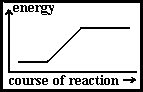
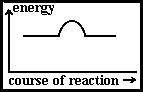
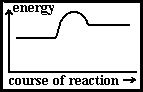
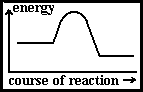
Which of the following statements best describes the arrangement of particles in a gas? [sm-1]
- Close together and stationary
- Close together and vibrating
- Far apart and moving slowly
- Very far apart and moving quickly
- Which of the following statements best describes the arrangement of particles in a solid? [sm-2]
- Close together and stationary
- Close together and vibrating
- Far apart and moving slowly
- Very far apart and moving quickly
- Which of the following statements best describes the arrangement of particles in a liquid? [sm-3]
- Close together and stationary
- Far apart and vibrating
- Close together and moving freely
- Very far apart and moving quickly
- Which of the following best describes what happens to the particles of water when it freezes? [sm-4]
- They gain energy and break up into atoms of hydrogen and oxygen,
- They gain energy and gain freedom to move about
- They lose energy and escape into the atmosphere
- They lose energy and lose freedom to move about,
- Which of the following best describes what happens to the particles of ice when it melts? [sm-5]
- They gain energy and break up into atoms of hydrogen and oxygen,
- They gain energy and gain freedom to move about
- They lose energy and escape into the atmosphere
- They lose energy and lose freedom to move about,
- Which of the following best describes what happens to the particles of water when it boils? [sm-6]
- They gain kinetic energy and increase their freedom to move without significant attraction
- They gain energy and gain freedom to move about
- They lose energy and escape into the atmosphere
- They lose energy and lose freedom to move about,
- Which of the following best describes what happens to the particles of water vapour when it condenses? [sm-7]
- They gain kinetic energy and increase their freedom to move without significant attraction
- They gain energy and gain freedom to move about
- They lose energy and are closer and less free to move around
- They lose energy and lose freedom to move about,
- Which of the following best describes what happens to the particles of water when it evaporates? [sm-8]
- The higher kinetic energy particles increase their freedom to move without significant attraction
- They gain energy and gain freedom to move about
- They lose energy and escape into the atmosphere
- They lose energy and lose freedom to move about,
 The table shows the melting points and boiling points of some substances. Which substance is a solid at 25oC? [sm-9]
[Substance] Melting Point oC and Boiling Point oC- -39 and 354
- 119 and 446
- 15 and 126
- -127 and -33
- The table shows the melting points and boiling points of some substances. Which substance is a liquid at 0oC? [sm-10]
[Substance] Melting Point oC and Boiling Point oC- -39 and 354
- 119 and 446
- 15 and 126
- -127 and -33
- The table shows the melting points and boiling points of some substances. Which substance is a gas at 0oC? [sm-11]
[Substance] Melting Point oC and Boiling Point oC- -39 and 354
- 119 and 446
- 15 and 126
- -127 and -33
- The table shows the melting points and boiling points of some substances. Which substance is a liquid at 30oC? [sm-12]
[Substance] Melting Point oC and Boiling Point oC- -39 and 10
- 119 and 446
- 15 and 126
- -127 and -33
 Air is confined in a glass bottle with a tight screw-top. When the bottle becomes warmer when heated with a hair-dryer, the pressure inside increases because the molecules of air? [sm-13]
- become bigger
- become smaller
- move faster
- move slower
- Air is in a glass bottle with a tight screw-top. When the bottle becomes cooler when placed in a refrigerator, the pressure inside decreases because the molecules of air? [sm-14]
- become bigger
- become smaller
- move faster
- move slower
- When the air in a room becomes warmer a hanging balloon blown up with air becomes bigger because the molecules of air? [sm-15]
- become bigger
- become smaller
- move faster
- move slower
- When the air in a room becomes cooler a hanging balloon blown up with air becomes smaller because the molecules of air? [sm-16]
- become bigger
- become smaller
- move faster
- move slower
- The table shows the melting points and boiling points of some substances. Which substance is a liquid at 20 oC? [sm-17]
[Substance] Melting Point oC and Boiling Point oC- -142 and -78
- -95 and 4
- -66 and 42
- 90 and 189
- The table shows the melting points and boiling points of some substances. Which substance is a solid at 20oC? [sm-18]
[Substance] Melting Point oC and Boiling Point oC- -142 and -78
- -95 and 4
- -66 and 42
- 90 and 189
- The table shows the melting points and boiling points of some substances. Which substance is a gas at -60oC? [sm-19]
[Substance] Melting Point oC and Boiling Point oC- -142 and -78
- -95 and 4
- -66 and 42
- 90 and 189
- The table shows the melting points and boiling points of some substances. Which substance is a liquid at -10oC and a gas at 10oC? [sm-20]
[Substance] Melting Point oC and Boiling Point oC- -142 and -78
- -95 and 4
- -66 and 42
- 90 and 189
 Which of the following graphs represents how the temperature of liquid varies as it becomes a solid? [sm-21]
- graph 1
- graph 2
- graph 3
- graph 4
- Which of the following graphs represents how the temperature of gas varies as it becomes a liquid? [sm-22]
- graph 1
- graph 2
- graph 3
- graph 4
- Which of the following graphs represents how the temperature of solid varies as it becomes a liquid? [sm-23]
- graph 1
- graph 2
- graph 3
- graph 4
- Which of the following graphs represents how the temperature of liquid varies as it becomes a gas? [sm-24]
- graph 1
- graph 2
- graph 3
- graph 4
- Which of the following graphs represents how the temperature of gas varies as it eventually becomes a solid? [sm-25]
- graph 1
- graph 2
- graph 3
- graph 4
- Which of the following graphs represents how the temperature of solid varies as it eventually becomes a gas? [sm-26]
- graph 1
- graph 2
- graph 3
- graph 4


Which of the following is true as a gas is changing to a liquid in condensation? [sm-27]- increase in particle order
- temperature rises
- particles gain more freedom
- energy change is endothermic
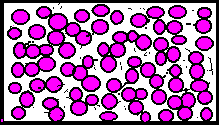
Which of the following is true as a gas is changing to a liquid in condensation? [sm-28]- decrease in particle order
- temperature rises
- particles lose freedom
- energy change is endothermic
Which of the following is true as a gas is changing to a liquid in condensation? [sm-29]- decrease in particle order
- temperature rises
- particles gain freedom
- energy change is exothermic

Which of the following is true as a liquid changes to a solid in freezing? [sm-30]- increase in particle order
- temperature falls
- particles gain freedom
- energy change is endothermic
Which of the following is true as a liquid changes to a solid in freezing? [sm-31]- decrease in particle order
- temperature stays constant
- particles gain freedom
- energy change is endothermic
Which of the following is true as a liquid changes to a solid in freezing? [sm-32]- decrease in particle order
- temperature falls
- particles lose freedom
- energy change is endothermic
Which of the following is true as a liquid changes to a solid in freezing? [sm-33]- decrease in particle order
- temperature falls
- particles gain freedom
- energy change is exothermic
Which of the following is true as a solid changes to a liquid in melting? [sm-34]- decrease in particle order
- temperature rises
- particles lose freedom
- energy change is exothermic
Which of the following is true as a solid changes to a liquid in melting? [sm-35]- increase in particle order
- temperature stays constant
- particles lose freedom
- energy change is exothermic
Which of the following is true as a solid changes to a liquid in melting? [sm-36]- increase in particle order
- temperature rises
- particles gain freedom
- energy change is exothermic
Which of the following is true as a solid changes to a liquid in melting? [sm-37]- increase in particle order
- temperature rises
- particles lose freedom
- energy change is endothermic
Which of the following is true as a liquid changes to a gas in boiling? [sm-38]- decrease in particle order
- temperature rises
- particles lose freedom
- energy change is exothermic
Which of the following is true as a liquid changes to a gas in boiling? [sm-39]- increase in particle order
- temperature stays constant
- particles lose freedom
- energy change is exothermic
Which of the following is true as a liquid changes to a gas in boiling? [sm-40]- increase in particle order
- temperature rises
- particles gain freedom
- energy change is exothermic
Which of the following is true as a liquid changes to a gas in boiling? [sm-41]- increase in particle order
- temperature rises
- particles lose freedom
- energy change is endothermic
Which of the following is true as a liquid changes to a gas in evaporation? [sm-42]- decrease in particle order
- temperature stays constant
- particles lose freedom
- energy change is exothermic
Which of the following is true as a liquid changes to a gas in evaporation? [sm-43]- increase in particle order
- temperature falls
- particles lose freedom
- energy change is exothermic
Which of the following is true as a liquid changes to a gas in evaporation? [sm-44]- increase in particle order
- temperature stays constant
- particles gain freedom
- energy change is exothermic
Which of the following is true as a liquid changes to a gas in evaporation? [sm-45]- increase in particle order
- temperature stays constant
- particles lose freedom
- energy change is endothermic
 When water vapour in a cloud is gradually cooled, rainwater is formed. This change of state is called? [sm-46]
- condensation
- distillation
- evaporation
- saturation
- Heat from the Sun changes water from liquid to a gas. This change of state is called? [sm-47]
- condensation
- distillation
- evaporation
- saturation
- Gases diffuse because they? [sm-48]
- are made of rapidly moving particles
- have low boiling points
- have a low density
- easily move as convection currents
- Liquids and dissolving solids diffuse because they? [sm-49]
- are made of moving particles
- have low boiling points
- have a low density
- easily move as convection currents
- The table below shows the melting points and boiling points of substances A to D. Which substance is a gas at 25oC? [sm-50]
[Substance] Melting point oC(mpt), Boiling Point oC(bpt)- mpt = -127o, bpt = -33 oC
- mpt = -39o, bpt = 354 oC
- mpt = 63o, bpt = 760 oC
- mpt = 119o, bpt = 446 oC
- The table below shows the melting points and boiling points of substances A to D. Which substance is a liquid at 25oC? [sm-51]
[Substance] Melting point oC(mpt), Boiling Point oC(bpt)- mpt = -127o, bpt = -33 oC
- mpt = -39o, bpt = 354 oC
- mpt = 63o, bpt = 760 oC
- mpt = 119o, bpt = 446 oC
- The table below shows the melting points and boiling points of substances A to D. Which substance is a solid at 100oC? [sm-52]
[Substance] Melting point oC(mpt), Boiling Point oC(bpt)- mpt = -127o, bpt = -33 oC
- mpt = -39o, bpt = 354 oC
- mpt = 63o, bpt = 760 oC
- mpt = 119o, bpt = 446 oC
- The table below shows the melting points and boiling points of substances A to D. Which substance is a solid at 100oC? [sm-53]
[Substance] Melting point oC(mpt), Boiling Point oC(bpt)- mpt = -127o, bpt = -33 oC
- mpt = -39o, bpt = 154 oC
- mpt = 99o, bpt = 140 oC
- mpt = 101o, bpt = 110 oC
- The table below shows the melting points and boiling points of substances A to D. Which substance is suitable to use in a thermometer that measures in the range 10oC to 90oC? [sm-54]
[Substance] Melting point oC(mpt), Boiling Point oC(bpt)- mpt = 0o, bpt = 100 oC
- mpt = -200o, bpt = 40 oC
- mpt = 20o, bpt = 350 oC
- mpt = -110o, bpt = 80 oC
- The table below shows the melting points and boiling points of substances A to D. Which substance is suitable to use in a thermometer that measures in the range -120oC to 20oC? [sm-55]
[Substance] Melting point oC(mpt), Boiling Point oC(bpt)- mpt = 0o, bpt = 100 oC
- mpt = -200o, bpt = 40 oC
- mpt = -40o, bpt = 350 oC
- mpt = -110o, bpt = 80 oC
- The table below shows the melting points and boiling points of substances A to D. Which substance is suitable to use in a thermometer that measures in the range 0oC to 100oC? [sm-56]
[Substance] Melting point oC(mpt), Boiling Point oC(bpt)- mpt = 0o, bpt = 100 oC
- mpt = -200o, bpt = 40 oC
- mpt = -40o, bpt = 350 oC
- mpt = -110o, bpt = 80 oC
- The table below shows the melting points and boiling points of substances A to D. Which substance is suitable to use in a thermometer that measures in the range -4oC to 50oC? [sm-57]
[Substance] Melting point oC(mpt), Boiling Point oC(bpt)- mpt = 0o, bpt = 100 oC
- mpt = -200o, bpt = 40 oC
- mpt = 40o, bpt = 350 oC
- mpt = -110o, bpt = 80 oC
- The rate of evaporation of a water does NOT depend on the? [sm-58]
- humidity of the surrounding air
- depth of the water
- surface area of the water
- temperature of the water
- Which is true about the rate of evaporation of water? [sm-59]
- it is speeded up on a humid day
- it is due to the escape of the most energetic particles
- heat is given out in the process
- it is slowed down in a breeze
- Which is true about the rate of evaporation of water? [sm-60]
- it is speeded up on a dry day
- it is due to the escape of the least energetic particles
- heat is given out in the process
- it is slowed down in a breeze
- Which is true about the rate of evaporation of water? [sm-61]
- it is speeded up on a humid day
- it is due to the escape of the least energetic particles
- heat is absorbed in the process
- it is slowed down in a breeze
- Which is true about the rate of evaporation of water? [sm-62]
- it is speeded up on a humid day
- it is due to the escape of the least energetic particles
- heat is given out in the process
- it is speeded up on a breezy day
- Which of these statements is true about evaporation? [sm-63]
- it is speeded up on a warm day
- it is due to the escape of the least energetic particles
- heat is given out in the process
- it is speeded up on a humid day
- The body is cooled down by sweating. This process mainly involves the heat transfer process of? [sm-64]
- conduction
- convection
- evaporation
- radiation
- Which of the following describes heat transfer due to evaporation? [sm-65]
- transfer due to the movement of volumes of gases or liquids
- transfer due to loss of energetic particles from the surface of a liquid
- transfer by infrared waves which can pass through air
- transfer due to the vibration of particles in contact with each other
- Which of the following best explains why gases diffuse throughout a container? [sm-66]
- there are no attractive forces between the particles of a gas
- gases have a low density
- gas particles move fast
- gas particles are very small
- Which of the following best explains why gases have a low density? [sm-67]
- the gas particles are very small
- the particles are far apart
- gas particles move fast
- the attractive force between particles are very weak
 Given the following symbol equation:
2Mg + O2 ==> 2MgO
Calculate how many g of magnesium oxide is formed by burning 24g of magnesium in air.
(Relative atomic masses, Ar: Mg = 24 and O = 16) [com-1]- Given the following symbol equation:
2Mg + O2 ==> 2MgO
Calculate how many tonne of magnesium is needed to make 80 tonne of magnesium oxide.
(Relative atomic masses, Ar: Mg = 24 and O = 16) [com-2] - Given the following symbol equation:
CaCO3(s) ==> CaO(s) + CO2(g)
Calculate how many kg of calcium carbonate is needed to make 56 kg of calcium oxide.
(Relative atomic masses, Ar: Ca = 40, C = 12 and O = 16) [com-3] - Given the following symbol equation:
CaCO3(s) ==> CaO(s) + CO2(g)
Calculate how many g of carbon dioxide is formed if 25g of calcium carbonate is decomposed on heating to form 14g of calcium oxide.
(Relative atomic masses, Ar: Ca = 40, C = 12 and O = 16) [com-4] - Given the symbol equation to show the formation of iron
sulfide:
Fe + S ==> FeS
Calculate the mass in g of iron sulfide formed when 5.6g of iron combines with 3.2g of sulfur.
(Relative atomic masses, Ar: Fe = 56 and S = 32) [com-5] - Given the symbol equation to show the formation of iron
sulfide:
Fe + S ==> FeS
Calculate the mass in g of iron sulfide formed when 28g of iron combines with 16g of sulfur.
(Relative atomic masses, Ar: Fe = 56 and S = 32) [com-6] - Given the symbol equation to show the formation of calcium chloride by burning calcium in chlorine:
Ca(s) + Cl2(g) ==> CaCl2(s)
Calculate the mass in g of calcium chloride formed when 20g of calcium combines with 35.5g of chlorine.
(Relative atomic masses, Ar: Ca = 40 and Cl = 35.5) [com-7] - Given the symbol equation to show the formation of calcium chloride by burning calcium in chlorine:
Ca(s) + Cl2(g) ==> CaCl2(s)
Calculate the mass in g of chlorine needed when 40g of calcium forms 111g of calcium chloride.
(Relative atomic masses, Ar: Ca = 40 and Cl = 35.5) [com-8] - Given the symbol equation to show the formation of aluminium
sulfide by heating a mixture of aluminium and sulfur:
2Al + 3S ==> Al2S3
How many g of sulfur is needed if 54g of aluminium is reacted to form 150g of aluminium sulfide?
(Relative atomic masses, Ar: Al = 27 and S = 32) [com-9] - Given the symbol equation to show the formation of aluminium
sulfide by heating a mixture of aluminium and sulfur:
2Al + 3S ==> Al2S3
How many kg of sulfur is needed if 108kg of aluminium is reacted to form 300kg of aluminium sulfide?
(Relative atomic masses, Ar: Al = 27 and S = 32) [com-10] - Given the symbol equation to show the formation of iron
sulfide by heating a mixture of iron and sulfur:
Fe + S ==> FeS
Calculate the mass in g of iron unreacted when 60g of iron reacts with 32g of sulfur to form 88g of iron sulfide.
(Relative atomic masses, Ar: Fe = 56 and S = 32) [com-11] - Given the symbol equation to show the formation of iron
sulfide by heating a mixture of iron and sulfur:
Fe + S ==> FeS
Calculate the mass in g of sulfur unreacted when 28g of iron reacts with 22g of sulfur to form 44g of iron sulfide.
(Relative atomic masses, Ar: Fe = 56 and S = 32) [com-12] - Given the symbol equation to show the formation of calcium chloride by burning calcium in chlorine:
Ca(s) + Cl2(g) ==> CaCl2(s)
Calculate the mass in g of calcium left unreacted when 25g of calcium reacts with 35.5g of chlorine.
(Relative atomic masses, Ar: Ca = 40 and Cl = 35.5) [com-13] - Given the symbol equation to show the formation of calcium chloride by burning calcium in chlorine:
Ca(s) + Cl2(g) ==> CaCl2(s)
Calculate the mass in g of chlorine left unreacted when 80g of calcium reacts with 150g of chlorine to form 222g of calcium chloride.
(Relative atomic masses, Ar: Ca = 40 and Cl = 35.5) [com-14]  Given the following relative atomic masses: Cu = 64, S = 32 and O = 16; calculate the relative formula mass of copper
sulfate, CuSO4 [rfm-1]
Given the following relative atomic masses: Cu = 64, S = 32 and O = 16; calculate the relative formula mass of copper
sulfate, CuSO4 [rfm-1]- Given the following relative atomic masses: H = 1 and C = 12; calculate the relative molecular mass of ethane, C2H6 [rfm-2]
- Given the following relative atomic masses: H = 1 and C = 12; calculate the relative molecular mass of octane, C8H18 [rfm-3]
- Given the following relative atomic masses: H = 1, N = 14 and O = 16; calculate the relative formula mass of nitric acid, HNO3 [rfm-4]
- Given the following relative atomic masses: H = 1, N = 14 and O = 16; calculate the relative formula mass of ammonium nitrate, NH4NO3 [rfm-5]
- Given the following relative atomic masses: H = 1, N = 14, O = 16 and S = 32; calculate the relative formula mass of ammonium
sulfate, (NH4)2SO4 [rfm-6]
- Given the following relative atomic masses: H = 1, O = 16 and S = 32; calculate the relative formula mass of
sulfuric acid, H2SO4 [rfm-7]
- Given the following relative atomic masses: O = 16, Al = 27 and S = 32; calculate the relative formula mass of aluminium
sulfate, Al2(SO4)3 [rfm-8]
- Given the following relative atomic masses: H = 1 and Cl = 35.5, calculate the relative formula mass of hydrochloric acid, HCl [rfm-9]
- Given the following relative atomic masses: Na = 23 and Cl = 35.5, calculate the relative formula mass of sodium chloride, NaCl [rfm-10]
- Given the following relative atomic masses: Ca = 40 and Cl = 35.5, calculate the relative formula mass of calcium chloride, CaCl2 [rfm-11]
- Given the following relative atomic masses: H = 1, O = 16 and Mg = 24, calculate the relative formula mass of magnesium hydroxide, Mg(OH)2 [rfm-12]
- Given the following relative atomic masses: Al = 27 and Cl = 35.5, calculate the relative formula mass of aluminium chloride, AlCl3 [rfm-13]
- Given the following relative atomic masses: H = 1, O = 16 and Al = 27, calculate the relative formula mass of aluminium hydroxide, Al(OH)3 [rfm-14]
- Given the following relative atomic masses: H = 1, C = 12 and O = 16; calculate the relative molecular mass of glucose, C6H12O6 [rfm-5]
- Given the following relative atomic masses: H = 1, C = 12 and O = 16; calculate the relative molecular mass of ethanol ('alcohol'), C2H5OH [rfm-16]
- Given the following relative atomic masses: H = 1, C = 12 and O = 16; calculate the relative molecular mass of ethanoic acid ('acetic acid'), CH3COOH [rfm-17]
- Given the following relative atomic masses: O = 16 and Fe = 56; calculate the relative formula mass of iron(II) oxide, FeO [rfm-18]
- Given the following relative atomic masses: O = 16 and Fe = 56; calculate the relative formula mass of iron(III) oxide, Fe2O3 [rfm-19]
- Given the following relative atomic masses: O = 16 and Fe = 56; calculate the relative formula mass of the iron oxide, Fe3O4 [rfm-20]
- Given the following relative atomic masses: H = 1 and C = 12; calculate the relative molecular mass of methane, CH4 [rfm-21]
- Given the following relative atomic masses: H = 1 and C = 12; calculate the relative molecular mass of propane, C3H8 [rfm-22]
- Given the following relative atomic masses: C = 12 and O = 16; calculate the relative molecular mass of carbon dioxide, CO2 [rfm-23]
- Given the following relative atomic masses: C = 12, O = 16 and Cu = 64; calculate the relative formula mass of copper carbonate, CuCO3 [rfm-24]
- Given the following relative atomic masses: C = 12, O = 16 and Ca = 40; calculate the relative formula mass of calcium carbonate, CaCO3 [rfm-25]
 Which of the following is a test for hydrogen gas? [gt1]
- Gives a squeaky pop with a lit splint.
- Relights a glowing red splint.
- Turns blue litmus red then bleaches it white.
- Turns red litmus paper blue
- Gives a milky white precipitate with limewater (calcium hydroxide solution).
- Which of the following is a test for oxygen gas? [gt2]
- Gives a squeaky pop with a lit splint.
- Relights a glowing red splint.
- Turns blue litmus red then bleaches it white.
- Turns red litmus paper blue
- Gives a milky white precipitate with limewater (calcium hydroxide solution).
- Which of the following is a test for chlorine gas? [gt3]
- Gives a squeaky pop with a lit splint.
- Relights a glowing red splint.
- Turns blue litmus red then bleaches it white.
- Turns red litmus paper blue
- Gives a milky white precipitate with limewater (calcium hydroxide solution).
- Which of the following is a test for ammonia gas? [gt4]
- Gives a squeaky pop with a lit splint.
- Relights a glowing red splint.
- Turns blue litmus red then bleaches it white.
- Turns red litmus paper blue
- Gives a milky white precipitate with limewater (calcium hydroxide solution).
- Which of the following is a test for carbon dioxide gas? [gt5]
- Gives a squeaky pop with a lit splint.
- Relights a glowing red splint.
- Turns blue litmus red then bleaches it white.
- Turns red litmus paper blue
- Gives a milky white precipitate with limewater (calcium hydroxide solution).
 Heat is taken in when ammonium nitrate dissolves in water. This is an example of? [et-1]
- electrolysis
- endothermic charge
- exothermic change
- thermal decomposition
- Change 1. When calcium carbonate forms calcium oxide and carbon dioxide heat is absorbed.
Change 2. Calcium oxide releases heat when shaken with carbon dioxide.
Which line BEST describes these changes? [et-2]- change 1 is endothermic; change 2 is exothermic
- change 1 is exothermic; change 2 is endothermic
- change 1 is exothermic; change 2 is exothermic
- change 1 is endothermic; change 2 is endothermic
- When sodium hydroxide dissolves in water the temperature rises. This is an example of? [et-3]
- electrolysis
- endothermic charge
- exothermic change
- thermal decomposition
- The breaking of bonds in a chlorine molecule must be? [et-4]
- electrolytic
- endothermic
- equilibrium
- exothermic
- The making of bonds in forming a hydrogen molecule from hydrogen atoms must be? [et-5]
- electrolytic
- endothermic
- equilibrium
- exothermic
- Change 1. Water is added to blue cobalt chloride, it turns pink and heats up.
Change 2. When pink cobalt chloride is heated, water is driven off, it turns blue and takes in heat.
Which line BEST describes these changes? [et-12]- change 1 is endothermic; change 2 is endothermic
- change 1 is exothermic; change 2 is exothermic
- change 1 is exothermic; change 2 is endothermic
- change 1 is endothermic; change 2 is exothermic
- Which of the following statements BEST explains why a chemical reaction involving a catalyst goes faster than without the catalyst? [et-22]
- the catalyst decreases the energy of collisions between reactant particles
- the catalyst increases the frequency of collisions between reactant particles
- the catalyst decreases the activation energy for the reaction
- the catalyst increases the activation energy for the reaction
- Which of the following statements BEST explains why a chemical reaction goes slower without a suitable catalyst? [et-23]
- the catalyst increases the energy of collisions between reactant particles
- the catalyst increases the frequency of collisions between reactant particles
- the activation energy is higher for the catalysed reaction
- the activation energy is higher for the uncatalysed reaction
- When ammonium chloride dissolves in water the temperature falls. The type of energy change is described as? [et-24]
- a decomposition
- endothermic
- exothermic
- activated
- When magnesium dissolves in hydrochloric acid the temperature rises. The type of energy change is described as? [et-25]
- a decomposition
- endothermic
- exothermic
- activated
 The reaction between
sulfuric acid and zinc is exothermic. During the reaction, which observation is correct? [et-26]
The reaction between
sulfuric acid and zinc is exothermic. During the reaction, which observation is correct? [et-26]- a precipitate forms
- the temperature of the solution decreases
- the temperature of the solution does not change
- the temperature of the solution rises
- Which of these processes is always exothermic? [et-27]
- burning
- evaporation
- insulation
- melting
- Which of these processes is always exothermic? [et-28]
- combustion
- evaporation
- insulation
- melting
- Which of these process is always endothermic? [et-29]
- burning
- condensation
- evaporation
- freezing
- Which of these process is always endothermic? [et-30]
- burning
- condensation
- freezing
- melting
- Which of these process is always endothermic? [et-31]
- burning
- boiling
- condensation
- freezing
 Which of these process is always exothermic? [et-32]
- boiling
- condensing
- evaporation
- melting
- Which of these process is always exothermic? [et-33]
- boiling
- evaporating
- freezing
- melting
- The chemical change when a fuel burns can be described as? [et-34]
- an endothermic reaction
- an exothermic reaction
- a precipitation
- a reversible reaction
- When ammonium nitrate is added to water, an endothermic reaction occurs and? [et-35]
- heat is given out
- the surroundings get hotter
- the temperature falls
- the temperature rises
- Equal amounts of four different substances (A-D) where added separately to equal amounts of an acid and a thermometer placed in the mixture. For which substance is the reaction the most exothermic? [et-36]
- temperature rises by 3oC
- temperature rises by 5oC
- temperature falls by 3oC
- temperature falls by 5oC
- Equal amounts of four different substances (A-D) where added separately to equal amounts of an acid and a thermometer placed in the mixture. For which substance is the reaction the most endothermic? [et-37]
- temperature rises by 3oC
- temperature rises by 5oC
- temperature falls by 3oC
- temperature falls by 5oC
- Equal amounts of four different substances (A-D) where added separately to equal amounts of an acid and a thermometer placed in the mixture. For which substance is the reaction the least exothermic? [et-38]
- temperature rises by 3oC
- temperature rises by 5oC
- temperature falls by 3oC
- temperature falls by 5oC
- Equal amounts of four different substances (A-D) where added separately to equal amounts of an acid and a thermometer placed in the mixture. For which substance is the reaction the least endothermic? [et-39]
- temperature rises by 3oC
- temperature rises by 5oC
- temperature falls by 3oC
- temperature falls by 5oC
 Which of the following energy changes corresponds to the activation energy required for the forward reaction to take place? [et-40]
- energy change 1
- energy change 2
- energy change 3
- energy change 4
- Which of the following energy changes corresponds to the overall energy change for the reaction? [et-42]
- energy change 1
- energy change 2
- energy change 3
- energy change 4
 Which of the following energy changes corresponds to the activation energy required for the forward reaction to take place? [et-43]
- energy change 1
- energy change 2
- energy change 3
- energy change 4
- Which of the following energy changes corresponds to the overall energy change for the reaction? [et-45]
- energy change 1
- energy change 2
- energy change 3
- energy change 4
 When an exothermic reaction takes place, the reaction mixture gets hotter because? [et-46]
- energy is always released in a chemical change which makes new substances
- exothermic changes always produce gases
- in an exothermic change the products are less stable than the reactants
- more energy is released when new bonds are made than is needed to break existing bonds
- When an exothermic reaction takes place, the reaction mixture gets hotter because? [et-47]
- energy is always released in a chemical change which makes new substances
- exothermic changes always produce gases
- in an exothermic change the products are more stable than the reactants
- more energy is absorbed when new bonds are made than is needed to break existing bonds
- When an endothermic reaction takes place, the reaction mixture takes in heat because? [et-48]
- energy is always absorbed in a chemical change which makes new substances
- endothermic changes always produce energy
- in an endothermic change the products are more stable than the reactants
- more energy is absorbed when existing bonds are broken than is given out when new bonds are formed in the products
- When an endothermic reaction takes place, the reaction mixture takes in heat because? [et-49]
- energy is always absorbed in a chemical change which makes new substances
- endothermic changes always produce energy
- in an endothermic change the products are less stable than the reactants
- more energy is released when new bonds are formed than is taken in when existing bonds in the reactants are broken
- Energy is needed to make a mixture of methane and oxygen react. The mixture explodes when a lighted splint is applied. What type of energy is supplied by the splint? [et-50]
- Activation energy
- Catalyst energy
- Kinetic energy
- Renewable energy
- Which of these involves a chemical reaction? [et-82]
1. baking bread : 2. boiling water : 3. corroding metals- 1 and 2
- 1 and 3
- 2 and 3
- All of them
- Which of the following is a chemical change? [et-83]
- cooling a cup of tea
- dissolving sugar in coffee
- lighting a match
- melting an ice-cube
- Which of the following is a physical change? [et-84]
- dissolving sugar in coffee
- lighting a match
- making lime from limestone
- making polythene from gaseous oil molecules
- Which of the following involves a chemical reaction? [et-85]
- cooking a cake
- filtering sand from water
- fractionally distilling oil
- melting ice
- Which of the following results in a chemical reaction? [et-86]
- adding vinegar to water
- leaving milk to go sour
- mixing salt with water
- stirring sugar with tea
- Which of these involves a chemical reaction? [et-87]
- apples decaying
- ice melting
- magnetising iron
- boiling water
- Which of these involves a physical change and NOT a chemical reaction? [et-88]
- apples decaying
- frying bacon
- iron rusting
- boiling water
- Which of these involves a physical change and NOT a chemical reaction? [et-89]
- apples decaying
- frying bacon
- iron rusting
- freezing water
- Which of these involves a chemical reaction? [et-90]
- crushing apples
- toasting bread
- magnetising iron
- freezing water
- Which of these results in chemical change? [et-91]
- adding lime to vinegar
- adding milk to tea
- mixing salt with water
- mixing iron and sulfur powders
- Which of these results ONLY in a physical change? [et-92]
- adding lime to vinegar
- leaving bread to go mouldy
- mixing salt with water
- adding magnesium to hydrochloric acid
- Which of the following temperature changes is NOT the result of a chemical change? [et-93]
- a fall in temperature as liquid metal cools to solidify
- a fall in temperature as a precipitate falls
- a rise in temperature as neutralisation takes place
- a rise in temperature when a fuel burns
- The reaction between hydrogen and chlorine to form hydrogen chloride can be written as:
H2(g) + Cl2(g) ===> 2HCl(g)
Use the bond energies shown to calculate the energy change that takes place when hydrogen chloride is formed according to the above equation. (Bond energies in kJ/mol: H-H 435, Cl-Cl 245, H-Cl 430) [et-6]- 90 kJ given out
- 180 kJ given out
- 125 kJ taken in
- 250 kJ taken in
- The reaction between hydrogen and fluorine to form hydrogen fluoride can be written as
H2(g) + F2(g) ===> 2HF(g)
Use the bond energies shown to calculate the energy change that takes place when hydrogen fluoride is formed according to the above equation. (Bond energies in kJ/mol: H-H 435, F-F 155, H-F 560) [et-7]- 15 kJ taken in
- 30 kJ taken in
- 265 kJ given out
- 530 kJ given out
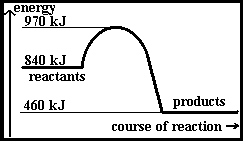 The diagram below shows the reaction profile for the course of a chemical reaction. Which of the following statements is TRUE? [et-8]
- The reaction is exothermic with an activation energy of 130 kJ/mol
- The reaction is exothermic and 460 kJ/mol of heat energy is given out
- The reaction is endothermic with an activation energy of 970 kJ/mol
- The reaction is endothermic with 460 kJ/mol of heat taken in
- The diagram below shows the reaction profile for the course of a chemical reaction. Which of the following statements is TRUE? [et-9]
- The reaction is exothermic with an activation energy of 970 kJ/mol
- The reaction is exothermic and 380 kJ/mol of heat energy is given out
- The reaction is endothermic with an activation energy of 970 kJ/mol
- The reaction is endothermic with 460 kJ/mol of heat taken in
 The diagram below shows the reaction profile for the course of a chemical reaction. Which of the following statements is TRUE? [et-10]
- The reaction is exothermic with an activation energy of 860 kJ/mol
- The reaction is exothermic and 380 kJ/mol of heat energy is given out
- The reaction is endothermic with an activation energy of 310 kJ/mol
- The reaction is endothermic with 460 kJ/mol of heat taken in
- The diagram below shows the reaction profile for the course of a chemical reaction. Which of the following statements is true? [et-11]
- The reaction is exothermic with an activation energy of 860 kJ/mol
- The reaction is exothermic and 770 kJ/mol of heat energy is given out
- The reaction is endothermic with an activation energy of 860 kJ/mol
- The reaction is endothermic with 220 kJ/mol of heat taken in
- The chemical equation shows how water is formed from its elements.
2H2 + O2 ==> 2H2O
The bond energies in kJ/mol are: H-H 440; O=O 500; H-O 460
How much energy is released when two moles of water are formed? [et-13]- 460 kJ
- 480 kJ
- 920 kJ
- 2300 kJ
- The reaction between hydrogen and bromine to form hydrogen bromide can be written as
H2(g) + Br2(g) ===> 2HBr(g)
Use the bond energies shown to calculate the energy change that takes place when hydrogen bromide is formed according to the above equation. (Bond energies in kJ/mol: H-H 435; Br-Br 200; H-Br 370) [et-14]- 105 kJ given out
- 105 kJ taken in
- 270 kJ given out
- 270 kJ taken in
- Which of the following reaction profiles represents an exothermic reaction with no activation energy? [et-15]
-
- Which of the following reaction profiles represents an endothermic reaction with no activation energy? [et-16]
-
- Which of the following reaction profiles represents a reaction with an activation energy but with no overall energy change? [et-17]
-
- Which of the following reaction profiles represents an exothermic reaction with a small activation energy? [et-18]
-
- Which of the following reaction profiles represents an endothermic reaction with a large activation energy? [et-19]
-
- Which of the following reaction profiles represents an exothermic reaction with a large activation energy? [et-20]
-
- Which of the following reaction profiles represents an endothermic reaction with a small activation energy? [et-21]
-
- Which of the following energy changes corresponds to the activation energy required for the
reverse or backward reaction to take place? [et-41]
- energy change 1
- energy change 2
- energy change 3
- energy change 4
- Which of the following energy changes corresponds to the activation energy required for the reverse or backward reaction to take place? [et-44]
- energy change 1
- energy change 2
- energy change 3
- energy change 4
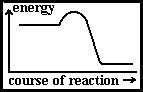 An energy level diagram can be used to show the energy changes involved in the course of a chemical reaction. The reaction must be? [et-51]
- an exothermic reaction
- a thermal decomposition
- an endothermic reaction
- a reaction with zero activation energy
- An energy level diagram can be used to show the energy changes involved in the course of a chemical reaction. The reaction must be? [et-52]
- a combustion reaction
- a thermal decomposition
- an endothermic reaction
- a reaction with zero activation energy
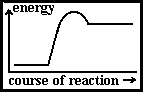 An energy level diagram can be used to show the energy changes involved in the course of a chemical reaction. The reaction must be? [et-53]
- an exothermic reaction
- a combustion reaction
- an endothermic reaction
- a reaction with zero activation energy
- The diagram shows the energy changes during a reaction. What would occur if a catalyst was used?[et-54]
- energy change 1 is lowered
- energy change 2 is raised
- energy change 3 is lowered
- energy change 4 is raised
- The diagram shows the energy changes during a reaction. What would occur if a catalyst was used?[et-55]
- energy change 1 is lowered
- energy change 2 is raised
- energy change 3 is lowered
- energy change 4 is raised
- The
diagram shows the profile of the energy changes for a reaction. Which energy change is reduced by using a suitable catalyst? [et-56]
- energy change 1
- energy change 2
- energy change 3
- energy change 4
- The
diagram shows the profile of the energy changes for a reaction. Which energy change is reduced by using a suitable catalyst? [et-57]
- energy change 1
- energy change 2
- energy change 3
- energy change 4
- The
diagram shows the profile of the energy changes for a reaction. Which energy change represents the energy needed to break chemical bonds so that new products can form? [et-58]
- energy change 1
- energy change 2
- energy change 3
- energy change 4
- The
diagram shows the profile of the energy changes for a reaction. Which energy change represents the energy needed to break chemical bonds so that new products can form? [et-59]
- energy change 1
- energy change 2
- energy change 3
- energy change 4
- For the reaction: 3H2 + N2 ==> 2NH3
The breaking of bonds in a hydrogen molecule when it combines with nitrogen to form ammonia must be? [et-60]- electrolytic
- electrostatic
- endothermic
- exothermic
- For the reaction: 3H2 + N2 ==> 2NH3
The breaking of bonds in a nitrogen molecule when it combines with hydrogen to form ammonia must be? [et-61]- electrolytic
- electrostatic
- endothermic
- exothermic
- For the reaction: 3H2 + N2 ==> 2NH3
The forming of bonds in an ammonia molecule when hydrogen combines with nitrogen must be? [et-62]- electrolytic
- electrostatic
- endothermic
- exothermic
- The equation for the formation of ammonia from its elements is:
3H2 + N2 ==> 2NH3
Given the BOND ENERGIES in kJ/mol for H-H = 440; N-N = 940; N-H = 390, calculate the energy released when 2 moles of ammonia are formed. [et-63]- 80 kJ
- 90 kJ
- 990 kJ
- 1110 kJ
- The reaction between hydrogen and iodine to form hydrogen iodide can be written as
H2(g) + I2(g) ===> 2HI(g)
Use the bond energies shown to calculate the energy change that takes place when hydrogen iodide is formed according to the above equation. (Bond energies in kJ/mol: H-H 440, I-I 150, H-I 300) [et-64]- 10 kJ given out
- 10 kJ taken in
- 600 kJ given out
- 590 kJ taken in
- When hydrogen fluoride is heated it breaks down into hydrogen and fluorine.
The equation can be written as: 2HF(g) ==> H2(g) + F2(g)
Use the bond energies shown below to calculate the energy change that takes place when 2 moles of hydrogen fluoride thermally decomposes in this way. (bond energies in kJ/mol: H-H = 440; F-F = 155; H-F = 560) [et-65]- 525 kJ taken in
- 525 kJ given out
- 560 kJ given out
- 560 kJ taken in
- When hydrogen chloride is heated it breaks down into hydrogen and fluorine.
The equation can be written as: 2HCl(g) ==> H2(g) + Cl2(g)
Use the bond energies shown below to calculate the energy change that takes place when 2 moles of hydrogen chloride thermally decomposes in this way. (bond energies in kJ/mol: H-H = 440; Cl-Cl = 245; H-Cl = 430) [et-66]- 175 kJ given out
- 175 kJ taken in
- 860 kJ given out
- 685 kJ taken in
- When hydrogen bromide is heated it breaks down into hydrogen and bromine.
The equation can be written as: 2HBr(g) ==> H2(g) + Br2(g)
Use the bond energies shown below to calculate the energy change that takes place when 2 moles of hydrogen bromide thermally decomposes in this way. (bond energies in kJ/mol: H-H = 440; Br-Br = 200; H-Br = 370) [et-67]- 740 kJ given out
- 640 kJ taken in
- 100 kJ taken in
- 100 kJ given out
- When hydrogen iodide is heated it breaks down into hydrogen and iodine.
The equation can be written as: 2HI(g) ==> H2(g) + I2(g)
Use the bond energies shown below to calculate the energy change that takes place when 2 moles of hydrogen iodide thermally decomposes in this way. (bond energies in kJ/mol: H-H = 440; I-I = 150; H-I = 300) [et-68]- 600 kJ given out
- 600 kJ taken in
- 10 kJ given out
- 10 kJ taken in
- Methane molecules, CH4, can be broken down into gaseous carbon and hydrogen atoms. The energy needed to break the bonds to do this is 1664 kJ/mol. Therefore the average C-H bond energy in the molecule is? [et-69]
- 416 kJ
- 832 kJ
- 1664 kJ
- 6656 kJ
- Ammonia molecules, NH3, can be broken down into gaseous nitrogen and hydrogen atoms. The energy needed to break the bonds to do this is 1164 kJ/mol. Therefore the average N-H bond energy in the molecule is? [et-70]
- 388 kJ
- 582 kJ
- 1164 kJ
- 291 kJ
- Water molecules, H2O, can be broken down into gaseous oxygen and hydrogen atoms. The energy needed to break the bonds to do this is 928 kJ/mol. Therefore the average O-H bond energy in the molecule is? [et-71]
- 116 kJ
- 232 kJ
- 464 kJ
- 928 kJ
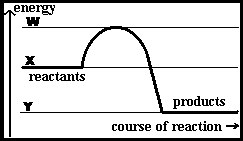 The diagram shows the energy changes as a reaction proceeds. For a reaction to be exothermic which of the following must be positive? [et-72]
- Y + X - W
- Y - X + W
- W - Y
- X - Y
- The diagram shows the energy changes as a reaction proceeds. Which of the following is the activation energy? [et-73]
- W - X
- W + X - Y
- W - Y
- X - Y
- The diagram shows the energy changes as a reaction proceeds. Which of the following is the overall energy change? [et-74]
- W - X given out
- W - X taken in
- X - Y given out
- X - Y taken in
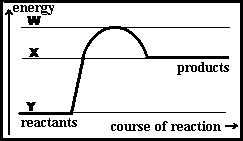 The diagram shows the energy changes as a reaction proceeds. For a reaction to be endothermic which of the following must be positive? [et-75]
- W - X
- X - Y
- W + X - Y
- W - Y
- The diagram shows the energy changes as a reaction proceeds. Which of the following is the activation energy? [et-76]
- Y + X - W
- Y - X + W
- X - Y
- W - Y
- The diagram shows the energy changes as a reaction proceeds. Which of the following is the overall energy change? [et-77]
- X - Y given out
- W - Y taken in
- X - Y given out
- X - Y taken in
- Sodium hydroxide and dilute hydrochloric acid react together to form sodium chloride without being heated. This is because the? [et-78]
- the activation energy is high
- the activation energy is low
- the activation energy is zero
- the reaction is exothermic
- Natural gas and the oxygen in air will only react when heated. This is because the reaction? [et-79]
- has a zero activation energy
- has a low activation energy
- is exothermic
- has a high activation energy
- The diagram shows the energy changes as a reaction proceeds. If a suitable catalyst is used, which of the following energy changes occurs? [et-80]
- W - X is increased
- W - X is reduced
- X - Y is increased
- X - Y is reduced
- The diagram shows the energy changes as a reaction proceeds. If a suitable catalyst is used, which of the following energy changes occurs? [et-81]
- W - X is increased
- W - Y is reduced
- X - Y is increased
- X - Y is reduced