Which four quantities a, b, c and d are required to balance the equation ... aCH4(g) + bO2(g) ==> cCO2(g) + dH2O(l) ?[eq-1]
1 2 1 2
1 1 1 2
1 2 2 1
1 1 1 1
Which four quantities a, b, c and d are required to balance the equation ... aC2H6(g) + bO2(g) ==> cCO2(g) + dH2O(l) ?[eq-2]
1 2 1 3
2 7 4 6
2 4 4 6
1 7 2 3
Which four quantities a, b, c and d are required to balance the equation ... aC3H8(g) + bO2(g) ==> cCO2(g) + dH2O(l) ?[eq-3]
1 3 3 4
2 10 4 6
1 5 3 4
2 5 2 3
Which four quantities a, b, c and d are required to balance the equation ... aC4H10(g) + bO2(g) ==> cCO2(g) + dH2O(l) ?[eq-4]
1 13 8 4
2 7 4 10
1 5 3 4
2 13 8 10
Which four quantities a, b, c and d are required to balance the equation ... aC5H12(l) + bO2(g) ==> cCO2(g) + dH2O(l) ?[eq-5]
1 8 5 6
1 4 4 6
2 4 5 12
2 8 10 12
Which four quantities a, b, c and d are required to balance the equation ... aC6H14(g) + bO2(g) ==> cCO2(g) + dH2O(l) ?[eq-6]
2 9 6 14
2 19 12 14
1 9 6 7
1 10 12 7
Which four quantities a, b, c and d are required to balance the equation ... aC7H16(l) + bO2(g) ==> cCO2(g) + dH2O(l) ?[eq-7]
1 5 7 8
2 12 14 16
1 11 7 8
2 11 14 16
Which four quantities a, b, c and d are required to balance the equation ... aC8H18(g) + bO2(g) ==> cCO2(g) + dH2O(l) ?[eq-8]
1 13 8 18
1 13 8 9
2 13 16 18
2 25 16 18
Which four quantities a, b, c and d are required to balance the equation ... aC2H4(g) + bO2(g) ==> cCO2(g) + dH2O(l) ?[eq-9]
1 3 2 2
1 2 2 2
2 3 4 4
2 6 4 4
Which four quantities a, b, c and d are required to balance the equation ... aC3H6(g) + bO2(g) ==> cCO2(g) + dH2O(l) ?[eq-10]
2 5 6 6
2 9 6 6
1 5 3 3
1 9 3 3
Which four quantities a, b, c and d are required to balance the equation ... aC4H8(g) + bO2(g) ==> cCO2(g) + dH2O(l) ?[eq-11]
2 12 8 8
2 6 8 8
1 6 4 4
1 3 4 4
Which four quantities a, b, c and d are required to balance the equation ... aC7H8(g) + bO2(g) ==> cCO2(g) + dH2O(l) ?[eq-12]
2 9 4 8
2 10 14 8
1 5 7 4
1 9 7 4
Which three quantities a, b and c are required to balance the equation ... aFe(s) + bO2(g) ==> cFe3O4(s) ? [eq-13]
3 2 1
3 4 1
6 4 2
6 2 2
Which three quantities a, b and c are required to balance the equation ... aLi(s) + bO2(g) ==> cLi2O(s) ? [eq-14]
2 1 2
4 1 2
4 2 1
2 2 1
Which three quantities a, b and c are required to balance the equation ... aAl(s) + bO2(g) ==> cAl2O3(s) ? [eq-15]
1 3 2
4 6 4
4 3 2
2 3 2
Which three quantities a, b and c are required to balance the equation ... aMg(s) + bO2(g) ==> cMgO(s) ? [eq-16]
1 1 2
4 2 2
2 1 1
2 1 2
Which four quantities a, b, c and d are required to balance the equation ... aZn(s) + bHCl(aq) ==> cZnCl2(aq) + dH2(g) ? [eq-17]
1 2 1 1
2 2 2 1
2 1 1 2
1 1 2 2
Which four quantities a, b, c and d are required to balance the equation ... aFe(s) + bH2SO4(aq) ==> cFeSO4(aq) + dH2(g) ? [eq-18]
1 1 1 2
1 1 1 1
2 2 2 1
2 1 2 2
Which four quantities a, b, c and d are required to balance the equation ... aAl(s) + bHCl(aq) ==> cAlCl3(aq) + dH2(g) ? [eq-19]
1 6 3 2
2 3 2 3
2 6 2 3
1 3 3 2
Which four quantities a, b, c and d are required to balance the equation ... aAl(s) + bH2SO4(aq) ==> cAl2(SO4)3(aq) + dH2(g) ? [eq-20]
1 3 1 3
2 3 2 3
1 2 2 2
2 3 1 3
Which four quantities a, b, c and d are required to balance the equation ... aNa(s) + bH2O(l) ==> cNaOH(aq) + dH2(g) ? [eq-21]
2 2 2 1
2 1 2 1
1 2 1 2
1 1 1 2
Which four quantities a, b, c and d are required to balance the equation ... aCa(s) + bH2O(l) ==> cCa(OH)2(aq) + dH2(g) ? [eq-22]
2 2 2 1
1 2 1 1
1 2 1 2
2 1 1 2
Which four quantities a, b, c and d are required to balance the equation ... aFe(s) + bH2O(g) ==> cFe3O4(s) + dH2(g) ? [eq-23]
3 4 1 2
2 3 1 4
3 4 1 4
2 3 2 2
Which four quantities a, b, c and d are required to balance the equation ... aAl(s) + bH2O(g) ==> cAl2O3(s) + dH2(g) ? [eq-24]
3 4 1 6
1 3 1 3
2 4 2 6
2 3 1 3
Which four quantities a, b, c and d are required to balance the equation ... aMg(s) + bCuSO4(aq) ==> cMgSO4(aq) + dCu(s) ? [eq-25]
1 1 1 1
2 1 2 2
1 2 1 2
2 2 2 1
Which four quantities a, b, c and d are required to balance the equation ... aCu(s) + bAgNO3(aq) ==> cCu(NO3)2(aq) + dAg(s) ? [eq-26]
1 1 2 1
1 2 1 2
2 2 1 2
2 2 2 1
Which four quantities a, b, c and d are required to balance the equation ... aZn(s) + bFe2(SO4)3(aq) ==> cZnSO4(aq) + dFe(s) ? [eq-27]
3 2 6 2
3 1 3 3
3 1 3 2
2 2 6 3
Which four quantities a, b, c and d are required to balance the equation ... aAl(s) + bFe2O3(s)) ==> cAl2O3(s) + dFe(s) ? [eq-28]
1 2 2 1
3 1 1 3
2 3 2 3
2 1 1 2
Which four quantities a, b, c and d are required to balance the equation ... aCl2(aq) + bKBr(aq) ==> cKCl(aq) + dBr2(aq) ? [eq-29]
1 2 2 1
2 1 1 1
1 1 2 2
2 2 1 2
Which four quantities a, b, c and d are required to balance the equation ... aBr2(aq) + bNaI(aq) ==> cNaBr(aq) + dI2(aq) ? [eq-30]
1 2 1 2
1 2 2 1
1 1 2 2
2 2 1 2
Which four quantities a, b, c and d are required to balance the equation ... aCl2(aq) + bCaI2(aq) ==> cCaCl2(aq) + dI2(s) ? [eq-31]
2 1 2 1
1 2 2 2
1 1 1 1
2 2 1 2
Which four quantities a, b, c and d are required to balance the equation ... aAlBr3(aq) + bCl2(aq) ==> cAlCl3(aq) + dBr2(s) ? [eq-32]
1 3 2 2
1 3 1 3
3 2 2 2
2 3 2 3
Which five quantities a, b, c, d and e are required to balance the equation ... aCaCO3(s) + bHCl(aq) ==> cCaCl2(aq) + dH2O(l) + eCO2(g) ? [eq-33]
1 2 1 1 1
2 2 1 2 1
1 1 1 1 1
2 1 2 2 2
Which five quantities a, b, c, d and e are required to balance the equation ... aNa2CO3(s) + bHCl(aq) ==> cNaCl(aq) + dH2O(l) + eCO2(g) ? [eq-34]
1 4 4 2 2
1 2 2 1 1
2 2 4 2 2
2 2 2 1 1
Which five quantities a, b, c, d and e are required to balance the equation ... aTl2(CO3)3(s) + bHCl(aq) ==> cTlCl3(aq) + dH2O(l) + eCO2(g) ? [eq-35]
2 6 4 3 6
1 3 2 6 2
1 6 2 3 3
2 3 4 3 6
Which five quantities a, b, c, d and e are required to balance the equation ... aTl2(CO3)3(s) + bH2SO4(aq) ==> cTl2(SO4)3(aq) + dH2O(l) + eCO2(g) ? [eq-36]
2 6 4 3 6
1 3 2 6 6
1 6 2 6 3
1 3 1 3 3
Which three quantities a, b and c are required to balance the equation ... aNa(s) + bCl2(g) ==> cNaCl(s) ? [eq-37]
2 1 2
1 1 1
1 2 1
2 1 1
Which three quantities a, b and c are required to balance the equation ... aAl(s) + bCl2(g) ==> cAlCl3(s) ? [eq-38]
1 3 1
2 3 2
2 2 3
1 3 2
Which three quantities a, b and c are required to balance the equation ... aCa(s) + bCl2(g) ==> cCaCl2(s) ? [eq-39]
1 2 1
1 1 2
1 1 1
2 2 1
Which three quantities a, b and c are required to balance the equation ... aP(s) + bCl2(g) ==> cPCl5(s) ? [eq-40]
1 5 1
1 5 2
2 5 4
2 5 2
Which four quantities a, b, c and d are required to balance the equation ... aFe2O3(s) + bCO(g) ==> cFe(l) + dCO2(g) ? eq-41]
1 3 2 3
1 6 2 6
2 6 4 3
2 3 4 6
Which four quantities a, b, c and d are required to balance the equation ... aCuO(s) + bH2(g) ==> cCu(l) + dH2O(g) ? [eq-42]
2 1 1 1
1 1 1 1
1 2 2 1
2 1 2 1
Which four quantities a, b, c and d are required to balance the equation ... aCuO(s) + bC(s) ==> cCu(s) + dCO2(g) ? [eq-43]
1 2 1 2
2 2 2 1
2 1 2 1
1 1 1 2
Which four quantities a, b, c and d are required to balance the equation ... aFe3O4(s) + bC(s) ==> cFe(l) + dCO2(g) ? [eq-44]
2 1 3 2
1 3 2 1
2 1 2 1
1 2 3 2
Which four quantities a, b, c and d are required to balance the equation ... aNaOH(aq) + bHCl(aq) ==> cNaCl(aq) + dH2O(l) ? [eq-45]
1 1 1 1
1 2 2 1
2 1 1 2
1 2 2 1
Which four quantities a, b, c and d are required to balance the equation ... aCa(OH)2(aq) + bHCl(aq) ==> cCaCl2(aq) + dH2O(l) ? [eq-46]
1 2 1 1
1 2 1 2
2 1 1 2
2 2 2 1
Which four quantities a, b, c and d are required to balance the equation ... aAl(OH)3(s) + bHCl(aq) ==> cAlCl3(aq) + dH2O(l) ? [eq-47]
2 6 2 3
1 6 2 6
1 3 1 3
2 3 2 3
Which four quantities a, b, c and d are required to balance the equation ... aFe2O3(s) + bHCl(aq) ==> cFeCl3(aq) + dH2O(l) ? [eq-48]
2 6 2 3
1 6 2 6
1 3 1 3
1 6 2 3
Which four quantities a, b, c and d are required to balance the equation ... aMgO(s) + bHCl(aq) ==> cMgCl2(aq) + dH2O(l) ? [eq-49]
1 2 1 1
1 1 1 1
2 2 1 2
1 4 1 2
Which four quantities a, b, c and d are required to balance the equation ... aMg(OH)2(s) + bH2SO4(aq) ==> cMgSO4(aq) + dH2O(l) ? [eq-50]
1 2 1 1
1 1 1 2
2 2 1 2
1 4 1 2
Which four quantities a, b, c and d are required to balance the equation ... aLi2O(s) + bHCl(aq) ==> cLiCl(aq) + dH2O(l) ? [eq-51]
1 2 1 1
1 1 1 1
1 2 2 1
1 2 1 2
Which four quantities a, b, c and d are required to balance the equation ... aKOH(aq) + bH2SO4(aq) ==> cK2SO4(aq) + dH2O(l) ? [eq-52]
1 2 1 1
1 1 1 1
2 2 1 2
2 1 1 2
Given the following symbol equation: 2Mg + O2 ==> 2MgO Calculate how many g of magnesium oxide is formed by burning 24g of magnesium in air. (Relative atomic masses, Ar: Mg = 24 and O = 16) [com-1]
40
16
20
80
Given the following symbol equation: 2Mg + O2 ==> 2MgO Calculate how many tonne of magnesium is needed to make 80 tonne of magnesium oxide. (Relative atomic masses, Ar: Mg = 24 and O = 16) [com-2]
96
48
24
16
Given the following symbol equation: CaCO3(s) ==> CaO(s) + CO2(g) Calculate how many kg of calcium carbonate is needed to make 56 kg of calcium oxide. (Relative atomic masses, Ar: Ca = 40, C = 12 and O = 16) [com-3]
50
44
100
40
Given the following symbol equation: CaCO3(s) ==> CaO(s) + CO2(g) Calculate how many g of carbon dioxide is formed if 25g of calcium carbonate is decomposed on heating to form 14g of calcium oxide. (Relative atomic masses, Ar: Ca = 40, C = 12 and O = 16) [com-4]
22
44
10
11
Given the symbol equation to show the formation of iron
sulfide: Fe + S ==> FeS Calculate the mass in g of iron sulfide formed when 5.6g of iron combines with 3.2g of
sulfur. (Relative atomic masses, Ar: Fe = 56 and S = 32) [com-5]
8.8
2.4
5.6
3.2
Given the symbol equation to show the formation of iron
sulfide: Fe + S ==> FeS Calculate the mass in g of iron sulfide formed when 28g of iron combines with 16g of
sulfur. (Relative atomic masses, Ar: Fe = 56 and S = 32) [com-6]
12
44
28
16
Given the symbol equation to show the formation of calcium chloride by burning calcium in chlorine: Ca(s) + Cl2(g) ==> CaCl2(s) Calculate the mass in g of calcium chloride formed when 20g of calcium combines with 35.5g of chlorine. (Relative atomic masses, Ar: Ca = 40 and Cl = 35.5) [com-7]
15.5
70.0
55.5
17.5
Given the symbol equation to show the formation of calcium chloride by burning calcium in chlorine: Ca(s) + Cl2(g) ==> CaCl2(s) Calculate the mass in g of chlorine needed when 40g of calcium forms 111g of calcium chloride. (Relative atomic masses, Ar: Ca = 40 and Cl = 35.5) [com-8]
80
100
151
71
Given the symbol equation to show the formation of aluminium
sulfide by heating a mixture of aluminium and sulfur: 2Al + 3S ==> Al2S3 How many g of
sulfur is needed if 54g of aluminium is reacted to form 150g of aluminium
sulfide? (Relative atomic masses, Ar: Al = 27 and S = 32) [com-9]
96
204
64
27
Given the symbol equation to show the formation of aluminium
sulfide by heating a mixture of aluminium and sulfur: 2Al + 3S ==> Al2S3 How many kg of
sulfur is needed if 108kg of aluminium is reacted to form 300kg of aluminium
sulfide? (Relative atomic masses, Ar: Al = 27 and S = 32) [com-10]
408
192
96
32
Given the symbol equation to show the formation of iron
sulfide by heating a mixture of iron and sulfur: Fe + S ==> FeS Calculate the mass in g of iron unreacted when 60g of iron reacts with 32g of
sulfur to form 88g of iron sulfide. (Relative atomic masses, Ar: Fe = 56 and S = 32) [com-11]
8
32
4
56
Given the symbol equation to show the formation of iron
sulfide by heating a mixture of iron and sulfur: Fe + S ==> FeS Calculate the mass in g of
sulfur unreacted when 28g of iron reacts with 22g of sulfur to form 44g of iron
sulfide. (Relative atomic masses, Ar: Fe = 56 and S = 32) [com-12]
22
16
12
6
Given the symbol equation to show the formation of calcium chloride by burning calcium in chlorine: Ca(s) + Cl2(g) ==> CaCl2(s) Calculate the mass in g of calcium left unreacted when 25g of calcium reacts with 35.5g of chlorine. (Relative atomic masses, Ar: Ca = 40 and Cl = 35.5) [com-13]
10.5
5.0
7.1
12.5
Given the symbol equation to show the formation of calcium chloride by burning calcium in chlorine: Ca(s) + Cl2(g) ==> CaCl2(s) Calculate the mass in g of chlorine left unreacted when 80g of calcium reacts with 150g of chlorine to form 222g of calcium chloride. (Relative atomic masses, Ar: Ca = 40 and Cl = 35.5) [com-14]
70
8
16
72
Which of the following is a test for hydrogen gas? [gt1]
Gives a squeaky pop with a lit splint.
Relights a glowing red splint.
Turns blue litmus red then bleaches it white.
Turns red litmus paper blue
Gives a milky white precipitate with limewater (calcium hydroxide solution).
Which of the following is a test for oxygen gas? [gt2]
Gives a squeaky pop with a lit splint.
Relights a glowing red splint.
Turns blue litmus red then bleaches it white.
Turns red litmus paper blue
Gives a milky white precipitate with limewater (calcium hydroxide solution).
Which of the following is a test for chlorine gas? [gt3]
Gives a squeaky pop with a lit splint.
Relights a glowing red splint.
Turns blue litmus red then bleaches it white.
Turns red litmus paper blue
Gives a milky white precipitate with limewater (calcium hydroxide solution).
Which of the following is a test for ammonia gas? [gt4]
Gives a squeaky pop with a lit splint.
Relights a glowing red splint.
Turns blue litmus red then bleaches it white.
Turns red litmus paper blue
Gives a milky white precipitate with limewater (calcium hydroxide solution).
Which of the following is a test for carbon dioxide gas? [gt5]
Gives a squeaky pop with a lit splint.
Relights a glowing red splint.
Turns blue litmus red then bleaches it white.
Turns red litmus paper blue
Gives a milky white precipitate with limewater (calcium hydroxide solution).
Given the following relative atomic masses: Cu = 64, S = 32 and O = 16; calculate the relative formula mass of copper
sulfate, CuSO4 [rfm-1]
160
112
96
336
Given the following relative atomic masses: H = 1 and C = 12; calculate the relative molecular mass of ethane, C2H6 [rfm-2]
13
30
18
25
Given the following relative atomic masses: H = 1 and C = 12; calculate the relative molecular mass of octane, C8H18 [rfm-3]
13
96
114
112
Given the following relative atomic masses: H = 1, N = 14 and O = 16; calculate the relative formula mass of nitric acid, HNO3 [rfm-4]
31
93
62
63
Given the following relative atomic masses: H = 1, N = 14 and O = 16; calculate the relative formula mass of ammonium nitrate, NH4NO3 [rfm-5]
80
31
90
180
Given the following relative atomic masses: H = 1, N = 14, O = 16 and S = 32; calculate the relative formula mass of ammonium
sulfate, (NH4)2SO4 [rfm-6]
63
132
216
100
Given the following relative atomic masses: H = 1, O = 16 and S = 32; calculate the relative formula mass of
sulfuric acid, H2SO4 [rfm-7]
49
194
98
66
Given the following relative atomic masses: O = 16, Al = 27 and S = 32; calculate the relative formula mass of aluminium
sulfate, Al2(SO4)3 [rfm-8]
75
315
171
342
Given the following relative atomic masses: H = 1 and Cl = 35.5, calculate the relative formula mass of hydrochloric acid, HCl [rfm-9]
36.5
18
35.5
37.5
Given the following relative atomic masses: Na = 23 and Cl = 35.5, calculate the relative formula mass of sodium chloride, NaCl [rfm-10]
40
58.5
49.5
35
Given the following relative atomic masses: Ca = 40 and Cl = 35.5, calculate the relative formula mass of calcium chloride, CaCl2 [rfm-11]
75.5
151
111
146.5
Given the following relative atomic masses: H = 1, O = 16 and Mg = 24, calculate the relative formula mass of magnesium hydroxide, Mg(OH)2 [rfm-12]
41
82
42
58
Given the following relative atomic masses: Al = 27 and Cl = 35.5, calculate the relative formula mass of aluminium chloride, AlCl3 [rfm-13]
133.5
62.5
187.5
98
Given the following relative atomic masses: H = 1, O = 16 and Al = 27, calculate the relative formula mass of aluminium hydroxide, Al(OH)3 [rfm-14]
44
78
132
46
Given the following relative atomic masses: H = 1, C = 12 and O = 16; calculate the relative molecular mass of glucose, C6H12O6 [rfm-5]
29
40
180
90
Given the following relative atomic masses: H = 1, C = 12 and O = 16; calculate the relative molecular mass of ethanol ('alcohol'), C2H5OH [rfm-16]
29
23
41
46
Given the following relative atomic masses: H = 1, C = 12 and O = 16; calculate the relative molecular mass of ethanoic acid ('acetic acid'), CH3COOH [rfm-17]
60
29
84
58
Given the following relative atomic masses: O = 16 and Fe = 56; calculate the relative formula mass of iron(II) oxide, FeO [rfm-18]
40
72
56
16
Given the following relative atomic masses: O = 16 and Fe = 56; calculate the relative formula mass of iron(III) oxide, Fe2O3 [rfm-19]
72
200
160
216
Given the following relative atomic masses: O = 16 and Fe = 56; calculate the relative formula mass of the iron oxide, Fe3O4 [rfm-20]
72
272
174
232
Given the following relative atomic masses: H = 1 and C = 12; calculate the relative molecular mass of methane, CH4 [rfm-21]
16
13
52
10
Given the following relative atomic masses: H = 1 and C = 12; calculate the relative molecular mass of propane, C3H8 [rfm-22]
13
44
99
40
Given the following relative atomic masses: C = 12 and O = 16; calculate the relative molecular mass of carbon dioxide, CO2 [rfm-23]
28
56
44
14
Given the following relative atomic masses: C = 12, O = 16 and Cu = 64; calculate the relative formula mass of copper carbonate, CuCO3 [rfm-24]
92
276
148
124
Given the following relative atomic masses: C = 12, O = 16 and Ca = 40; calculate the relative formula mass of calcium carbonate, CaCO3 [rfm-25]
100
68
204
124
Given the equation: 2Mg(s) + O2(g) ==> 2MgO(s) and the atomic masses: Mg = 24, O = 16, how many g of magnesium is needed to make 10g of magnesium oxide? [rmc-1]
6.0
3.0
1.2
2.4
Given the equation: 2Mg(s) + O2(g) ==> 2MgO(s) and the atomic masses: Mg = 24, O = 16, how many tonne of magnesium oxide can be made from 3 tonne of magnesium? [rmc-2]
2.4
5.0
8.0
4.8
Given the equation: 2Mg(s) + O2(g) ==> 2MgO(s) and the atomic masses: Mg = 24, O = 16, what mass of oxygen in g, combines with 240g of magnesium? [rmc-3]
64
80
160
32
Iron
sulfide can be made by heating an iron and sulfur mixture. Fe(s) + S(s) ==> FeS(s) Given the atomic masses: Fe = 56, S = 32, how many g of iron
sulfide can be made from 14g of iron? [rmc-4]
44
28
16
22
Iron
sulfide can be made by heating an iron and sulfur mixture. Fe(s) + S(s) ==> FeS(s) Given the atomic masses: Fe = 56, S = 32, how many g of
sulfur reacts with 224g of iron? [rmc-5]
128
32
64
112
Iron
sulfide can be made by heating an iron and sulfur mixture. Fe(s) + S(s) ==> FeS(s) Given the atomic masses: Fe = 56, S = 32, how many g of iron is needed to make 440g of iron
sulfide? [rmc-6]
56
280
220
168
The iron ore Haematite consists mainly of iron(III) oxide. In a blast furnace it is reduced to iron with carbon monoxide ... Fe2O3(s) + 3CO(g) ==> 2Fe(l) + 3CO2(g) Given the atomic masses: Fe = 56, O =16, C=12, how many tonne of iron can be made from 40 tonnes of haematite ore? [rmc-7]
56
14
28
7
The iron ore Haematite consists mainly of iron(III) oxide. In a blast furnace it is reduced to iron with carbon monoxide ... Fe2O3(s) + 3CO(g) ==> 2Fe(l) + 3CO2(g) Given the atomic masses: Fe = 56, O =16, C=12, how many tonne of haematite ore are needed to make 224 tonne of iron? [rmc-8]
160
480
640
320
The iron ore Haematite consists mainly of iron(III) oxide. In a blast furnace it is reduced to iron with carbon monoxide ... Fe2O3(s) + 3CO(g) ==> 2Fe(l) + 3CO2(g) Given the atomic masses: Fe = 56, O =16, C=12, how g of carbon monoxide are needed to reduce 32g of iron oxide to iron? [rmc-9]
16.8
33.6
8.4
28.0
The iron ore Haematite consists mainly of iron(III)
oxide. In a blast furnace it is reduced to iron with carbon monoxide ... Fe2O3(s) + 3CO(g) ==> 2Fe(l) + 3CO2(g) Given the atomic masses: Fe = 56, O =16, C=12, how many g of carbon dioxide are formed when 80 g of haematite is reduced to iron? [rmc-10]
44
66
33
40
Lime (calcium oxide) is made by heating limestone (calcium carbonate). CaCO3(s) ==> CaO(s) + CO2(g) Given the atomic masses: Ca = 40, C = 12, O = 16, how many tonne of limestone is needed to make 112 tonne of lime? [rmc-11]
224
400
200
300
Lime (calcium oxide) is made by heating limestone (calcium carbonate). CaCO3(s) ==> CaO(s) + CO2(g) Given the atomic masses: Ca = 40, C = 12, O = 16, what mass in g of lime is made from 20g of limestone? [rmc-12]
8.8
5.6
4.4
11.2
Lime (calcium oxide) is made by heating limestone (calcium carbonate). CaCO3(s) ==> CaO(s) + CO2(g) Given the atomic masses: Ca = 40, C = 12, O = 16, how many tonne of carbon dioxide is formed by decomposing 400 tonne of calcium carbonate? [rmc-13]
176
44
88
132
The salt zinc chloride can be made by dissolving zinc carbonate in dilute hydrochloric acid. ZnCO3(s) + 2HCl(aq) ==> ZnCl2(aq) + H2O(l) + CO2(g) Given the atomic masses: Zn = 65, C = 12, O =16, H = 1, Cl =35.5, how many g of zinc carbonate are needed to make 68g of zinc chloride?? [rmc-14]
125.0
62.5
68.0
136.0
The salt zinc chloride can be made by dissolving zinc carbonate in dilute hydrochloric acid. ZnCO3(s) + 2HCl(aq) ==> ZnCl2(aq) + H2O(l) + CO2(g) Given the atomic masses: Zn = 65, C = 12, O =16, H = 1, Cl =35.5, how many g of HCl are needed to make 408g of zinc chloride? [rmc-15]
109.5
36.5
219.0
71.0
The salt zinc chloride can be made by dissolving zinc carbonate in dilute hydrochloric acid. ZnCO3(s) + 2HCl(aq) ==> ZnCl2(aq) + H2O(l) + CO2(g) Given the atomic masses: Zn = 65, C = 12, O =16, H = 1, Cl =35.5, what mass of zinc chloride in g can be made from 25g of zinc carbonate? [rmc-16]
54.4
12.5
13.6
27.2
The salt zinc chloride can be made by dissolving zinc carbonate in dilute hydrochloric acid. ZnCO3(s) + 2HCl(aq) ==> ZnCl2(aq) + H2O(l) + CO2(g) Given the atomic masses: Zn = 65, C = 12, O =16, H = 1, Cl =35.5, how many g of water are formed when 250g of zinc carbonate reacts? [rmc-17]
36
18
9
27
The salt zinc chloride can be made by dissolving zinc carbonate in dilute hydrochloric acid. ZnCO3(s) + 2HCl(aq) ==> ZnCl2(aq) + H2O(l) + CO2(g) Given the atomic masses: Zn = 65, C = 12, O =16, H = 1, Cl =35.5, how many g of carbon dioxide are formed when 3.65g of hydrochloric acid reacts? [rmc-18]
4.4
2.2
1.1
8.8
The salt sodium
sulfate, Na2SO4, can be made by neutralising sodium hydroxide with
sulfuric acid. 2NaOH(aq) + H2SO4(aq) ==> Na2SO4(aq) + 2H2O(l) Given the atomic masses: Na = 23, O = 16, H = 1, S = 32, how many g of sodium hydroxide is needed to make 213g of sodium
sulfate? [rmc-19]
40
80
120
160
The salt sodium
sulfate, Na2SO4, can be made by neutralising sodium hydroxide with
sulfuric acid. 2NaOH(aq) + H2SO4(aq) ==> Na2SO4(aq) + 2H2O(l) Given the atomic masses: Na = 23, O = 16, H = 1, S = 32, what mass in g of
sulfuric acid is needed to make 7.1g of sodium sulfate? [rmc-20]
9.8
14.7
19.6
4.9
The salt sodium
sulfate, Na2SO4, can be made by neutralising sodium hydroxide with
sulfuric acid. 2NaOH(aq) + H2SO4(aq) ==> Na2SO4(aq) + 2H2O(l) Given the atomic masses: Na = 23, O = 16, H = 1, S = 32, how many g of sodium
sulfate is formed when 8g of sodium hydroxide reacts? [rmc-21]
14.2
28.4
7.1
21.3
The salt sodium
sulfate, Na2SO4, can be made by neutralising sodium hydroxide with
sulfuric acid. 2NaOH(aq) + H2SO4(aq) ==> Na2SO4(aq) + 2H2O(l) Given the atomic masses: Na = 23, O = 16, H = 1, S = 32, how many g of water are formed when 49g of
sulfuric acid reacts? [rmc-22]
9
18
36
23
Copper(I)
sulfide ore can be converted to copper by roasting in air: Cu2S(s) + O2(g) ==> 2Cu(s) + SO2(g) How many g of copper can be made from 320g of the copper ore? (Relative atomic masses: Cu = 64, S = 32, O = 16) [rmc-23]
128
64
256
192
Copper(I)
sulfide ore can be converted to copper by roasting in air: Cu2S(s) + O2(g) ==> 2Cu(s) + SO2(g) How many tonnes of oxygen are needed to convert 40 tonnes of ore to copper? (Relative atomic masses: Cu = 64, S = 32, O = 16) [rmc-24]
16
32
12
8
Copper(I)
sulfide ore can be converted to copper by roasting in air: Cu2S(s) + O2(g) ==> 2Cu(s) + SO2(g) How many tonnes of
sulfur dioxide are produced for every 1280 tonnes of ore processed? (Relative atomic masses: Cu = 64, S = 32, O = 16) [rmc-25]
512
128
256
64
Copper(I)
sulfide ore can be converted to copper by roasting in air: Cu2S(s) + O2(g) ==> 2Cu(s) + SO2(g) How many tonnes of ore are needed to make 25.6 tonnes of copper? (Relative atomic masses: Cu = 64, S = 32, O = 16) [rmc-26]
64
32
48
56
Aluminium chloride can be prepared by passing dry chlorine or hydrogen chloride gas over heated aluminium metal. The equation for the hydrogen chloride reaction is: 2Al(s) + 6HCl(g) ==> 2AlCl3(s) + 3H2(g) How many kg of aluminium chloride can be made from 27 kg of aluminium? (Relative atomic masses: Al = 27.0, Cl = 35.5, H = 1.0) [rmc-27]
267.0
400.5
133.5
66.75
Aluminium chloride can be prepared by passing dry chlorine or hydrogen chloride gas over heated aluminium metal. The equation for the hydrogen chloride reaction is: 2Al(s) + 6HCl(g) ==> 2AlCl3(s) + 3H2(g) How many tonnes of hydrogen would be produced by reacting 108 tonnes of aluminium? (Relative atomic masses: Al = 27.0, Cl = 35.5, H = 1.0) [rmc-28]
2
3
6
12
Aluminium chloride can be prepared by passing dry chlorine or hydrogen chloride gas over heated aluminium metal. The equation for the chlorine reaction is: 2Al(s) + 3Cl2(g) ==> 2AlCl3(s) How much aluminium is needed to make 89 g of aluminium chloride? (Relative atomic masses: Al = 27.0, Cl = 35.5, H =1) [rmc-29]
18
27
54
9
Aluminium chloride can be prepared by passing dry chlorine or hydrogen chloride gas over heated aluminium metal. The equation for the chlorine reaction is: 2Al(s) + 3Cl2(g) ==> 2AlCl3(s) How many tonne of chlorine is needed to make 1068 tonne of aluminium chloride? (Relative atomic masses: Al = 27.0, Cl = 35.5, H = 1) [rmc-30]
71
852
426
213
Yellow lead(II) oxide ore can be reduced by heating with charcoal (carbon) in a furnace to give silvery liquid lead metal: lead(II) oxide + carbon ==> lead + carbon dioxide 2PbO(s) + C(s) ==> 2Pb(l) + CO2(g) How many tonne of lead can be made from 223 tonne of ore? (Relative atomic masses: Pb = 207, O = 16, C = 12) [rmc-31]
414.0
103.5
207.0
310.5
Yellow lead(II) oxide ore can be reduced by heating with charcoal (carbon) in a furnace to give silvery liquid lead metal: lead(II) oxide + carbon ==> lead + carbon dioxide 2PbO(s) + C(s) ==> 2Pb(l) + CO2(g) How many tonne of ore is needed to make 828 tonne of lead? (Relative atomic masses: Pb = 207, O = 16, C = 12) [rmc-32]
223
446
1784
892
Yellow lead(II) oxide ore can be reduced by heating with charcoal (carbon) in a furnace to give silvery liquid lead metal: lead(II) oxide + carbon ==> lead + carbon dioxide 2PbO(s) + C(s) ==> 2Pb(l) + CO2(g) How many kg of carbon is needed to make 828 kg of lead? (Relative atomic masses: Pb = 207, O = 16, C = 12) [rmc-33]
24
12
6
48
Yellow lead(II) oxide ore can be reduced by heating with charcoal (carbon) in a furnace to give silvery liquid lead metal: lead(II) oxide + carbon ==> lead + carbon dioxide 2PbO(s) + C(s) ==> 2Pb(l) + CO2(g) How many g of carbon dioxide are formed when 207 g of lead are produced? (Relative atomic masses: Pb = 207, O = 16, C = 12) [rmc-34]
44
22
11
33
Chlorine consists of 75% chlorine-35 and 25% chlorine-37. Calculate the Ar of chlorine to 3sf/1dp. [ram-1]
35.5
35.0
36.0
35.6
Bromine consists of the isotopes: 50.5% Br-79 and 49.5% Br-81. Calculate the relative atomic mass, Ar, of bromine to 3sf/1dp. [ram-2]
80.1
80.0
79.9
79.8
Lithium consists of 7.4% lithium-6 and 92.6% lithium-7. Calculate the relative atomic mass, Ar, of lithium to 2sf/1dp. [ram-3]
6.5
6.7
6.9
6.6
Boron is 19.7% B-10 and 80.3% B-11. Calculate the relative atomic mass, Ar, of boron to 3sf/1dp. [ram-4]
10.5
10.9
10.3
10.8
Antimony (Sb) is 57.2% Sb-121 and 42.8% Sb-123. Calculate the Ar of Sb to 4sf/1dp. [ram-5]
121.9
122.0
122.1
121.2
Chromium has four stable isotopes. 4.31% Cr-50, 83.76% Cr-52, 9.55% Cr-53 and 2.38% Cr-54. Calculate the relative atomic mass, Ar, of chromium to 3sf/1dp. [ram-6]
52.3
52.1
52.2
52.5
Copper consists of 69.1% Cu-63 and 30.9% Cu-65. Calculate the relative atomic mass, Ar, of copper to 3sf/1dp. [ram-7]
64.0
63.3
63.6
64.5
Europium consists of 47.8% Eu-151 and 52.2% Eu-153. Calculate Ar(Eu) to 4sf/1dp. [ram-8]
151.9
152.2
151.5
152.0
Gallium is made up of 60.2% gallium-69 and 39.8% of gallium-71. Calculate the Ar of gallium to 3sf/1dp. [ram-9]
69.8
70.0
69.9
69.5
Iron has four stable isotopes. 5.8% Fe-54, 91.7% Fe-56, 2.2% Fe-57 and 0.3% Fe-58. Calculate the Ar of iron to 3sf/1dp. [ram-10]
56.2
55.9
56.3
56.1
Magnesium consists of 78.6% 24Mg, 10.1% 25Mg and 11.3% of 26Mg. Calculate the relative atomic mass, Ar, of magnesium to 3sf/1dp. [ram-11]
25.0
24.7
24.3
24.1
Neon consists of 90.9% 20Ne, 0.3% 21Ne and 8.8% 22Ne. Calculate the relative atomic mass, Ar, of neon to 3sf/1dp. [ram-12]
20.5
20.1
20.3
20.2
Rhenium (Re) consists of 37.1% 185Re and 62.9% 187Re. Calculate the relative atomic mass, Ar, of rhenium to 4sf/1dp. [ram-13]
186.3
186.0
185.6
185.5
Rubidium consists of the stable isotopes: 85Rb (72.2%) and 87Rb (27.8%). Calculate Ar(Rb) to 3sf/1dp. [ram-14]
86.0
85.6
85.9
85.5
Thallium consists of 29.5% thallium-203 and 70.5% thallium-205. Calculate the relative atomic mass, Ar, of to 4sf/1dp. [ram-15]
204.0
204.2
204.4
204.1
Heat is taken in when ammonium nitrate dissolves in water. This is an example of? [et-1]
electrolysis
endothermic charge
exothermic change
thermal decomposition
Change 1. When calcium carbonate forms calcium oxide and carbon dioxide heat is absorbed. Change 2. Calcium oxide releases heat when shaken with carbon dioxide. Which line BEST describes these changes? [et-2]
change 1 is endothermic; change 2 is exothermic
change 1 is exothermic; change 2 is endothermic
change 1 is exothermic; change 2 is exothermic
change 1 is endothermic; change 2 is endothermic
When sodium hydroxide dissolves in water the temperature rises. This is an example of? [et-3]
electrolysis
endothermic charge
exothermic change
thermal decomposition
The breaking of bonds in a chlorine molecule must be? [et-4]
electrolytic
endothermic
equilibrium
exothermic
The making of bonds in forming a hydrogen molecule from hydrogen atoms must be? [et-5]
electrolytic
endothermic
equilibrium
exothermic
Change 1. Water is added to blue cobalt chloride, it turns pink and heats up. Change 2. When pink cobalt chloride is heated, water is driven off, it turns blue and takes in heat. Which line BEST describes these changes? [et-12]
change 1 is endothermic; change 2 is endothermic
change 1 is exothermic; change 2 is exothermic
change 1 is exothermic; change 2 is endothermic
change 1 is endothermic; change 2 is exothermic
Which of the following statements BEST explains why a chemical reaction involving a catalyst goes faster than without the catalyst? [et-22]
the catalyst decreases the energy of collisions between reactant particles
the catalyst increases the frequency of collisions between reactant particles
the catalyst decreases the activation energy for the reaction
the catalyst increases the activation energy for the reaction
Which of the following statements BEST explains why a chemical reaction goes slower without a suitable catalyst? [et-23]
the catalyst increases the energy of collisions between reactant particles
the catalyst increases the frequency of collisions between reactant particles
the activation energy is higher for the catalysed reaction
the activation energy is higher for the uncatalysed reaction
When ammonium chloride dissolves in water the temperature falls. The type of energy change is described as? [et-24]
a decomposition
endothermic
exothermic
activated
When magnesium dissolves in hydrochloric acid the temperature rises. The type of energy change is described as? [et-25]
a decomposition
endothermic
exothermic
activated
The reaction between
sulfuric acid and zinc is exothermic. During the reaction, which observation is correct? [et-26]
a precipitate forms
the temperature of the solution decreases
the temperature of the solution does not change
the temperature of the solution rises
Which of these processes is always exothermic? [et-27]
burning
evaporation
insulation
melting
Which of these processes is always exothermic? [et-28]
combustion
evaporation
insulation
melting
Which of these process is always endothermic? [et-29]
burning
condensation
evaporation
freezing
Which of these process is always endothermic? [et-30]
burning
condensation
freezing
melting
Which of these process is always endothermic? [et-31]
burning
boiling
condensation
freezing
Which of these process is always exothermic? [et-32]
boiling
condensing
evaporation
melting
Which of these process is always exothermic? [et-33]
boiling
evaporating
freezing
melting
The chemical change when a fuel burns can be described as? [et-34]
an endothermic reaction
an exothermic reaction
a precipitation
a reversible reaction
When ammonium nitrate is added to water, an endothermic reaction occurs and? [et-35]
heat is given out
the surroundings get hotter
the temperature falls
the temperature rises
Equal amounts of four different substances (A-D) where added separately to equal amounts of an acid and a thermometer placed in the mixture. For which substance is the reaction the most exothermic? [et-36]
temperature rises by 3oC
temperature rises by 5oC
temperature falls by 3oC
temperature falls by 5oC
Equal amounts of four different substances (A-D) where added separately to equal amounts of an acid and a thermometer placed in the mixture. For which substance is the reaction the most endothermic? [et-37]
temperature rises by 3oC
temperature rises by 5oC
temperature falls by 3oC
temperature falls by 5oC
Equal amounts of four different substances (A-D) where added separately to equal amounts of an acid and a thermometer placed in the mixture. For which substance is the reaction the least exothermic? [et-38]
temperature rises by 3oC
temperature rises by 5oC
temperature falls by 3oC
temperature falls by 5oC
Equal amounts of four different substances (A-D) where added separately to equal amounts of an acid and a thermometer placed in the mixture. For which substance is the reaction the least endothermic? [et-39]
temperature rises by 3oC
temperature rises by 5oC
temperature falls by 3oC
temperature falls by 5oC
Which of the following energy changes corresponds to the activation energy required for the forward reaction to take place? [et-40]
energy change 1
energy change 2
energy change 3
energy change 4
Which of the following energy changes corresponds to the overall energy change for the reaction? [et-42]
energy change 1
energy change 2
energy change 3
energy change 4
Which of the following energy changes corresponds to the activation energy required for the forward reaction to take place? [et-43]
energy change 1
energy change 2
energy change 3
energy change 4
Which of the following energy changes corresponds to the overall energy change for the reaction? [et-45]
energy change 1
energy change 2
energy change 3
energy change 4
When an exothermic reaction takes place, the reaction mixture gets hotter because? [et-46]
energy is always released in a chemical change which makes new substances
exothermic changes always produce gases
in an exothermic change the products are less stable than the reactants
more energy is released when new bonds are made than is needed to break existing bonds
When an exothermic reaction takes place, the reaction mixture gets hotter because? [et-47]
energy is always released in a chemical change which makes new substances
exothermic changes always produce gases
in an exothermic change the products are more stable than the reactants
more energy is absorbed when new bonds are made than is needed to break existing bonds
When an endothermic reaction takes place, the reaction mixture takes in heat because? [et-48]
energy is always absorbed in a chemical change which makes new substances
endothermic changes always produce energy
in an endothermic change the products are more stable than the reactants
more energy is absorbed when existing bonds are broken than is given out when new bonds are formed in the products
When an endothermic reaction takes place, the reaction mixture takes in heat because? [et-49]
energy is always absorbed in a chemical change which makes new substances
endothermic changes always produce energy
in an endothermic change the products are less stable than the reactants
more energy is released when new bonds are formed than is taken in when existing bonds in the reactants are broken
Energy is needed to make a mixture of methane and oxygen react. The mixture explodes when a lighted splint is applied. What type of energy is supplied by the splint? [et-50]
Activation energy
Catalyst energy
Kinetic energy
Renewable energy
Which of these involves a chemical reaction? [et-82] 1. baking bread : 2. boiling water : 3. corroding metals
1 and 2
1 and 3
2 and 3
All of them
Which of the following is a chemical change? [et-83]
cooling a cup of tea
dissolving sugar in coffee
lighting a match
melting an ice-cube
Which of the following is a physical change? [et-84]
dissolving sugar in coffee
lighting a match
making lime from limestone
making polythene from gaseous oil molecules
Which of the following involves a chemical reaction? [et-85]
cooking a cake
filtering sand from water
fractionally distilling oil
melting ice
Which of the following results in a chemical reaction? [et-86]
adding vinegar to water
leaving milk to go sour
mixing salt with water
stirring sugar with tea
Which of these involves a chemical reaction? [et-87]
apples decaying
ice melting
magnetising iron
boiling water
Which of these involves a physical change and NOT a chemical reaction? [et-88]
apples decaying
frying bacon
iron rusting
boiling water
Which of these involves a physical change and NOT a chemical reaction? [et-89]
apples decaying
frying bacon
iron rusting
freezing water
Which of these involves a chemical reaction? [et-90]
crushing apples
toasting bread
magnetising iron
freezing water
Which of these results in chemical change? [et-91]
adding lime to vinegar
adding milk to tea
mixing salt with water
mixing iron and
sulfur powders
Which of these results ONLY in a physical change? [et-92]
adding lime to vinegar
leaving bread to go mouldy
mixing salt with water
adding magnesium to hydrochloric acid
Which of the following temperature changes is NOT the result of a chemical change? [et-93]
a fall in temperature as liquid metal cools to solidify
a fall in temperature as a precipitate falls
a rise in temperature as neutralisation takes place
a rise in temperature when a fuel burns
The reaction between hydrogen and chlorine to form hydrogen chloride can be written as: H2(g) + Cl2(g) ===> 2HCl(g) Use the bond energies shown to calculate the energy change that takes place when hydrogen chloride is formed according to the above equation. (Bond energies in kJ/mol: H-H 435, Cl-Cl 245, H-Cl 430) [et-6]
90 kJ given out
180 kJ given out
125 kJ taken in
250 kJ taken in
The reaction between hydrogen and fluorine to form hydrogen fluoride can be written as H2(g) + F2(g) ===> 2HF(g) Use the bond energies shown to calculate the energy change that takes place when hydrogen fluoride is formed according to the above equation. (Bond energies in kJ/mol: H-H 435, F-F 155, H-F 560) [et-7]
15 kJ taken in
30 kJ taken in
265 kJ given out
530 kJ given out
The diagram below shows the reaction profile for the course of a chemical reaction. Which of the following statements is TRUE? [et-8]
The reaction is exothermic with an activation energy of 130 kJ/mol
The reaction is exothermic and 460 kJ/mol of heat energy is given out
The reaction is endothermic with an activation energy of 970 kJ/mol
The reaction is endothermic with 460 kJ/mol of heat taken in
The diagram below shows the reaction profile for the course of a chemical reaction. Which of the following statements is TRUE? [et-9]
The reaction is exothermic with an activation energy of 970 kJ/mol
The reaction is exothermic and 380 kJ/mol of heat energy is given out
The reaction is endothermic with an activation energy of 970 kJ/mol
The reaction is endothermic with 460 kJ/mol of heat taken in
The diagram below shows the reaction profile for the course of a chemical reaction. Which of the following statements is TRUE? [et-10]
The reaction is exothermic with an activation energy of 860 kJ/mol
The reaction is exothermic and 380 kJ/mol of heat energy is given out
The reaction is endothermic with an activation energy of 310 kJ/mol
The reaction is endothermic with 460 kJ/mol of heat taken in
The diagram below shows the reaction profile for the course of a chemical reaction. Which of the following statements is true? [et-11]
The reaction is exothermic with an activation energy of 860 kJ/mol
The reaction is exothermic and 770 kJ/mol of heat energy is given out
The reaction is endothermic with an activation energy of 860 kJ/mol
The reaction is endothermic with 220 kJ/mol of heat taken in
The chemical equation shows how water is formed from its elements. 2H2 + O2 ==> 2H2O The bond energies in kJ/mol are: H-H 440; O=O 500; H-O 460 How much energy is released when two moles of water are formed? [et-13]
460 kJ
480 kJ
920 kJ
2300 kJ
The reaction between hydrogen and bromine to form hydrogen bromide can be written as H2(g) + Br2(g) ===> 2HBr(g) Use the bond energies shown to calculate the energy change that takes place when hydrogen bromide is formed according to the above equation. (Bond energies in kJ/mol: H-H 435; Br-Br 200; H-Br 370) [et-14]
105 kJ given out
105 kJ taken in
270 kJ given out
270 kJ taken in
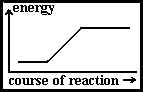
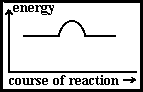
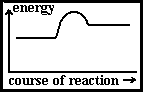
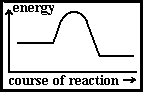
Which of the following reaction profiles represents an exothermic reaction with no activation energy? [et-15]
Which of the following reaction profiles represents an endothermic reaction with no activation energy? [et-16]
Which of the following reaction profiles represents a reaction with an activation energy but with no overall energy change? [et-17]
Which of the following reaction profiles represents an exothermic reaction with a small activation energy? [et-18]
Which of the following reaction profiles represents an endothermic reaction with a large activation energy? [et-19]
Which of the following reaction profiles represents an exothermic reaction with a large activation energy? [et-20]
Which of the following reaction profiles represents an endothermic reaction with a small activation energy? [et-21]
Which of the following energy changes corresponds to the activation energy required for the
reverse or backward reaction to take place? [et-41]
energy change 1
energy change 2
energy change 3
energy change 4
Which of the following energy changes corresponds to the activation energy required for the reverse or backward reaction to take place? [et-44]
energy change 1
energy change 2
energy change 3
energy change 4
An energy level diagram can be used to show the energy changes involved in the course of a chemical reaction. The reaction must be? [et-51]
an exothermic reaction
a thermal decomposition
an endothermic reaction
a reaction with zero activation energy
An energy level diagram can be used to show the energy changes involved in the course of a chemical reaction. The reaction must be? [et-52]
a combustion reaction
a thermal decomposition
an endothermic reaction
a reaction with zero activation energy
An energy level diagram can be used to show the energy changes involved in the course of a chemical reaction. The reaction must be? [et-53]
an exothermic reaction
a combustion reaction
an endothermic reaction
a reaction with zero activation energy
The diagram shows the energy changes during a reaction. What would occur if a catalyst was used?[et-54]
energy change 1 is lowered
energy change 2 is raised
energy change 3 is lowered
energy change 4 is raised
The diagram shows the energy changes during a reaction. What would occur if a catalyst was used?[et-55]
energy change 1 is lowered
energy change 2 is raised
energy change 3 is lowered
energy change 4 is raised
The
diagram shows the profile of the energy changes for a reaction. Which energy change is reduced by using a suitable catalyst? [et-56]
energy change 1
energy change 2
energy change 3
energy change 4
The
diagram shows the profile of the energy changes for a reaction. Which energy change is reduced by using a suitable catalyst? [et-57]
energy change 1
energy change 2
energy change 3
energy change 4
The
diagram shows the profile of the energy changes for a reaction. Which energy change represents the energy needed to break chemical bonds so that new products can form? [et-58]
energy change 1
energy change 2
energy change 3
energy change 4
The
diagram shows the profile of the energy changes for a reaction. Which energy change represents the energy needed to break chemical bonds so that new products can form? [et-59]
energy change 1
energy change 2
energy change 3
energy change 4
For the reaction: 3H2 + N2 ==> 2NH3 The breaking of bonds in a hydrogen molecule when it combines with nitrogen to form ammonia must be? [et-60]
electrolytic
electrostatic
endothermic
exothermic
For the reaction: 3H2 + N2 ==> 2NH3 The breaking of bonds in a nitrogen molecule when it combines with hydrogen to form ammonia must be? [et-61]
electrolytic
electrostatic
endothermic
exothermic
For the reaction: 3H2 + N2 ==> 2NH3 The forming of bonds in an ammonia molecule when hydrogen combines with nitrogen must be? [et-62]
electrolytic
electrostatic
endothermic
exothermic
The equation for the formation of ammonia from its elements is: 3H2 + N2 ==> 2NH3 Given the BOND ENERGIES in kJ/mol for H-H = 440; N-N = 940; N-H = 390, calculate the energy released when 2 moles of ammonia are formed. [et-63]
80 kJ
90 kJ
990 kJ
1110 kJ
The reaction between hydrogen and iodine to form hydrogen iodide can be written as H2(g) + I2(g) ===> 2HI(g) Use the bond energies shown to calculate the energy change that takes place when hydrogen iodide is formed according to the above equation. (Bond energies in kJ/mol: H-H 440, I-I 150, H-I 300) [et-64]
10 kJ given out
10 kJ taken in
600 kJ given out
590 kJ taken in
When hydrogen fluoride is heated it breaks down into hydrogen and fluorine. The equation can be written as: 2HF(g) ==> H2(g) + F2(g) Use the bond energies shown below to calculate the energy change that takes place when 2 moles of hydrogen fluoride thermally decomposes in this way. (bond energies in kJ/mol: H-H = 440; F-F = 155; H-F = 560) [et-65]
525 kJ taken in
525 kJ given out
560 kJ given out
560 kJ taken in
When hydrogen chloride is heated it breaks down into hydrogen and fluorine. The equation can be written as: 2HCl(g) ==> H2(g) + Cl2(g) Use the bond energies shown below to calculate the energy change that takes place when 2 moles of hydrogen chloride thermally decomposes in this way. (bond energies in kJ/mol: H-H = 440; Cl-Cl = 245; H-Cl = 430) [et-66]
175 kJ given out
175 kJ taken in
860 kJ given out
685 kJ taken in
When hydrogen bromide is heated it breaks down into hydrogen and bromine. The equation can be written as: 2HBr(g) ==> H2(g) + Br2(g) Use the bond energies shown below to calculate the energy change that takes place when 2 moles of hydrogen bromide thermally decomposes in this way. (bond energies in kJ/mol: H-H = 440; Br-Br = 200; H-Br = 370) [et-67]
740 kJ given out
640 kJ taken in
100 kJ taken in
100 kJ given out
When hydrogen iodide is heated it breaks down into hydrogen and iodine. The equation can be written as: 2HI(g) ==> H2(g) + I2(g) Use the bond energies shown below to calculate the energy change that takes place when 2 moles of hydrogen iodide thermally decomposes in this way. (bond energies in kJ/mol: H-H = 440; I-I = 150; H-I = 300) [et-68]
600 kJ given out
600 kJ taken in
10 kJ given out
10 kJ taken in
Methane molecules, CH4, can be broken down into gaseous carbon and hydrogen atoms. The energy needed to break the bonds to do this is 1664 kJ/mol. Therefore the average C-H bond energy in the molecule is? [et-69]
416 kJ
832 kJ
1664 kJ
6656 kJ
Ammonia molecules, NH3, can be broken down into gaseous nitrogen and hydrogen atoms. The energy needed to break the bonds to do this is 1164 kJ/mol. Therefore the average N-H bond energy in the molecule is? [et-70]
388 kJ
582 kJ
1164 kJ
291 kJ
Water molecules, H2O, can be broken down into gaseous oxygen and hydrogen atoms. The energy needed to break the bonds to do this is 928 kJ/mol. Therefore the average O-H bond energy in the molecule is? [et-71]
116 kJ
232 kJ
464 kJ
928 kJ
The diagram shows the energy changes as a reaction proceeds. For a reaction to be exothermic which of the following must be positive? [et-72]
Y + X - W
Y - X + W
W - Y
X - Y
The diagram shows the energy changes as a reaction proceeds. Which of the following is the activation energy? [et-73]
W - X
W + X - Y
W - Y
X - Y
The diagram shows the energy changes as a reaction proceeds. Which of the following is the overall energy change? [et-74]
W - X given out
W - X taken in
X - Y given out
X - Y taken in
The diagram shows the energy changes as a reaction proceeds. For a reaction to be endothermic which of the following must be positive? [et-75]
W - X
W - Y
W + X - Y
X - Y
The diagram shows the energy changes as a reaction proceeds. Which of the following is the activation energy? [et-76]
Y + X - W
Y - X + W
X - Y
W - Y
The diagram shows the energy changes as a reaction proceeds. Which of the following is the overall energy change? [et-77]
X - Y given out
W - Y taken in
X - Y given out
X - Y taken in
Sodium hydroxide and dilute hydrochloric acid react together to form sodium chloride without being heated. This is because the? [et-78]
the activation energy is high
the activation energy is low
the activation energy is zero
the reaction is exothermic
Natural gas and the oxygen in air will only react when heated. This is because the reaction? [et-79]
has a zero activation energy
has a low activation energy
is exothermic
has a high activation energy
The diagram shows the energy changes as a reaction proceeds. If a suitable catalyst is used, which of the following energy changes occurs? [et-80]
W - X is increased
W - X is reduced
X - Y is increased
X - Y is reduced
The diagram shows the energy changes as a reaction proceeds. If a suitable catalyst is used, which of the following energy changes occurs? [et-81]
W - X is increased
W -
Y is reduced
X - Y is increased
X - Y is reduced
Which of the following is a 'combustion reaction'? [rt-1]
CH4(g) + 2O2(g) => CO2(g) + 2H2O(l)
NaOH(aq) + HCl(aq) => NaCl(aq) + H2O(l)
CaCO3(s) => CaO(s) + CO2(g)
C6H12O6(aq) ==> 2C2H5OH(aq) + 2CO2(g)
Which of the following is a 'neutralisation reaction'? [rt-2]
CH4(g) + 2O2(g) => CO2(g) + 2H2O(l)
NaOH(aq) + HCl(aq) => NaCl(aq) + H2O(l)
CaCO3(s) => CaO(s) + CO2(g)
C6H12O6(aq) ==> 2C2H5OH(aq) + 2CO2(g)
Which of the following is a 'thermal decomposition' reaction? [rt-3]
CH4(g) + 2O2(g) => CO2(g) + 2H2O(l)
NaOH(aq) + HCl(aq) => NaCl(aq) + H2O(l)
CaCO3(s) => CaO(s) + CO2(g)
C6H12O6(aq) ==> 2C2H5OH(aq) + 2CO2(g)
Which of the following is a 'fermentation' reaction? [rt-4]
CH4(g) + 2O2(g) => CO2(g) + 2H2O(l)
NaOH(aq) + HCl(aq) => NaCl(aq) + H2O(l)
CaCO3(s) => CaO(s) + CO2(g)
C6H12O6(aq) ==> 2C2H5OH(aq) + 2CO2(g)
Which of the following is a 'combustion' reaction? [rt-5]
methane + oxygen => carbon dioxide + water
sodium hydroxide + hydrochloric acid => sodium chloride + water
methane + oxygen ==> carbon dioxide + water (burning reaction)
ethanol ==> ethene + water (using acid catalyst)
Which of the following corresponds to 'a hydration reaction'? [rt-74]
CuSO4.5H2O ==> CuSO4 + 5H2O
CH2=CH2 + H2O ==> CH3CH2OH
C6H12O6 ==> 2CH3CH2OH + 2CO2
C6H12O6 ==> 6C + 6H2O
Which of the following corresponds to 'a dehydration reaction'? [rt-75]
C6H12O6 ==> 2CH3CH2OH + 2CO2
CH2=CH2 + H2O ==> CH3CH2OH
CuSO4.5H2O ==> CuSO4 + 5H2O
CH4 + 2O2 ==> CO2 + 2H2O
Which of the following corresponds to 'a dehydration reaction'? [rt-76]
C6H12O6 ==> 2CH3CH2OH + 2CO2
CH2=CH2 + H2O ==> CH3CH2OH
CH4 + 2O2 ==> CO2 + 2H2O
C6H12O6 ==> 6C + 6H2O
Which of the following corresponds to 'a dehydration reaction'? [rt-77]
CH3CH2OH ==> CH2=CH2 + H2O
C6H12O6 ==> 2CH3CH2OH + 2CO2
CH4 + 2O2 ==> CO2 + 2H2O
CuSO4 + 5H2O ==> CuSO4.5H2O
Which of the following corresponds to 'a hydration reaction'? [rt-78]
CH3CH2OH ==> CH2=CH2 + H2O
CuSO4 + 5H2O ==> CuSO4.5H2O
CH4 + 2O2 ==> CO2 + 2H2O
C6H12O6 ==> 6C + 6H2O
The reaction illustrated produces ...? [ab-1]
a salt + water
a salt only
a salt and hydrogen
water only
The type of reaction illustrated is called ...? [ab-2]
decomposition
neutralisation
displacement
oxidation
To produce sodium
sulfate by the reaction illustrated you need ...? [ab-3]
potassium
sulfate + sodium hydroxide
sodium chloride +
sulfuric acid
sodium hydroxide +
sulfuric acid
sodium hydroxide + hydrochloric acid
In the reaction illustrated, in order to add the correct amount of acid you would add a few drops of Universal Indicator and add acid until the indicator in the conical flask was ...? [ab-4]
blue
orange
yellow
green
In the reaction illustrated, in order to add the correct amount of acid you would add a few drops of Universal Indicator to the conical flask. If too little acid was added the indicator colour could be? [ab-5]
blue
orange
yellow
green
In the reaction illustrated, in order to add the correct amount of acid you would add a few drops of Universal Indicator to the conical flask. If too much acid was added the indicator colour could be? [ab-6]
blue
orange
purple
green
To produce potassium chloride by the reaction illustrated you need ...? [ab-7]
potassium
sulfate + hydrochloric acid
sodium chloride + potassium hydroxide
potassium hydroxide + hydrochloric acid
sodium hydroxide + hydrochloric acid
To produce lithium nitrate by the reaction illustrated you need ...? [ab-8]
lithium
sulfate + nitric acid
sodium nitrate + lithium hydroxide
potassium nitrate + lithium hydroxide
lithium hydroxide + nitric acid
The diagram shows a method of preparing salts. Which of the following will forms when a transition metal oxide reacts with hydrochloric acid? [ab-9]
transition metal chloride + water
transition metal chloride + hydrogen
transition metal chloride only
water only
The diagram shows a method of preparing salts from reacting an insoluble metal oxide and an acid. This type of reaction is called? [ab-10]
electrolysis
neutralisation
reduction
displacement
The diagram shows a method of preparing salts by reacting an insoluble metal oxide with an acid. How can you tell when all the acid has been used up before filtering the mixture? [ab-11]
universal indicator will give a yellow colour in the acid
universal indicator will give a pale blue colour in the acid
no more of the metal oxide will dissolve in the acid
the solution will go clear
The diagram shows a method of preparing salts. Which of the following will form a transition metal
sulfate and hydrogen? [ab-12]
transition metal oxide +
sulfuric acid
transition metal + sodium
sulfate
transition metal hydroxide + potassium
sulfate
transition metal +
sulfuric acid
Which is the strongest base or alkali? [ab-13]
limewater
baking soda
vinegar
wine
Which is the weakest base or alkali? [ab-14]
limewater
baking soda
vinegar
wine
Which is the strongest acid? [ab-15]
limewater
baking soda
vinegar
wine
Which is the weakest acid? [ab-16]
limewater
baking soda
vinegar
wine
Which of the following can be mixed to form a neutral solution? [ab-17]
limewater and fizzy drink
baking soda and toothpaste
vinegar and wine
calomine lotion and common salt
Which of the following can be mixed to form a neutral solution? [ab-18]
limewater and washing soda
baking soda and wine
vinegar and common salt
ammonia and limewater
Which of the following can be safely used to treat an acid bee sting? [ab-19]
limewater
wine
calomine lotion
common salt
Which of the following can be safely used to treat an alkaline wasp sting? [ab-20]
calomine lotion
vinegar
washing soda
common salt
Which of the following is most likely to be part of an ant-acid indigestion medicine? [ab-21]
sodium hydrogencarbonate
ammonia
washing soda
limewater
Which of the following is the safest to use to treat an acid nettle sting? [ab-22]
wine
sodium hydrogencarbonate
washing soda
limewater
A small amount of a dense white powder was mixed with water in a test tube. Non of the white powder sank to the bottom of the test tube. A few drops of universal indicator were added and the solution turned blue. This meant the white powder was ...? [ab-23]
a soluble neutral substance
a slightly soluble acid
a very soluble alkali
a slightly soluble alkali
A small amount of a dense white powder was mixed with water in a test tube. Some of the white powder sank to the bottom of the test tube. A few drops of universal indicator were added and the solution turned blue. This meant the white powder was ...? [ab-24]
a soluble neutral substance
a slightly soluble acid
a very soluble alkali
a slightly soluble alkali
A small amount of a dense white powder was mixed with water in a test tube. Non of the white powder sank to the bottom of the test tube. A few drops of universal indicator were added and the solution turned green. This meant the white powder was ...? [ab-25]
a soluble neutral substance
a slightly soluble acid
a slightly soluble neutral substance
a slightly soluble alkali
A small amount of a dense white powder was mixed with water in a test tube. Some of the white powder sank to the bottom of the test tube. A few drops of universal indicator were added and the solution turned green. This meant the white powder was ...? [ab-26]
a soluble acidic substance
a slightly soluble neutral substance
a soluble
acidic substance
a slightly soluble alkali
A small amount of a dense white powder was mixed with water in a test tube. Non of the white powder sank to the bottom of the test tube. A few drops of universal indicator were added and the solution turned orange. This meant the white powder was ...? [ab-26]
a soluble weak alkali
a very soluble neutral substance
a soluble weak acid
a slightly soluble strong acid
A small amount of a dense white powder was mixed with water in a test tube. Some of the white powder sank to the bottom of the test tube. A few drops of universal indicator were added and the solution turned red. This meant the white powder was ...? [ab-26]
a soluble weak alkali
a slightly soluble neutral substance
a soluble weak acid
a slightly soluble strong acid
Which of the following is the pH of a strong acid? [ab-49]
pH 1
pH 14
pH 5
pH 9
Which of the following is the pH of a strong alkali? [ab-50]
pH 1
pH 14
pH 5
pH 9
Which of the following is the pH of a weak acid? [ab-51]
pH 1
pH 14
pH 5
pH 9
Which of the following is the pH of a weak alkali? [ab-52]
pH 1
pH 14
pH 5
pH 9
When dilute nitric acid reacts with sodium hydroxide the products are? [ab-53]
sodium nitrate + water
sodium nitrate + hydrogen
sodium hydride + hydrogen nitrate
sodium nitrite + oxygen
dilute acid X + copper(II) carbonate ==> copper(II)
sulfate + water + carbon dioxide. Acid X is? [ab-54]
nitric acid
sulfuric acid
sulfurous acid
hydrochloric acid
dilute acid X + magnesium hydroxide ==> magnesium chloride + water. Acid X is? [ab-55]
ammonium chlorate
sulfuric acid
hydrochloric acid
chloric acid
magnesium + dilute acid X ==> magnesium nitrate + hydrogen. Acid X is? [ab-56]
ammonium nitrate
nitrogen dioxide
nitrous acid
nitric acid
When hydrochloric acid is added to copper carbonate, the gas bubbles formed can be identified by? [ab-57]
burning with a squeaky pop
turning limewater cloudy
relighting a glowing splint
turning blue litmus red and then bleaching it
When
sulfuric acid is added to zinc, the gas bubbles formed can be identified by? [ab-58]
burning with a squeaky pop
turning limewater cloudy
relighting a glowing splint
turning blue litmus red and then bleaching it
An iron tray was cleaned with dilute hydrochloric acid and bubbles formed. The gas formed was? [ab-59]
oxygen
chlorine
hydrogen
carbon dioxide
A carbonate mineral rock was tested with dilute
sulfuric acid and bubbles formed. The gas formed was? [ab-60]
carbon monoxide
sulfur dioxide
hydrogen
carbon dioxide
Dilute
sulfuric acid will only form one product when reacted with? [ab-61]
ammonia
copper
magnesium oxide
zinc carbonate
Dilute
sulfuric acid will not readily react with? [ab-62]
ammonia
copper
magnesium oxide
zinc carbonate
Which will form a salt and water when reacted with dilute hydrochloric acid? [ab-63]
ammonia
copper
magnesium oxide
zinc carbonate
Which will form a salt, water and carbon dioxide when reacted with dilute hydrochloric acid? [ab-64]
ammonia
copper
magnesium oxide
zinc carbonate
Which of these reactants is the best combination to use to make magnesium
sulfate? [ab-65]
magnesium oxide +
sulfuric acid
magnesium chloride + sodium
sulfate
sulfuric acid + magnesium chloride
magnesium nitrate +
sulfuric acid
Which of these reactants is the best combination to use to make zinc nitrate? [ab-66]
zinc chloride + nitric acid
nitric acid + zinc hydroxide
nitric acid + zinc
sulfate
zinc oxide + nitrous acid
Which of these reactants is the best combination to use to make copper(II)
sulfate? [ab-67]
copper +
sulfuric acid
copper(II) chloride + sodium
sulfate
copper(II) oxide +
sulfuric acid
copper(II) nitrate + sodium chloride
Which of these reactants is the best combination to use to make zinc chloride? [ab-68]
calcium chloride + zinc carbonate
zinc nitrate + hydrochloric acid
sodium chloride + zinc oxide
zinc carbonate + hydrochloric acid
The diagram shows the preparation of a salt. Which word applies to stages 1-2? [ab-69]
neutralisation
filtration
evaporation
condensation
The diagram shows the preparation of a salt. Which word applies to stage 3? [ab-70]
neutralisation
filtration
evaporation
condensation
The diagram shows the preparation of a salt. Which word describes the change from 3 to 4? [ab-71]
neutralisation
filtration
evaporation
condensation
The diagram shows the preparation of a salt. Which word describes stage 4? [ab-72]
neutralisation
filtration
evaporation
crystallisation
The diagram shows the preparation of a salt using a solid and an acid. Which is true concerning this method? [ab-73]
the solid can be an insoluble base
it is not a neutralisation reaction
you cannot use an insoluble carbonate
the solid must be an alkali
The diagram shows the preparation of a salt. Which word means a 'soluble base'? [ab-74]
oxide
alkali
hydroxide
indicator
The diagram shows a method of salt preparation. Which statement is true about the method? [ab-75]
the method uses an insoluble base
the acid must be in the burette and the alkali in the flask
the neutralisation point is detected with an indicator
the salt will precipitate at the neutralisation point
The diagram shows one method of salt preparation. Which statement is true about the method illustrated? [ab-76]
the salt will precipitate at the neutralisation point
an alkali is used
the neutralisation point is detected with an indicator
the method uses an insoluble base
Complete the word equation: zinc oxide + hydrochloric acid ==> ..???.. [ab-77]
zinc chloride + hydrogen
zinc hydrochloride + water
zinc chloride + water
zinc hydrochloride chloride + water + carbon dioxide
Complete the word equation: zinc hydroxide + hydrochloric acid ==> ..???.. [ab-78]
zinc hydrochloride + water
zinc chloride + water + carbon dioxide
zinc hydrochloride + hydrogen
zinc chloride + water
Complete the word equation: zinc + hydrochloric acid ==> ..???.. [ab-79]
zinc chloride + hydrogen
zinc chloride + water
zinc hydrochloride + hydrogen
zinc hydrochloride + water
Complete the word equation: zinc carbonate + hydrochloric acid ==> ..???.. [ab-80]
zinc hydrochloride + water
zinc chloride + water + carbon dioxide
zinc hydrochloride + hydrogen
zinc chloride + carbon dioxide
Complete the word equation: nickel +
sulfuric acid ==> ..???.. [ab-81]
nickel
sulfate + hydrogen
nickel
sulfate + water
nickel
sulfite + water
nickel
sulfite + hydrogen
Complete the word equation: nickel oxide +
sulfuric acid ==> ..???.. [ab-82]
nickel
sulfate + hydrogen
nickel
sulfate + water
nickel
sulfite + water
nickel
sulfite + hydrogen
Complete the word equation: nickel hydroxide +
sulfuric acid ==> ..???.. [ab-83]
nickel
sulfate + hydrogen
nickel
sulfite + water
nickel
sulfate + water
nickel
sulfite + hydrogen
Complete the word equation: nickel carbonate +
sulfuric acid ==> ..???.. [ab-84]
nickel
sulfate + carbon dioxide
nickel
sulfite + water
nickel
sulfate + water
nickel
sulfate + water + carbon dioxide
Complete the word equation: ammonia +
sulfuric acid ==> ..???.. [ab-85]
ammonium
sulfate
ammonia
sulfate
ammonium hydrogensulfate
ammonia
sulfite
Complete the word equation: ammonia + hydrochloric acid ==> ..???.. [ab-86]
ammonia chloride
ammonium chloride
ammonium hydrochloride
ammonia hydrochloride
Complete the word equation: ammonia + nitric acid ==> ..???.. [ab-87]
ammonia nitrite
ammonium nitrite
ammonium nitrate
ammonia hydrogennitrate
Complete the word equation: sodium hydroxide +
sulfuric acid ===> ..???.. [ab-88]
sodium
sulfate
sodium
sulfate + hydrogen
sodium hydrogensulfite + water
sodium
sulfate + water
Given the following neutralisation equation: NaOH(aq) + HCl(aq) ==> NaCl(aq) + H2O(l) Which is the alkali? [ab-89]
NaOH
HCl
NaCl
H2O
Given the following neutralisation equation: NaOH(aq) + HCl(aq) ==> NaCl(aq) + H2O(l) Which is the acid? [ab-90]
NaOH
HCl
NaCl
H2O
Given the following neutralisation equation: NaOH(aq) + HCl(aq) ==> NaCl(aq) + H2O(l) Which is the salt? [ab-91]
NaOH
HCl
NaCl
H2O
Given the following neutralisation equation: NaOH(aq) + HCl(aq) ==> NaCl(aq) + H2O(l) Which is the base? [ab-92]
H2O
HCl
NaCl
NaOH
Which two reactants would you use to make potassium nitrate? [ab-101]
nitric acid and potassium hydroxide
sodium
nitrate and potassium chloride
sulfuric acid and sodium nitrate
nitric acid and sodium hydroxide
Insoluble metal oxides and metal hydroxides (bases) will not dissolve to form an alkaline solution. But they will dissolve in acids to give the same reaction as with alkalis. This method is particularly handy for making transition metal salts. Which reaction will produce a transition metal chloride and hydrogen? [ab-102]
transition metal oxide + sodium chloride
transition metal + hydrochloric acid
transition metal hydroxide + hydrochloric acid
transition metal +
sulfuric acid
Insoluble metal oxides and metal hydroxides (bases) will not dissolve to form an alkaline solution. But they will dissolve in acids to give the same reaction as with alkalis. This method is particularly handy for making transition metal salts. When sufficient base has been added so that no more dissolves, how is the excess base removed? [ab-103]
boiling
distillation
filtration
crystallisation
Insoluble metal oxides and metal hydroxides (bases) will not dissolve to form an alkaline solution. But they will dissolve in acids to give the same reaction as with alkalis. This method is particularly handy for making transition metal salts. When sufficient base has been added so that no more dissolves. How could you test that all the acid was neutralised? [ab-104]
see if crystals form on evaporating the solution
see if the solution is clear
measure the boiling point of the solution
use indicator paper
Insoluble bases and metals will not dissolve to form an alkaline solution, but they will dissolve in acids to form salts. This method is particularly handy for making transition metal salts. What pair of chemicals will make cobalt
sulfate and water? [ab-105]
cobalt oxide +
sulfuric acid
cobalt + hydrochloric acid
cobalt + nitric acid
cobalt hydroxide + nitric acid
Insoluble bases and metals will not dissolve to form an alkaline solution, but they will dissolve in acids to form salts. This method is particularly handy for making transition metal salts. What pair of chemicals will make cobalt chloride and hydrogen? [ab-106]
cobalt oxide +
sulfuric acid
cobalt + hydrochloric acid
cobalt hydroxide + sodium chloride
cobalt hydroxide + nitric acid
Which two reactants make ammonium chloride and water? [ab-107]
ammonium
sulfate and hydrochloric acid
ammonium hydroxide and sodium chloride
ammonium hydroxide and hydrochloric acid
ammonia and potassium chloride
Which of these gives an alkaline solution when dissolved in water? [ab-108]
aluminium hydroxide
copper hydroxide
iron hydroxide
ammonia (ammonium hydroxide)
Which of these gives an alkaline solution when dissolved in water? [ab-109]
sodium hydroxide
copper hydroxide
iron hydroxide
aluminium hydroxide
Which of these gives an alkaline solution when dissolved in water? [ab-109]
nickel hydroxide
potassium hydroxide
iron hydroxide
magnesium hydroxide
Which of A to D completes the equation ..?.. [ab-111] ..?.. + potassium hydroxide ==> potassium
sulfate + water
potassium nitrate
calcium hydroxide
sulfuric acid
sodium chloride
Which of A to D completes the equation ..?.. [ab-112] hydrochloric acid + sodium hydroxide ==> ..?.. + water
sodium
sulfate
potassium chloride
calcium chloride
sodium chloride
Which of A to D completes the equation ..?.. [ab-113] ..?.. + nitric acid ==> ammonium nitrate
ammonia (ammonium hydroxide)
calcium hydroxide
ammonium
sulfate
sodium nitrate
Which of A to D completes the equation ..?.. [ab-114]
sulfuric acid + ..?.. ==> calcium sulfate + water
ammonia
sulfate
calcium hydroxide
calcium chloride
sodium
sulfate
Which quantities a, b, c and d are required to balance the equation ... (note that '1's would not be shown in the equation) a Zn(s) + b HCl(aq) ==> c ZnCl2(aq) + d H2(g) ? [ab-29]
1 2 1 1
2 2 2 1
2 1 1 2
1 1 2 2
Which quantities a, b, c and d are required to balance the equation ... (note that '1's would not be shown in the equation) a Fe(s) + b H2SO4(aq) ==> c FeSO4(aq) + d H2(g) ? [ab-30]
1 1 1 2
1 1 1 1
2 2 2 1
2 1 2 2
Which quantities a, b, c and d are required to balance the equation ... (note that '1's would not be shown in the equation) a Al(s) + b HCl(aq) ==> c AlCl3(aq) + d H2(g) ? [ab-31]
1 6 3 2
2 3 2 3
2 6 2 3
1 3 3 2
Which quantities a, b, c and d are required to balance the equation ... (note that '1's would not be shown in the equation) a Al(s) + b H2SO4(aq) ==> c Al2(SO4)3(aq) + d H2(g) ? [ab-32]
1 3 1 3
2 3 2 3
1 2 2 2
2 3 1 3
Which quantities a, b, c, d and e are required to balance the equation ... (note that '1's would not be shown in the equation) a CaCO3(s) + b HCl(aq) ==> c CaCl2(aq) + d H2O(l) + e CO2(g) ? [ab-33]
1 2 1 1 1
2 2 1 2 1
1 1 1 1 1
2 1 2 2 2
Which quantities a, b, c, d and e are required to balance the equation ... (note that '1's would not be shown in the equation) a Na2CO3(s) + b HCl(aq) ==> c NaCl(aq) + d H2O(l) + e CO2(g) ? [ab-34]
1 4 4 2 2
1 2 2 1 1
2 2 4 2 2
2 2 2 1 1
Which quantities a, b, c, d and e are required to balance the equation ... (note that '1's would not be shown in the equation) a Tl2(CO3)3(s) + b HCl(aq) ==> c TlCl3(aq) + d H2O(l) + e CO2(g) ? [ab-35]
2 6 4 3 6
1 3 2 6 2
1 6 2 3 3
2 3 4 3 6
Which quantities a, b, c, d and e are required to balance the equation ... (note that '1's would not be shown in the equation) a Tl2(CO3)3(s) + b H2SO4(aq) ==> c Tl2(SO4)3(aq) + d H2O(l) + e CO2(g) ? [ab-36]
2 6 4 3 6
1 3 2 6 6
1 6 2 6 3
1 3 1 3 3
Which quantities a, b, c and d are required to balance the equation ... (note that '1's would not be shown in the equation) a NaOH(aq) + b HCl(aq) ==> c NaCl(aq) + d H2O(l) ? [ab-37]
1 1 1 1
1 2 2 1
2 1 1 2
1 2 1 1
Which quantities a, b, c and d are required to balance the equation ... (note that '1's would not be shown in the equation) a Ca(OH)2(aq) + b HCl(aq) ==> c CaCl2(aq) + d H2O(l) ? [ab-38]
1 2 1 1
1 2 1 2
2 1 1 2
2 2 2 1
Which quantities a, b, c and d are required to balance the equation ... (note that '1's would not be shown in the equation) a Al(OH)3(s) + b HCl(aq) ==> c AlCl3(aq) + d H2O(l) ? [ab-39]
2 6 2 3
1 6 2 6
1 3 1 3
2 3 2 3
Which quantities a, b, c and d are required to balance the equation ... (note that '1's would not be shown in the equation) a Fe2O3(s) + b HCl(aq) ==> c FeCl3(aq) + d H2O(l) ? [ab-40]
2 6 2 3
1 6 2 6
1 3 1 3
1 6 2 3
Which quantities a, b, c and d are required to balance the equation ... (note that '1's would not be shown in the equation) a MgO(s) + b HCl(aq) ==> c MgCl2(aq) + d H2O(l) ? [ab-41]
1 2 1 1
1 1 1 1
2 2 1 2
1 4 1 2
Which quantities a, b, c and d are required to balance the equation ... (note that '1's would not be shown in the equation) a Mg(OH)2(s) + b H2SO4(aq) ==> c MgSO4(aq) + d H2O(l) ? [ab-42]
1 2 1 1
1 1 1 2
2 2 1 2
1 4 1 2
Which quantities a, b, c and d are required to balance the equation ... (note that '1's would not be shown in the equation) a Li2O(s) + b HCl(aq) ==> c LiCl(aq) + d H2O(l) ? [ab-43]
1 2 1 1
1 1 1 1
1 2 2 1
1 2 1 2
Which quantities a, b, c and d are required to balance the equation ... (note that '1's would not be shown in the equation) a KOH(aq) + b H2SO4(aq) ==> c K2SO4(aq) + d H2O(l) ? [ab-44]
1 2 1 1
1 1 1 1
2 2 1 2
2 1 1 2
Which ions do acids always produce in water? [ab-45]
H+
OH-
H2+
O2-
Which ions do alkalis always produce in water? [ab-46]
H+
OH-
H2+
O2-
Which is the correct ionic equation for the neutralisation of an acid and an alkali? [ab-47]
2H+(aq) + O2-(aq) ==> 2H2O(l)
H-(aq) + OH+(aq) ==> H2O(l)
H+(aq) + OH-(aq) ==> H2O(l)
4H+(aq) + O2-(aq) ==> 2H2O(l)
When hydrochloric acid is neutralised with sodium hydroxide, which two ions have the highest concentrations in the resulting mixture? [ab-48]
H+ and OH-
Na+ and OH-
H+ and Cl-
Na+ and Cl-
Complete the symbol equation: NH3 + HCl ==> ...???... [ab-93]
NH4Cl
NH3HCl
NH3Cl
NH3
Complete the symbol equation: NH3 + HNO3 ==> ...???... [ab-94]
NH3HNO3
NH4NO3
NH3NO3
NH4HNO3
Complete the symbol equation: 2NH3 + H2SO4 ==> ...???... [ab-95]
(NH3)2HSO4
NH42SO4
(NH4)2SO4
NH4HSO4
Given the symbol equation: MgO + 2HCl ==> ???? + H2O What is the missing ???? [ab-96]
MgCl
Mg2Cl
2MgCl
MgCl2
Given the symbol equation: Ca(OH)2 + H2SO4 ==> CaSO4 + ???? What is the missing ???? [ab-97]
2H2O
H2O
2H2
H2O2
Given the symbol equation: ???? + 2HNO3 ==> Zn(NO3)2 + H2O + CO2 What is the missing ???? [ab-98]
Zn(OH)2
ZnCO3
ZnHCO3
ZnCO2
Given the symbol equation: Fe + H2SO4 ==> FeSO4 + ???? What is the missing ???? [ab-99]
H2O
HO2
H2
2H2
Given the symbol equation: Na2CO3 + 2HCl ==> ???? + H2O + CO2 What is the missing ???? [ab-100]
NaCl
Na2Cl2
NaCl
2NaCl
The equation shows the formation of sodium
sulfate when sodium hydroxide neutralises sulfuric acid .... H2SO4 + 2NaOH ==> Na2SO4 + 2H2O An acid salt called sodium hydrogensulfate can also be made ... H2SO4 + NaOH ==> NaHSO4 + H2O 50 cm3 of a
sulfuric acid solution was neutralised by 20 cm3 of a sodium hydroxide solution to make sodium
sulfate. What volume of sodium hydroxide solution is needed to form sodium hydrogensulfate from the 50cm3 of
sulfuric acid? [ab-115]
10 cm3
15 cm3
20 cm3
25 cm3
The equation shows the formation of sodium
sulfate when sodium hydroxide neutralises sulfuric acid .... H2SO4 + 2NaOH ==> Na2SO4 + 2H2O An acid salt called sodium hydrogensulfate can also be made ... H2SO4 + NaOH ==> NaHSO4 + H2O 100 cm3 of a
sulfuric acid solution was neutralised by 40 cm3 of a sodium hydroxide solution to make sodium
sulfate. What volume of sodium hydroxide solution is needed to form sodium hydrogensulfate from the 100cm3 of
sulfuric acid? [ab-116]
10 cm3
20 cm3
50 cm3
200 cm3
The equation shows the formation of sodium
sulfate when sodium hydroxide neutralises sulfuric acid .... H2SO4 + 2NaOH ==> Na2SO4 + 2H2O An acid salt called sodium hydrogensulfate can also be made ... H2SO4 + NaOH ==> NaHSO4 + H2O 70 cm3 of a
sulfuric acid solution was neutralised by 15 cm3 of a sodium hydroxide solution to make sodium hydrogensulfate. What volume of sodium hydroxide solution is needed to form sodium
sulfate from the 70cm3 of
sulfuric acid? [ab-117]
35 cm3
20 cm3
30 cm3
40 cm3
The equation shows the formation of sodium
sulfate when sodium hydroxide neutralises sulfuric acid .... H2SO4 + 2NaOH ==> Na2SO4 + 2H2O An acid salt called sodium hydrogensulfate can also be made ... H2SO4 + NaOH ==> NaHSO4 + H2O 80 cm3 of a
sulfuric acid solution was neutralised by 25 cm3 of a sodium hydroxide solution to make sodium hydrogensulfate. What volume of sodium hydroxide solution is needed to form sodium
sulfate from the 80cm3 of
sulfuric acid? [ab-118]
40 cm3
20 cm3
25 cm3
50 cm3
Method 1 (left) Method 2 (above) The diagrams show two ways of making a salt. Method 1 cannot be used for making transition metal salts because transition metal oxides or hydroxides are ..?.. [ab-119]
insoluble in water
too coloured to follow the reaction
unreactive with acids
not bases
Which of the following statements about acids and alkalis is TRUE? [ab-120]
hydrogen ions make sodium hydroxide solution alkaline
ammonium hydroxide is alkaline due to the presence of OH- ions
sulfuric acid is acid because it contains H- ions
hydrochloric acid solution is acidic because it contains hydroxide ions
Which of the following statements about acids and alkalis is TRUE? [ab-121]
hydrogen ions make sodium hydroxide solution alkaline
ammonium hydroxide is alkaline due to the presence of OH+ ions
sulfuric acid is acid because it contains H+ ions
hydrochloric acid solution is acidic because it contains hydroxide ions
Which of the following statements about acids and alkalis is TRUE? [ab-122]
the presence of oxide ions make sodium hydroxide solution alkaline
ammonium hydroxide is alkaline due to the presence of OH+ ions
sulfuric acid is acid because it contains H- ions
hydrochloric acid solution is acidic because it contains hydrogen ions
Which of the following statements about acids and alkalis is TRUE? [ab-123]
hydroxide ions make sodium hydroxide solution alkaline
ammonium hydroxide is alkaline due to the presence of OH+ ions
sulfuric acid is acid because it contains H- ions
hydrochloric acid solution is acidic because it contains hydride ions
What word specifically means 'a soluble base'? [ab-124]
acid
alkali
salt
dissolves
A molecule of hydrobromic acid (HBr) has one hydrogen that can be replaced by a metal to form a salt. Some acids have two hydrogens that can be replaced. If both hydrogens are replaced the 'normal' salt is formed. If one hydrogen only is replaced, an 'acid' salt is formed. Which of the following can form an acid salt? [ab-125]
nitric acid, HNO3
hydrochloric acid, HCl
carbonic acid, H2CO3
hydroiodic acid, HI
A molecule of hydrobromic acid (HBr) has one hydrogen that can be replaced by a metal to form a salt. Some acids have two hydrogens that can be replaced. If both hydrogens are replaced the 'normal' salt is formed. If one hydrogen only is replaced, an 'acid' salt is formed. Which of the following can form an acid salt? [ab-126]
nitric acid, HNO3
hydrochloric acid, HCl
hydroiodic acid, HI
sulfuric acid, H2SO4
When hydrochloric acid is neutralised with sodium hydroxide, which two ions have the lowest concentrations in the resulting mixture? [ab-127]
H+ and OH-
Na+ and OH-
H+ and Cl-
Na+ and Cl-
In the electrolysis of moderately concentrated sodium chloride solution (brine) using carbon/platinum electrodes, the principal product formed at the positive anode is? [ef1]
chlorine
hydrogen
oxygen
sodium
In the electrolysis of moderately concentrated sodium chloride solution (brine) using carbon/platinum electrodes, the principal product formed at the negative cathode is? [ef2]
chlorine
hydrogen
oxygen
sodium
When copper(II) sulfate solution undergoes electrolysis using carbon/platinum electrodes the product at the positive anode is? [ef3]
sulfur
hydrogen
oxygen
copper
When copper(II) sulfate solution undergoes electrolysis using carbon/platinum electrodes the product at the negative cathode is? [ef4]
sulfur
hydrogen
oxygen
copper
In the electrolysis of sodium sulfate solution with carbon/platinum electrodes, what product is formed on the surface of the negative cathode? [ef5]
hydrogen
oxygen
sodium
sulfur dioxide
In the electrolysis of sodium sulfate solution with carbon/platinum electrodes, what product is formed on the surface of the positive anode? [ef6]
hydrogen
oxygen
sodium
sulfur dioxide
In the electrolysis of water acidified with sulfuric acid, using carbon/platinum electrodes, what product is formed on the surface of the negative cathode? [ef7]
sulfur
sulfur dioxide
hydrogen
oxygen
In the electrolysis of water acidified with sulfuric acid, using carbon/platinum electrodes, what product is formed on the surface of the positive anode? [ef8]
copper ions
sulfur dioxide
hydrogen
oxygen
When copper(II) sulfate solution undergoes electrolysis using a carbon cathode and copper anode electrodes the product at the negative cathode is? [ef9]
copper
blue copper(II) ions
oxygen
hydrogen
When copper(II) sulfate solution undergoes electrolysis using a carbon cathode and copper anode electrodes the product at the positive anode is? [ef10]
copper
blue copper(II) ions
oxygen
hydrogen
When copper(II) chloride solution undergoes electrolysis using a carbon/platinum electrodes the product at the negative cathode is? [ef11]
hydrogen
blue copper(II) ions
copper
chlorine
When copper(II) chloride solution undergoes electrolysis using a carbon/platinum electrodes the product at the positive anode is? [ef12]
hydrogen
blue copper(II) ions
copper
chlorine
Which of the following statements is FALSE concerning the electrolysis of molten lead bromide, PbBr2 ? [ef13]
solid lead bromide can also undergo electrolysis
lead is formed at the cathode
bromine is formed at the anode
molten lead bromide can be decomposed by the passage of a d.c. electric current
Which of the following statements is FALSE concerning the electrolysis of molten lead bromide, PbBr2 ? [ef14]
solid lead bromide cannot undergo electrolysis
lead oxide is formed at the cathode
bromine is formed at the anode
molten lead bromide can be decomposed by the passage of a d.c. electric current
Which of the following statements is FALSE concerning the electrolysis of molten lead bromide, PbBr2 ? [ef15]
solid lead bromide cannot undergo electrolysis
lead is formed at the cathode
oxygen is formed at the anode
molten lead bromide can be decomposed by the passage of a d.c. electric current
Which of the following statements is FALSE concerning the electrolysis of molten lead bromide, PbBr2 ? [ef16]
solid lead bromide cannot undergo electrolysis
lead is formed at the cathode
bromine is formed at the anode
molten lead bromide can be decomposed by the passage of an a.c. electric current
Which of the following statements is FALSE concerning the electrolysis of molten sodium chloride, NaCl ? [ef17]
solid sodium chloride can also undergo electrolysis
sodium is formed at the cathode
chlorine is formed at the anode
molten sodium chloride can be decomposed by the passage of an d.c. electric current
Which of the following statements is FALSE concerning the electrolysis of molten sodium chloride, NaCl ? [ef18]
solid sodium chloride cannot undergo electrolysis
sodium is oxidised at the cathode
chlorine is formed at the anode
molten sodium chloride can be decomposed by the passage of an d.c. electric current
Which of the following statements is FALSE concerning the electrolysis of molten sodium chloride, NaCl ? [ef19]
solid sodium chloride cannot undergo electrolysis
sodium is formed at the cathode
chlorine is oxidised at the anode
molten sodium chloride can be decomposed by the passage of an d.c. electric current
Which of the following statements is FALSE concerning the electrolysis of molten sodium chloride, NaCl ? [ef20]
solid sodium chloride cannot undergo electrolysis
sodium is formed at the cathode
chlorine is formed at the anode
molten sodium chloride can be decomposed by the passage of an a.c. electric current
Which of the following statements is FALSE concerning the electrolysis of molten aluminium oxide, Al2O3 ? [ef21]
solid aluminium oxide can also undergo electrolysis
aluminium is formed at the cathode
oxygen is formed at the anode
molten aluminium oxide can be decomposed by the passage of an d.c. electric current
Which of the following statements is FALSE concerning the electrolysis of molten aluminium oxide, Al2O3 ? [ef22]
solid aluminium oxide cannot undergo electrolysis
aluminium is oxidised at the cathode
oxygen is formed at the anode
molten aluminium oxide can be decomposed by the passage of an d.c. electric current
Which of the following statements is FALSE concerning the electrolysis of molten aluminium oxide, Al2O3 ? [ef23]
solid aluminium oxide cannot undergo electrolysis
aluminium is formed at the cathode
oxygen cannot form at the anode
molten aluminium oxide can be decomposed by the passage of an d.c. electric current
Which of the following statements is FALSE concerning the electrolysis of molten aluminium oxide, Al2O3 ? [ef24]
solid aluminium oxide cannot undergo electrolysis
aluminium is formed at the cathode
oxygen is formed at the anode
molten aluminium oxide can be decomposed by the passage of an a.c. electric current
When copper(II) sulfate solution undergoes electrolysis using copper electrodes the product at the positive anode is? [ef25]
blue copper(II) ions
copper
hydrogen
oxygen
When copper(II) sulfate solution undergoes electrolysis using copper electrodes the product at the negative cathode is? [ef26]
blue copper(II) ions
copper
hydrogen
oxygen
Which of the following statements about electrolysis is FALSE? [ef27]
metals or hydrogen are formed at the cathode
any ionic compound dissolved in water can undergo electrolysis
an electrolyte is a solution or melt that cannot conduct a d.c. electrical current
positively charged ions migrate to the negatively charged cathode
Which of the following statements about electrolysis is FALSE? [ef28]
metals or hydrogen are formed at the cathode
any ionic compound dissolved in water can undergo electrolysis
an electrolyte is a solution or melt that contains ions and so conducts electricity
positively charged ions migrate to the anode
Which of the following statements about electrolysis is FALSE? [ef29]
metals or hydrogen are formed at the anode
any ionic compound dissolved in water can undergo electrolysis
an electrolyte is a solution or melt that contains ions and so conducts electricity
negatively charged ions migrate to the anode
Which of the following statements about electrolysis is FALSE? [ef30]
any ionic compound dissolved in water can undergo electrolysis
non-metals like oxygen and chlorine are formed at the cathode
an electrolyte is a solution or melt that contains ions and so conducts electricity
negatively charged ions migrate to the anode
Which of the following statements about electrolysis is FALSE? [ef31]
any ionic compound dissolved in water can undergo electrolysis
non-metals like oxygen and chlorine are formed at the anode
any compound dissolved in water can readily conduct electricity and undergo electrolysis.
positively charged ions migrate to the cathode
Which of the following statements about electrolysis is FALSE? [ef32]
any ionic compound dissolved in water can undergo electrolysis
non-metals like oxygen and chlorine are formed at the anode
What do we call the positive electrode in an electrolysis cell? [ef33]
anode
cathode
electrolyte
anion
cation
What do we call the negative electrode in an electrolysis cell? [ef34]
anode
cathode
electrolyte
anion
cation
What do we call a negatively charged ion? [ef35]
anode
cathode
electrolyte
anion
cation
What do we call a positively charged ion? [ef36]
anode
cathode
electrolyte
anion
cation
Electrolysis is brought about by passing a d.c. electrical current through a solution of ions (electrolyte). Which of the following statements is FALSE? [eh-1]
oxidation involves electron gain
an electrolyte is an electrically conducting solution of ions
oxidation occurs at the anode
cations are reduced at an electrode
Electrolysis is brought about by passing a d.c. electrical current through a solution of ions (electrolyte). Which of the following statements is FALSE? [eh-2]
an electrolyte is an electrically conducting solution of ions
reduction involves electron loss
oxidation occurs at the anode
cations are reduced at an electrode
Electrolysis is brought about by passing a d.c. electrical current through a solution of ions (electrolyte). Which of the following statements is FALSE? [eh-3]
anions are oxidised at an electrode
reduction involves electron gain
oxidation occurs at the cathode
an electrolyte is an electrically conducting solution of ions
Electrolysis is brought about by passing a d.c. electrical current through a solution of ions (electrolyte). Which of the following statements is FALSE? [eh-4]
anions are oxidised at an electrode
reduction involves electron gain
an electrolyte is an electrically conducting solution of ions
cations are reduced at the anode
Given the following half-equation for what may happen on the surface of an electrode in electrolysis. 2H+(aq) + 2e- ==> H2(g) Which statement is TRUE about this electrode equation? [eh-5]
it is a reduction at the cathode
it is an oxidation at the anode
the solution must to be acid for this cathode half-reaction to happen
it involves electron gain at the anode
Given the following half-equation for what may happen on the surface of an electrode in electrolysis. 2H+(aq) + 2e- ==> H2(g) Which statement is TRUE about this electrode equation? [eh-6]
it is an oxidation at the anode
the solution does not have to be acid for this cathode half-reaction to happen
it is an oxidation at the cathode
it involves electron loss at the anode
Given the following half-equation for what may happen on the surface of an electrode in electrolysis. 2Cl-(aq) ==> Cl2(g) + 2e- Which statement is TRUE about this electrode equation? [eh-7]
it is a reduction at the cathode
it involves electron loss at the cathode
it is an oxidation at the anode
it involves electron gain at the anode
Given the following half-equation for what may happen on the surface of an electrode in electrolysis. 2Cl-(aq) ==> Cl2(g) + 2e- Which statement is TRUE about this electrode equation? [eh-8]
it is a reduction at the cathode
it involves electron loss at the cathode
it is a reduction at the anode
it involves electron loss at the anode
Given the following half-equation for what may happen on the surface of an electrode in electrolysis. Cu2+(aq) + 2e- ==> Cu(s) Which statement is TRUE about this electrode equation? [eh-9]
it is a reduction at the cathode
it is an oxidation at the anode
it involves electron loss at the cathode
it involves electron gain at the anode
Given the following half-equation for what may happen on the surface of an electrode in electrolysis. Cu2+(aq) + 2e- ==> Cu(s) Which statement is TRUE about this electrode equation? [eh-10]
it is an oxidation at the cathode
it involves electron gain at the cathode
it involves electron loss at the anode
it involves electron gain at the anode
Given the following half-equation for what may happen on the surface of an electrode in electrolysis. Cu(s) ==> Cu2+(aq) + 2e- Which statement is TRUE about this electrode equation? [eh-11]
it is an oxidation at the cathode
it involves electron gain at the cathode
it involves electron loss at the anode
it involves reduction at the anode
Given the following half-equation for what may happen on the surface of an electrode in electrolysis. Cu(s) ==> Cu2+(aq) + 2e- Which statement is TRUE about this electrode equation? [eh-12]
it is an oxidation at the cathode
it involves electron gain at the cathode
it involves electron gain at the anode
it involves an oxidation at the anode
Given the following half-equation for what may happen on the surface of an electrode in electrolysis. 4OH- ==> 2H2O(l) + O2(g) + 4e- Which statement is TRUE about this electrode equation? [eh-13]
it involves electron loss at the anode
it involves electron gain at the cathode
it involves reduction at the anode
it involves an oxidation at the cathode
Given the following half-equation for what may happen on the surface of an electrode in electrolysis. 4OH- ==> 2H2O(l) + O2(g) + 4e- Which statement is TRUE about this electrode equation? [eh-13]
it is an reduction at the cathode
it involves an oxidation at the anode
it involves electron gain at the anode
it involves electron loss at the cathode
Which of the following is the correctly balanced electrode half equation for the cathode in the electrolysis of acidified water? [eh-15]
2H+(aq) + 2e- ==> H2(g)
4OH- ==> 2H2O(l) + O2(g) + 4e-
H+(aq) + e- ==> H(g)
2OH- ==> H2O(l) + O2(g) + 2e-
Which of the following is the correctly balanced electrode half equation for the anode in the electrolysis of acidified water? [eh-16]
2H+(aq) + 2e- ==> H2(g)
4OH- ==> 2H2O(l) + O2(g) + 4e-
H+(aq) + e- ==> H(g)
2OH- ==> H2O(l) + O2(g) + 2e-
Which of the following is the correctly balanced electrode half equation for the cathode in the electrolysis of copper(II) sulfate with carbon electrodes? [eh-17]
Cu2+(aq) + 2e- ==> Cu(s)
Cu(s) ==> Cu2+(aq) + 2e-
4OH- ==> 2H2O(l) + O2(g) + 4e-
2OH- ==> H2O(l) + O2(g) + 2e-
Cu2+(aq) + e- ==> Cu(s)
Cu(s) ==> Cu2+(aq) + e-
Which of the following is the correctly balanced electrode half equation for the anode in the electrolysis of copper(II) sulfate with carbon electrodes? [eh-18]
Cu2+(aq) + 2e- ==> Cu(s)
Cu(s) ==> Cu2+(aq) + 2e-
4OH- ==> 2H2O(l) + O2(g) + 4e-
2OH- ==> H2O(l) + O2(g) + 2e-
Cu2+(aq) + e- ==> Cu(s)
Cu(s) ==> Cu2+(aq) + e-
Which of the following is the correctly balanced electrode half equation for the anode in the electrolysis of copper(II) sulfate with copper electrodes? [eh-19]
Cu2+(aq) + 2e- ==> Cu(s)
Cu(s) ==> Cu2+(aq) + 2e-
4OH- ==> 2H2O(l) + O2(g) + 4e-
2OH- ==> H2O(l) + O2(g) + 2e-
Cu2+(aq) + e- ==> Cu(s)
Cu(s) ==> Cu2+(aq) + e-
Which of the following is the correctly balanced electrode half equation for the cathode in the electrolysis of copper(II) sulfate with copper electrodes? [eh-20]
 Which four quantities a, b, c and d are required to balance the equation ...
 Which three quantities a, b and c are required to balance the equation ...
 Given the following symbol equation:
 Which of the following is a test for hydrogen gas? [gt1]
 Given the following relative atomic masses: Cu = 64, S = 32 and O = 16; calculate the relative formula mass of copper
sulfate, CuSO4 [rfm-1]
Given the following relative atomic masses: Cu = 64, S = 32 and O = 16; calculate the relative formula mass of copper
sulfate, CuSO4 [rfm-1] Given the equation: 2Mg(s) + O2(g) ==> 2MgO(s)
 Chlorine consists of 75% chlorine-35 and 25% chlorine-37. Calculate the Ar of chlorine to 3sf/1dp. [ram-1]
 Heat is taken in when ammonium nitrate dissolves in water. This is an example of? [et-1]
 The reaction between
sulfuric acid and zinc is exothermic. During the reaction, which observation is correct? [et-26]
The reaction between
sulfuric acid and zinc is exothermic. During the reaction, which observation is correct? [et-26] Which of these process is always exothermic? [et-32]
 Equal amounts of four different substances (A-D) where added separately to equal amounts of an acid and a thermometer placed in the mixture. For which substance is the reaction the least endothermic? [et-39]
 Which of the following energy changes corresponds to the activation energy required for the forward reaction to take place? [et-40]
 Which of the following energy changes corresponds to the activation energy required for the forward reaction to take place? [et-43]
 When an exothermic reaction takes place, the reaction mixture gets hotter because? [et-46]
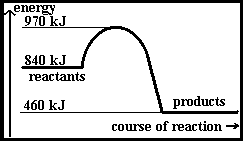 The diagram below shows the reaction profile for the course of a chemical reaction. Which of the following statements is TRUE? [et-8]
 The diagram below shows the reaction profile for the course of a chemical reaction. Which of the following statements is TRUE? [et-10]
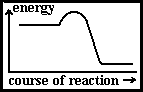 An energy level diagram can be used to show the energy changes involved in the course of a chemical reaction. The reaction must be? [et-51]
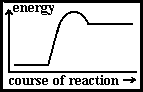 An energy level diagram can be used to show the energy changes involved in the course of a chemical reaction. The reaction must be? [et-53]
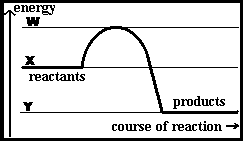 The diagram shows the energy changes as a reaction proceeds. For a reaction to be exothermic which of the following must be positive? [et-72]
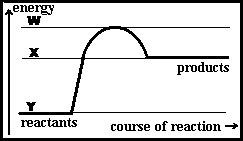 The diagram shows the energy changes as a reaction proceeds. For a reaction to be endothermic which of the following must be positive? [et-75]
 2NH3(g)


 A small amount of a dense white powder was mixed with water in a test tube. Non of the white powder sank to the bottom of the test tube. A few drops of universal indicator were added and the solution turned blue. This meant the white powder was ...? [ab-23]
 Which of the following is the pH of a strong acid? [ab-49]
 In the electrolysis of moderately concentrated sodium chloride solution (brine) using carbon/platinum electrodes, the principal product formed at the positive anode is? [ef1]
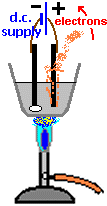 Which of the following statements is FALSE concerning the electrolysis of molten lead bromide, PbBr2 ? [ef13]
 When copper(II) sulfate solution undergoes electrolysis using copper electrodes the product at the positive anode is? [ef25]
 Electrolysis is brought about by passing a d.c. electrical current through a solution of ions (electrolyte). Which of the following statements is FALSE? [eh-1]