QUIZ ON ELECTROLYSIS
(UK GCSE Chemistry easier Foundation Tier level)
In the electrolysis of moderately concentrated sodium chloride solution (brine) using carbon/platinum electrodes, the principal product formed at the positive anode is? [ef1]
chlorine
hydrogen
oxygen
sodium
In the electrolysis of moderately concentrated sodium chloride solution (brine) using carbon/platinum electrodes, the principal product formed at the negative cathode is? [ef2]
chlorine
hydrogen
oxygen
sodium
When copper(II) sulfate solution undergoes electrolysis using carbon/platinum electrodes the product at the positive anode is? [ef3]
sulfur
hydrogen
oxygen
copper
When copper(II) sulfate solution undergoes electrolysis using carbon/platinum electrodes the product at the negative cathode is? [ef4]
sulfur
hydrogen
oxygen
copper
In the electrolysis of sodium sulfate solution with carbon/platinum electrodes, what product is formed on the surface of the negative cathode? [ef5]
hydrogen
oxygen
sodium
sulfur dioxide
In the electrolysis of sodium sulfate solution with carbon/platinum electrodes, what product is formed on the surface of the positive anode? [ef6]
hydrogen
oxygen
sodium
sulfur dioxide
In the electrolysis of water acidified with sulfuric acid, using carbon/platinum electrodes, what product is formed on the surface of the negative cathode? [ef7]
sulfur
sulfur dioxide
hydrogen
oxygen
In the electrolysis of water acidified with sulfuric acid, using carbon/platinum electrodes, what product is formed on the surface of the positive anode? [ef8]
copper ions
sulfur dioxide
hydrogen
oxygen
When copper(II) sulfate solution undergoes electrolysis using a carbon cathode and copper anode electrodes the product at the negative cathode is? [ef9]
copper
blue copper(II) ions
oxygen
hydrogen
When copper(II) sulfate solution undergoes electrolysis using a carbon cathode and copper anode electrodes the product at the positive anode is? [ef10]
copper
blue copper(II) ions
oxygen
hydrogen
When copper(II) chloride solution undergoes electrolysis using a carbon/platinum electrodes the product at the negative cathode is? [ef11]
hydrogen
blue copper(II) ions
copper
chlorine
When copper(II) chloride solution undergoes electrolysis using a carbon/platinum electrodes the product at the positive anode is? [ef12]
hydrogen
blue copper(II) ions
copper
chlorine
Which of the following statements is FALSE concerning the electrolysis of molten lead bromide, PbBr2 ? [ef13]
solid lead bromide can also undergo electrolysis
lead is formed at the cathode
bromine is formed at the anode
molten lead bromide can be decomposed by the passage of a d.c. electric current
Which of the following statements is FALSE concerning the electrolysis of molten lead bromide, PbBr2 ? [ef14]
solid lead bromide cannot undergo electrolysis
lead oxide is formed at the cathode
bromine is formed at the anode
molten lead bromide can be decomposed by the passage of a d.c. electric current
Which of the following statements is FALSE concerning the electrolysis of molten lead bromide, PbBr2 ? [ef15]
solid lead bromide cannot undergo electrolysis
lead is formed at the cathode
oxygen is formed at the anode
molten lead bromide can be decomposed by the passage of a d.c. electric current
Which of the following statements is FALSE concerning the electrolysis of molten lead bromide, PbBr2 ? [ef16]
solid lead bromide cannot undergo electrolysis
lead is formed at the cathode
bromine is formed at the anode
molten lead bromide can be decomposed by the passage of an a.c. electric current
Which of the following statements is FALSE concerning the electrolysis of molten sodium chloride, NaCl ? [ef17]
solid sodium chloride can also undergo electrolysis
sodium is formed at the cathode
chlorine is formed at the anode
molten sodium chloride can be decomposed by the passage of an d.c. electric current
Which of the following statements is FALSE concerning the electrolysis of molten sodium chloride, NaCl ? [ef18]
solid sodium chloride cannot undergo electrolysis
sodium is oxidised at the cathode
chlorine is formed at the anode
molten sodium chloride can be decomposed by the passage of an d.c. electric current
Which of the following statements is FALSE concerning the electrolysis of molten sodium chloride, NaCl ? [ef19]
solid sodium chloride cannot undergo electrolysis
sodium is formed at the cathode
chlorine is oxidised at the anode
molten sodium chloride can be decomposed by the passage of an d.c. electric current
Which of the following statements is FALSE concerning the electrolysis of molten sodium chloride, NaCl ? [ef20]
solid sodium chloride cannot undergo electrolysis
sodium is formed at the cathode
chlorine is formed at the anode
molten sodium chloride can be decomposed by the passage of an a.c. electric current
Which of the following statements is FALSE concerning the electrolysis of molten aluminium oxide, Al2O3 ? [ef21]
solid aluminium oxide can also undergo electrolysis
aluminium is formed at the cathode
oxygen is formed at the anode
molten aluminium oxide can be decomposed by the passage of an d.c. electric current
Which of the following statements is FALSE concerning the electrolysis of molten aluminium oxide, Al2O3 ? [ef22]
solid aluminium oxide cannot undergo electrolysis
aluminium is oxidised at the cathode
oxygen is formed at the anode
molten aluminium oxide can be decomposed by the passage of an d.c. electric current
Which of the following statements is FALSE concerning the electrolysis of molten aluminium oxide, Al2O3 ? [ef23]
solid aluminium oxide cannot undergo electrolysis
aluminium is formed at the cathode
oxygen cannot form at the anode
molten aluminium oxide can be decomposed by the passage of an d.c. electric current
Which of the following statements is FALSE concerning the electrolysis of molten aluminium oxide, Al2O3 ? [ef24]
solid aluminium oxide cannot undergo electrolysis
aluminium is formed at the cathode
oxygen is formed at the anode
molten aluminium oxide can be decomposed by the passage of an a.c. electric current
When copper(II) sulfate solution undergoes electrolysis using copper electrodes the product at the positive anode is? [ef25]
blue copper(II) ions
copper
hydrogen
oxygen
When copper(II) sulfate solution undergoes electrolysis using copper electrodes the product at the negative cathode is? [ef26]
blue copper(II) ions
copper
hydrogen
oxygen
Which of the following statements about electrolysis is FALSE? [ef27]
metals or hydrogen are formed at the cathode
any ionic compound dissolved in water can undergo electrolysis
an electrolyte is a solution or melt that cannot conduct a d.c. electrical current
positively charged ions migrate to the negatively charged cathode
Which of the following statements about electrolysis is FALSE? [ef28]
metals or hydrogen are formed at the cathode
any ionic compound dissolved in water can undergo electrolysis
an electrolyte is a solution or melt that contains ions and so conducts electricity
positively charged ions migrate to the anode
Which of the following statements about electrolysis is FALSE? [ef29]
metals or hydrogen are formed at the anode
any ionic compound dissolved in water can undergo electrolysis
an electrolyte is a solution or melt that contains ions and so conducts electricity
negatively charged ions migrate to the anode
Which of the following statements about electrolysis is FALSE? [ef30]
any ionic compound dissolved in water can undergo electrolysis
non-metals like oxygen and chlorine are formed at the cathode
an electrolyte is a solution or melt that contains ions and so conducts electricity
negatively charged ions migrate to the anode
Which of the following statements about electrolysis is FALSE? [ef31]
any ionic compound dissolved in water can undergo electrolysis
non-metals like oxygen and chlorine are formed at the anode
any compound dissolved in water can readily conduct electricity and undergo electrolysis.
positively charged ions migrate to the cathode
Which of the following statements about electrolysis is FALSE? [ef32]
any ionic compound dissolved in water can undergo electrolysis
non-metals like oxygen and chlorine are formed at the anode
 In the electrolysis of moderately concentrated sodium chloride solution (brine) using carbon/platinum electrodes, the principal product formed at the positive anode is? [ef1]
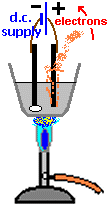 Which of the following statements is FALSE concerning the electrolysis of molten lead bromide, PbBr2 ? [ef13]
 When copper(II) sulfate solution undergoes electrolysis using copper electrodes the product at the positive anode is? [ef25]